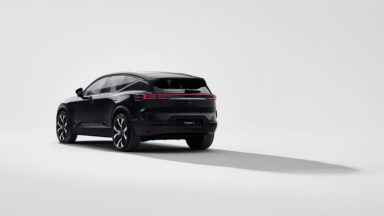
Feds deny Polestar authorization to sell cars in US from model year 2027
Polestar, the electric vehicle manufacturer, is facing a significant hurdle in its U.S. operations. The company announced today that the U.S. Commerce Department has rejected its request to import new models starting from the 2027 model year. This decision is part of a broader regulation aimed at prohibiting connected car imports from companies with Chinese affiliations. While existing models, such as the Polestar 3 and Polestar 4 SUVs, will remain available for sale, the future looks bleak for upcoming models like the Polestar 5 sedan and Polestar 6 roadster. The company, which emerged as a fully electric brand from Volvo Cars, is owned by Zhejiang Geely Holding, a Chinese firm that also has stakes in other automakers like Lynk & Co and Zeekr. Interestingly, just weeks prior, the U.S. authorized Volvo to import 2027 vehicles, raising questions about the disparity in treatment between the two brands. Polestar had previously communicated its commitment to collaborate with U.S. authorities to comply with regulations, but it appears that these efforts have not yielded the desired results. The shift in U.S. policy reflects the growing influence of domestic auto manufacturing interests, which have successfully garnered bipartisan support for protective measures. This is particularly ironic since the Polestar 3 is manufactured in South Carolina at Volvo's Charleston facility, while the Polestar 4s intended for the U.S. market are produced in South Korea, despite a significant portion of Polestar's production being based in China. Polestar's CEO, Michael Lohscheller, acknowledged the changing landscape of the automotive industry, highlighting Europe as a key growth area for the brand. He stated, "Our strategy is evolving with regional dynamics, focusing on Europe as our primary market for expansion." Despite these challenges, Polestar remains optimistic about its future, citing record sales in 2025 and early 2026, along with plans to launch new markets across Europe and additional investments in regions like Southeast Asia, Eastern Europe, and Latin America.
Unlocking the Secrets of Quantum Gravity: Can AI Help Physics Make a Leap?
The realm of scientific research is undergoing a profound transformation, fueled by the rapid advancements in artificial...
Business Today | Jul 25, 2026, 24:30
Nvidia Strikes Major Deal with SK Hynix to Secure AI Memory Supply
Nvidia has successfully forged a significant partnership with South Korea's SK Hynix to secure memory supplies essential...
CNBC | Jul 25, 2026, 05:15
SpaceX's Latest Starlink Launch Marks Milestone Amid Booster Setbacks
On Friday, SpaceX marked a significant achievement by successfully launching its first batch of third-generation Starlin...
TechCrunch | Jul 24, 2026, 23:40
The Rise of AI Distillation: A Controversial Technique Sparks Debate in Tech and Government
In recent discussions, a once-obscure topic in artificial intelligence has surged to the forefront of debates among tech...
CNBC | Jul 25, 2026, 12:15
The Elusive Phineas Fisher: The Hacktivist Who Took Down Spyware Giants
In the realm of cybersecurity, few figures are as intriguing as Phineas Fisher, a hacker who has evaded capture for near...
TechCrunch | Jul 25, 2026, 21:00