Polar Loop review: Nailed aesthetics, limited distractions, but is it worth Rs 19,999?
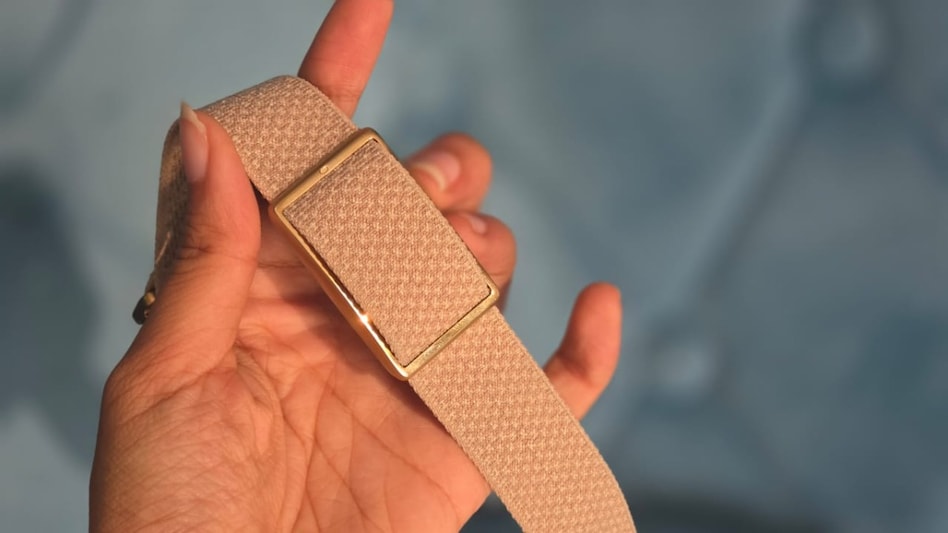
The fitness tracking landscape has shifted away from bulky smartwatches with extravagant features, making way for sleek, minimalist bands that cater to users seeking simplicity. One of the latest entries in this market is the Polar Loop, priced at Rs 19,999. While it presents a compelling design, the pressing question is whether this streamlined device can compete with smartwatches that offer extensive functionalities such as heart rate monitoring and personalized fitness recommendations. Having tested the Polar Loop for over 15 days, we explored its performance and the value it adds to fitness tracking compared to traditional smartwatches. **Aesthetics and Comfort** The Polar Loop emerges as an affordable alternative to the popular Whoop band. Its design features a minimalist approach with no screen, a rectangular sensor unit, and a strap that fits effortlessly around the wrist. What sets the Polar Loop apart is its unique charm: the soft fabric strap sits comfortably against the skin, while the lightweight sensor unit blends seamlessly into daily wear. Weighing just 29 grams, it feels almost nonexistent, especially during sleep—a common discomfort with traditional smartwatches. Adjustment is made easy with a velcro-style fastener, eliminating the fuss associated with buckles and clasps. The blinking LEDs on the back and a magnetic charging unit add to the device's understated appeal. Overall, the Polar Loop is designed for daily wear with a minimalist aesthetic that many may find attractive. **Functionality and Performance** Without a screen to display metrics, the Polar Loop relies on the Polar app to track various fitness data, including steps, calories burned, sleep quality, and heart rate. The band automatically tracks activities such as running, eliminating the need for manual session initiation. It also monitors sleep patterns, offering insights into light, deep, REM, and disrupted sleep phases, alongside heart rate and breathing data to generate a sleep score. However, users may experience inconsistencies with the tracking. For instance, the Loop’s step and calorie counts were comparable to those recorded by my iPhone, and heart rate measurements aligned closely with those from a smartwatch I tested. Unfortunately, sleep tracking was less reliable; the Loop sometimes struggles to differentiate between sleep and being awake, resulting in inaccurate readings. **Polar App: A Mixed Bag** The Polar app consolidates all tracking data, but its user experience doesn't always reflect the device's quality. The app's syncing process can take up to a minute, which may frustrate users eager to access their latest data. Additionally, navigation through the app can feel cumbersome, requiring several clicks to access daily information. **Battery Life and Charging** Equipped with a 170mAh battery, the Polar Loop claims to deliver up to 8 days of use on a single charge. In practice, however, users can expect around 6 days of battery life with regular usage. The app notifies you when battery levels drop below 20%, and the charging time is around 1 hour and 45 minutes, which is relatively swift for this type of device. **Final Thoughts** The Polar Loop excels in design and comfort, offering a lightweight and distraction-free experience in a market saturated with feature-rich smartwatches. It is an appealing choice for those looking to simplify their fitness tracking. However, the device's inconsistent sleep tracking, slow data syncing, and navigation issues are notable drawbacks, especially at a price point of Rs 19,999. As a result, while the Loop is a commendable option, potential buyers should weigh these factors carefully before making a decision.
The Future of Work: Executives Weigh In on AI's Impact on Gen Z Careers
As generative artificial intelligence continues to rise, uncertainty looms for the incoming Gen Z workforce. Leaders fro...
Business Insider | Jul 26, 2026, 10:15Market Turbulence: Four Key Factors Impacting Stocks This Week
This past week has been challenging for the stock market, driven by several significant forces that have created turbule...
CNBC | Jul 25, 2026, 20:05
Nvidia Strikes Major Deal with SK Hynix to Secure AI Memory Supply
Nvidia has successfully forged a significant partnership with South Korea's SK Hynix to secure memory supplies essential...
CNBC | Jul 25, 2026, 05:15
OpenAI's Micro Keypad: A Novelty for Coders or Just a Confounding Gadget?
Last week, OpenAI made its debut in the hardware landscape with the launch of Micro, a stylish keypad designed to integr...
TechCrunch | Jul 25, 2026, 24:40
Crisis Averted: Power Line Failure Highlights Urgent Need for Data Center Resilience
A power line failure near Washington, DC, recently showcased a significant challenge faced by the electrical grid due to...
TechCrunch | Jul 25, 2026, 13:50