
Nvidia-backed startup trains first AI model in space as orbital data center race heats up
In a remarkable advancement for orbital data centers, Starcloud, a startup supported by Nvidia, has successfully trained an artificial intelligence model from space, marking a significant milestone in the quest to alleviate Earth's growing digital infrastructure challenges. Last month, the company launched its Starcloud-1 satellite, equipped with a Nvidia H100 graphics processing unit, a chip renowned for its extraordinary computing power — 100 times more potent than any GPU previously used in space. This groundbreaking satellite is now operational, utilizing Gemma, an open large language model developed by Google, to generate responses while in orbit. This achievement signifies the first instance where an LLM has been trained beyond Earth’s atmosphere. The satellite playfully greeted Earth with a message, stating, "Greetings, Earthlings! Or, as I prefer to think of you — a fascinating collection of blue and green... Let's see what wonders this view of your world holds." Starcloud's ambitious vision is to demonstrate that space can serve as an efficient environment for data centers. As terrestrial facilities face increasing pressure on power supplies, consuming vast amounts of water and contributing to greenhouse gas emissions, the company aims to provide a sustainable alternative. According to the International Energy Agency, electricity usage in data centers is expected to surpass current levels by more than double by 2030. Philip Johnston, CEO of Starcloud, explained in a CNBC interview that their orbital data centers could potentially offer energy costs ten times lower than those of their Earth-based counterparts. He envisions a future where every operation possible in a terrestrial data center can also be executed in space, primarily due to the energy constraints faced on the planet. Johnston emphasized, "This very powerful, very parameter dense model is living on our satellite. We can query it, and it will respond just like a chat from a terrestrial database." In addition to operating Gemma, Starcloud has also trained NanoGPT, an LLM developed by an OpenAI founding member, using Shakespeare's complete works, resulting in the model communicating in Shakespearean English. The company plans to develop a massive 5-gigawatt orbital data center, featuring solar panels and cooling systems that measure approximately 4 kilometers wide and tall. This scale of operation could generate more energy than the largest power plant in the United States while being more compact and less expensive than a comparable terrestrial solar farm. These space-based data centers would harness continuous solar energy, free from the limitations of Earth’s day-night cycles and weather variability. Starcloud anticipates a five-year lifespan for its satellites, correlating with the expected durability of the Nvidia chips onboard. Johnston outlined the potential for real-world applications, stating that their systems could facilitate real-time intelligence, such as identifying the thermal signature of a wildfire and promptly notifying first responders. He noted, "We've linked in the telemetry of the satellite, allowing it to share vital information about its altitude, orientation, and location." Starcloud is collaborating with Capella Space to analyze satellite imagery, which could aid in locating capsized vessels at sea and detecting forest fires. The upcoming satellite launch in October 2026 will include additional Nvidia H100 chips and will integrate Nvidia's Blackwell platform to enhance AI performance. A new module from Crusoe, a cloud infrastructure startup, will also be included, allowing for the deployment and management of AI workloads from space. Johnston concluded, "Running advanced AI from space solves the critical bottlenecks facing data centers on Earth. Orbital compute offers a way forward that balances technological ambition with environmental responsibility." Despite the potential, challenges remain. Analysts at Morgan Stanley have highlighted risks such as harsh radiation, maintenance difficulties in orbit, debris hazards, and regulatory concerns regarding data governance. However, the lure of limitless solar energy and the possibility of large-scale operations in space continues to attract interest from major tech companies. Initiatives like Google’s Project Suncatcher and the efforts of Lonestar Data Holdings, which aims to establish a commercial data center on the moon, indicate a growing trend in space-based computing solutions. As Starcloud’s journey unfolds, it represents a significant leap toward utilizing the boundless power of the cosmos for our technological needs.
Navigating the AI Landscape: Insights from a Former OpenAI Intern
As the demand for expertise in artificial intelligence surges, many are seeking ways to break into this dynamic field. H...
Business Insider | Jul 26, 2026, 10:10The Aluminum Foil Trend: A DIY Shield Against Wireless Identity Theft
Have you noticed an unusual trend where people are wrapping their wallets in aluminum foil? This peculiar practice has e...
Business Today | Jul 25, 2026, 02:45
Unleashing the Power of AI: The 5 Smartphones Redefining Mobile Photography
Artificial Intelligence (AI) is transforming our daily experiences, permeating various aspects of technology, including ...
Business Today | Jul 26, 2026, 07:05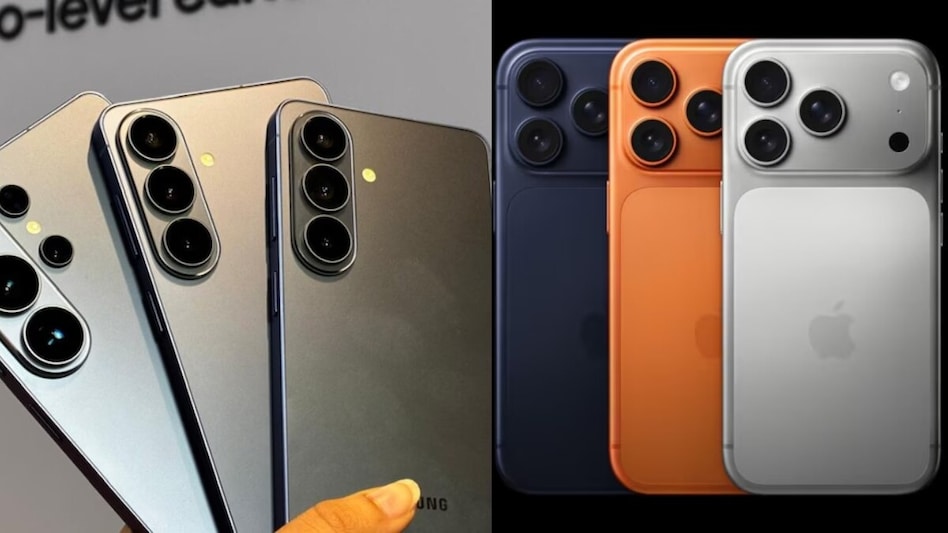
The Boring Company Eyes $4 Billion Funding Boost Amid Expanding Tunnel Ventures
Elon Musk's tunneling enterprise, The Boring Company, is reportedly negotiating a substantial funding round of $4 billio...
TechCrunch | Jul 25, 2026, 19:50
Warner Bros. Takes Legal Action Against Amazon Over Executive Poaching Allegations
Warner Bros. Discovery has initiated legal proceedings against Amazon, accusing the tech giant of unlawful interference ...
TechCrunch | Jul 25, 2026, 21:25