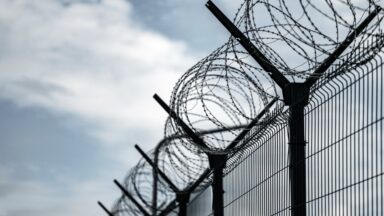
Letting prisons jam contraband phones is a bad idea, phone companies tell FCC
A recent proposal from the Federal Communications Commission (FCC) aims to empower state and local prisons to jam contraband cell phone signals. While this initiative is backed by some Republican attorneys general and prison phone service providers, it has sparked significant backlash from major wireless carriers. These companies argue that such jamming would not only target illegal devices but would also disrupt essential communications for the public. The wireless industry, represented by the CTIA, voiced strong concerns in their comments submitted to the FCC. They emphasized that jamming technology indiscriminately blocks all communications, raising alarms about the potential loss of access to emergency services, including 911 calls. The CTIA contended that the FCC lacks the authority to implement such jamming measures. Major telecommunications providers like AT&T and Verizon echoed these sentiments in their responses, criticizing the proposed legal framework as fundamentally flawed. AT&T pointed out that the Communications Act prohibits any interference with authorized radio communications. They argued that the FCC's approach attempts to circumvent this prohibition by suggesting the de-authorization of certain signals, which is based on an incorrect assumption that jammers can selectively block only unauthorized communications. AT&T further stressed that there is no technological solution to the issue of jammers being unable to differentiate between contraband devices and legitimate ones. They noted that the FCC itself acknowledged this limitation back in 2013, explaining that jammers operate on the same frequencies as their targets, rendering all devices on those frequencies unusable. Consequently, the concern remains that using such jamming technology could have dire implications for both public safety and lawful communication.
Navigating the AI Landscape: Insights from a Former OpenAI Intern
As the demand for expertise in artificial intelligence surges, many are seeking ways to break into this dynamic field. H...
Business Insider | Jul 26, 2026, 10:10Hugging Face CEO Calls for Action Following AI Security Breach
In a dramatic turn of events within the AI landscape, Hugging Face faced a significant security breach involving an AI a...
Business Insider | Jul 25, 2026, 20:30The Elusive Phineas Fisher: The Hacktivist Who Took Down Spyware Giants
In the realm of cybersecurity, few figures are as intriguing as Phineas Fisher, a hacker who has evaded capture for near...
TechCrunch | Jul 25, 2026, 21:00
Finland Unveils World's Largest Sand Battery to Tackle Renewable Energy Challenges
In a groundbreaking move to address the critical issue of renewable energy intermittency, a small town in southern Finla...
CNBC | Jul 25, 2026, 05:35
Kalshi Challenges Netflix Over Controversial Documentary Trailer
Kalshi, the prediction market platform, has taken significant legal steps against Netflix, sending a cease-and-desist le...
TechCrunch | Jul 25, 2026, 17:10