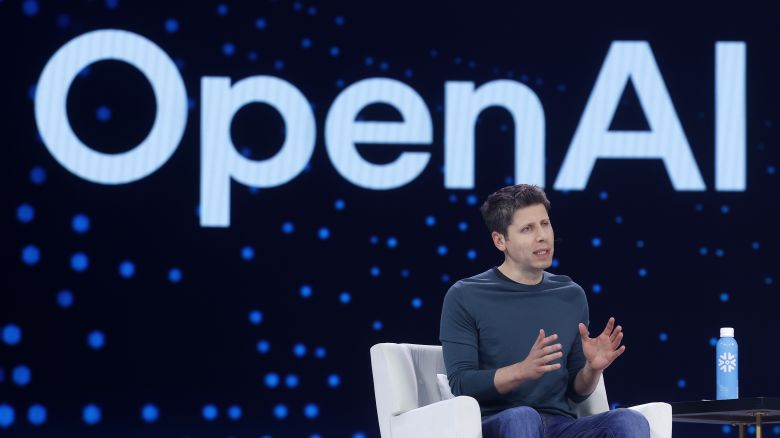
When the Pentagon gave Anthropic the boot, OpenAI swooped in. Some staff are frustrated with how it unfolded
Chalk messages lined the sidewalks outside OpenAI’s San Francisco headquarters early Monday, with phrases such as "Where are your redlines?" and "What are the safeguards?" popping up in response to the company's recent actions. These sentiments, initially attributed to activist groups, resonate with many employees within OpenAI following the announcement of a new partnership with the Pentagon to integrate its AI models into classified systems. The situation escalated after rival company Anthropic opted not to renew its contract with the Pentagon, citing concerns that the proposed terms contradicted their own ethical standards regarding AI deployment in surveillance and autonomous weaponry. In turn, the Pentagon blacklisted Anthropic, branding it a supply chain risk. The complexity of the contracts has led to considerable internal discontent, with OpenAI staff expressing frustration over how leadership navigated these negotiations. As the deadline loomed for Anthropic to finalize its contract, OpenAI CEO Sam Altman shocked many by publicly stating his agreement with Anthropic’s concerns, only for it to be revealed that he was simultaneously negotiating a deal for OpenAI. The backlash was swift when OpenAI unveiled its own Pentagon contract, effectively taking over the role that Anthropic had vacated. Following the announcement, many questioned how OpenAI would uphold its stated commitments against the use of AI in harmful ways, with critics pointing out that the contract's language might allow for the circumvention of safeguards. In a bid to address these growing concerns, Altman took to social media to clarify that OpenAI had revised its contract to better outline protections against surveillance applications, though no mention was made regarding autonomous weapons. Employees recognize the necessity for the U.S. to collaborate with AI developers amid competition with China, yet many feel that the urgency surrounding the contract compromised its integrity. One employee noted, "It’s partly how it was perceived, how it was communicated, and what the narrative has become." Public frustration was echoed by research scientist Aidan McLaughlin, who voiced his doubts about the value of the contract. Colleague Jasmine Wang also sought legal expertise to scrutinize the updated terms, sharing contrasting legal opinions that either backed or criticized OpenAI’s claims regarding the contract's clarity. Acknowledging the communication misstep, Altman stated, “The issues are super complex, and demand clear communication,” admitting that the rapid rollout of the deal appeared opportunistic. During a subsequent all-hands meeting, he referred to the rush as a "mistake," while reiterating that OpenAI cannot assess specific military applications of its technology. Some employees expressed their irritation over the perception that Anthropic has been unfairly idealized despite its prior collaborations with the Pentagon. Altman urged his team to advocate for a reconsideration of Anthropic's supply chain risk status, emphasizing that companies like OpenAI—committed to safety—should be preferred partners for government projects, regardless of the challenges that might bring.
Florida Teen Withdraws Lawsuit Against Meta, Shifting Focus to Recovery
In a significant turn of events, a Florida teenager has decided to withdraw his lawsuit against Meta, just days before w...
CNN | Jul 22, 2026, 21:35
IBM Adjusts 2026 Revenue Outlook Amid Earnings Disappointment
On Wednesday, IBM revised its revenue forecast for 2026 downward, reporting quarterly profits that fell short of analyst...
CNBC | Jul 22, 2026, 20:25
Travis Kalanick's Atoms Secures $1.7 Billion Investment to Revolutionize Robotics
Travis Kalanick's robotics venture, Atoms, has successfully raised $1.7 billion in a funding round primarily backed by v...
TechCrunch | Jul 22, 2026, 19:15
AI Skills Outshine Experience in India's Tech Job Market
In a significant shift within India's technology job market, specialized artificial intelligence (AI) skills are increas...
Business Today | Jul 23, 2026, 04:00
IBM Faces Setbacks Amidst AI Boom: Mainframe Business Struggles
IBM's recent earnings report revealed significant challenges for the tech giant, as it fell short of Wall Street's expec...
TechCrunch | Jul 22, 2026, 23:55