
Sam Altman says he doesn’t want the government to bail out OpenAI if it fails
In a recent discussion, OpenAI's CEO, Sam Altman, addressed concerns regarding the company's ambitious plans for a $1.4 trillion investment in data center infrastructure. Despite OpenAI's significant revenue growth, currently projected at a $20 billion annual run rate, questions loom about how they will finance such expansive commitments. These comments were sparked by remarks from OpenAI's CFO, Sarah Friar, during a Wall Street Journal event. She suggested that a government 'backstop' for infrastructure loans could reduce borrowing costs and facilitate access to the latest technology. A government guarantee would mean taxpayers would foot the bill if OpenAI were to default on its loans, which typically results in more favorable loan terms from lenders. While emphasizing the need for cutting-edge chips, Friar noted that relying on older technology limits financing options. She expressed hope that a collaborative ecosystem involving banks, private equity firms, and the government could help meet their funding needs. However, following backlash from the public and a swift clarification from Friar, it became clear that OpenAI is not actively seeking government financial support for their infrastructure projects. David Sacks, an influential figure in Silicon Valley and advisor to former President Trump, also weighed in, stating that there are no plans for federal bailouts for AI companies. He reassured stakeholders that even if one of the major AI firms falters, others are poised to fill the gap, stressing the government's focus on streamlining regulatory processes instead. In response to the unfolding situation, Altman reiterated that OpenAI does not desire government guarantees for its data centers. He insisted that it is crucial for governments to refrain from intervening in market dynamics, stating, "Taxpayers should not bail out companies that make poor business decisions." Furthermore, Altman acknowledged that while discussions about loan guarantees have occurred, they have exclusively pertained to supporting semiconductor manufacturing in the U.S. He remains optimistic about OpenAI's financial trajectory, projecting a run rate exceeding $20 billion by the end of this year, with aspirations of reaching hundreds of billions by 2030. As OpenAI navigates its ambitious plans, it is clear that the company's leadership is prepared to address the financial challenges ahead without reliance on government bailouts.
Elon Musk and Sam Altman: The Ongoing Rivalry Intensifies Over AI Claims
In a renewed clash between tech titans, OpenAI CEO Sam Altman has claimed that the latest version of ChatGPT, 5.6, is th...
Business Insider | Jul 12, 2026, 22:15Autonomous Vehicle Industry Faces New Challenges Amid Partnerships and Regulation
Welcome to the latest update on the autonomous vehicle landscape, where developments are unfolding rapidly, especially r...
TechCrunch | Jul 12, 2026, 16:30
Navigating the New AI Landscape: Satya Nadella's Insights on Knowledge Ownership
In a thought-provoking discussion, Satya Nadella, Chairman and CEO of Microsoft, has ignited a crucial debate surroundin...
Business Today | Jul 12, 2026, 16:45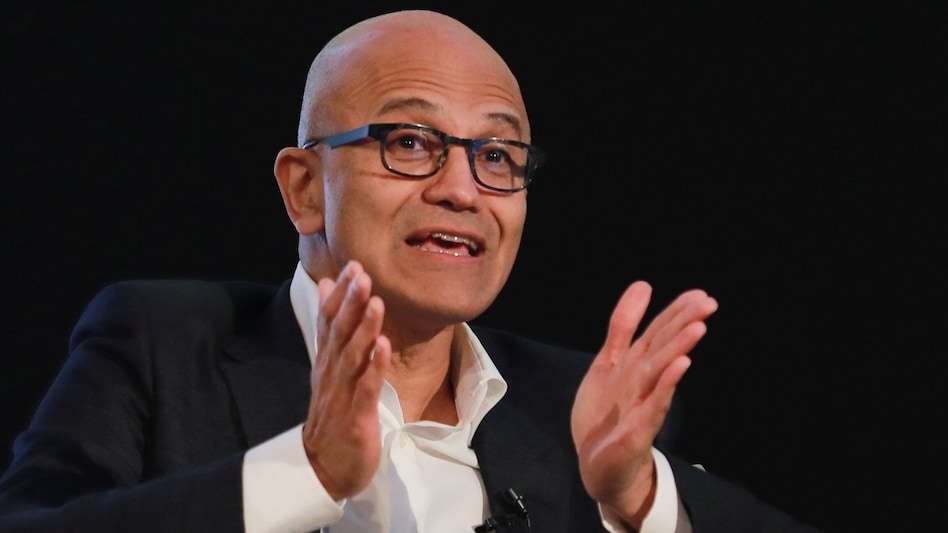
From LA to the Heart of AI: A Journalist's Journey into Startup Culture
Relocating from Los Angeles to San Francisco can feel like entering an entirely new universe, especially when transition...
Business Insider | Jul 12, 2026, 10:05OpenAI Faces Leadership Exodus in Safety Sector Amidst Strategic Overhaul
OpenAI is witnessing a significant shift in its safety leadership, as Johannes Heidecke, the head of its Safety Systems ...
Business Insider | Jul 12, 2026, 20:35