
OpenAI launches GPT-5, pushing for Enterprise AI dominance amid soaring industry investments
OpenAI has launched GPT-5, the newest version of its renowned language model which powers ChatGPT, now accessible to its extensive user base of 700 million. This iteration is being touted as the most advanced to date, with a significant emphasis on applications for businesses, while also enhancing user experience for consumers. The timing of this release is notable, coinciding with a surge in investments across the AI sector. Major players such as Alphabet, Meta, Amazon, and Microsoft, which supports OpenAI, are projected to invest nearly $400 billion this fiscal year to bolster AI data centers and infrastructure. In addition to its launch, OpenAI is reportedly exploring opportunities for employees to sell shares at a projected valuation of $500 billion, an increase from its current valuation of $300 billion. This competitive landscape has led to top AI researchers receiving signing bonuses reaching up to $100 million. OpenAI has emphasized GPT-5's enhanced capabilities in various domains, including software development, health inquiries, finance, and complex problem-solving. CEO Sam Altman remarked, "GPT-5 represents a significant leap, allowing users to consult a legitimate expert on diverse topics." He highlighted the model's ability to generate functional software instantly, suggesting that on-demand software development will be a hallmark of the GPT-5 era. During a demonstration, OpenAI showcased a feature dubbed “vibe coding,” where GPT-5 translated natural language prompts into working software. Early feedback indicates notable improvements in coding, science, and mathematics proficiency, although some reviewers remarked that the advancements from GPT-4 may not be as pronounced as in prior updates. Despite these strides, Altman pointed out that GPT-5 is not yet equipped to fully replace human workers, as it still lacks autonomous learning capabilities. Dwarkesh Patel, during his AI podcast, likened the current model's learning process to teaching a child an instrument solely through written instructions, without practical experience. As OpenAI reflects on the three years since ChatGPT's introduction—a pivotal moment for generative AI—the company faces the challenge of scaling its innovations. Limitations in data availability and the intricacies of large-scale training have hindered progress. GPT-5 integrates a feature called “test-time compute,” which allows for additional processing power to be allocated for more complex queries, a capability now available to the public. Altman concluded by stating, “We need to build a lot more infrastructure globally to ensure AI is accessible in all markets,” underscoring the extensive investment still required for future advancements.
Google's Ambitious AI Chip: Frozen V2 Set to Revolutionize Gemini Performance
Alphabet, the parent company of Google, is reportedly in the process of creating a cutting-edge artificial intelligence ...
Business Today | Jul 21, 2026, 05:55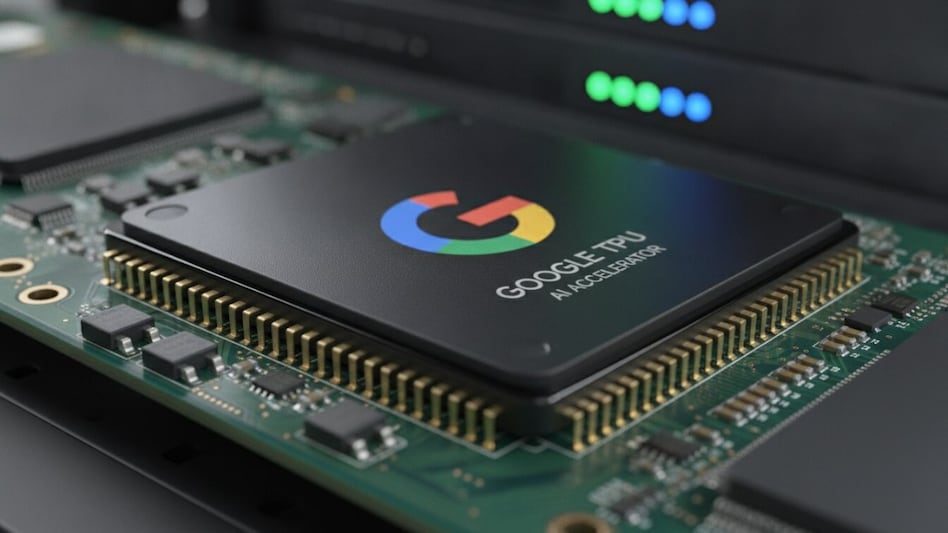
The Future of AI: Moving Beyond Token Concerns, Says OpenAI Chair
The conversation around AI tokens is evolving, and Bret Taylor, chairman of OpenAI, believes it won't be a major concern...
Business Insider | Jul 20, 2026, 16:35Natural Secures $30 Million to Transform Payments for AI Agents and Challenge Stripe
In a rapidly evolving landscape where AI agents are taking on increasingly complex tasks—ranging from vendor identificat...
TechCrunch | Jul 20, 2026, 19:35
Agility Robotics Shuns Hiring Wars, Focuses on Culture and Innovation
Agility Robotics has recently established a new base in Silicon Valley, aiming to attract top-tier engineers for its inn...
Business Insider | Jul 20, 2026, 21:45AI Safety Leadership Shakeup: Chris Fall Exits After Brief Tenure
In a surprising turn of events, Chris Fall, the top AI safety official within the Trump administration, has stepped down...
Business Insider | Jul 20, 2026, 20:05