OpenAI launches ‘ChatGPT Translate’ for web: Can it take on Google Translate?
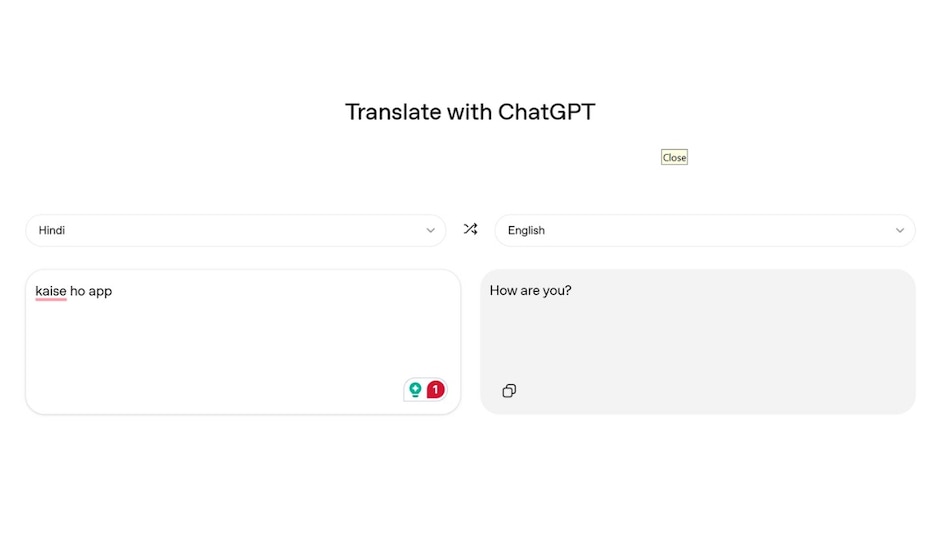
OpenAI has officially launched ChatGPT Translate, a new web-based translation service that aims to rival Google Translate. This latest initiative marks OpenAI's strategic move to broaden its offerings beyond the well-known ChatGPT chatbot. The ChatGPT Translate tool features a user-friendly dual-pane design reminiscent of Google Translate and supports translation of text, voice, and images in over 50 languages, including several Indian languages such as Hindi, Marathi, Tamil, and Telugu. Additionally, it incorporates automatic language detection and provides users with the ability to modify translations in various tones, including formal business language, casual speech, and region-specific expressions. Previously, users relied on the main ChatGPT interface for translation needs. The introduction of this dedicated translation platform underscores OpenAI's ambition to position ChatGPT as a viable alternative to established consumer productivity tools. However, ChatGPT Translate currently offers only web access and requires a stable internet connection, which may limit its usability for those who need translation services on the go. In contrast, Google Translate is accessible on both web and mobile platforms, supports offline use, and provides translations in over 200 languages. While Google's service is designed for quick, functional translations, it lacks the interactive tone-rewriting capabilities that OpenAI is highlighting as a significant advantage. In response to OpenAI’s launch, Google quickly introduced TranslateGemma, a suite of open-source AI translation models that promise faster and more efficient operation across various devices. Built on the latest Gemma 3 architecture, these models support translation for 55 languages and are optimized for a range of devices, from smartphones to powerful cloud servers. They are available in three configurations: a compact 4-billion-parameter model for mobile applications, a 12-billion-parameter version for everyday laptops, and a robust 27-billion-parameter model tailored for high-performance AI hardware such as Nvidia’s H100 GPUs and Google’s TPUs.
Nvidia's Board Shake-Up: The High-Stakes Return of Jensen Huang
Nvidia's CEO Jensen Huang has received unwavering support from longtime board members Tench Coxe, Mark Stevens, and Harv...
CNN | Nov 24, 2026, 23:00
Jensen Huang Shares Personal Journey in First All-Hands Meeting Post-Reinstatement
In a pivotal moment for Nvidia, CEO Jensen Huang addressed employees on Tuesday during his first companywide meeting sin...
Business Insider | Nov 24, 2026, 19:55Yale Expert Warns Nvidia’s Leadership Changes Could Harm U.S. Tech Dominance
On Monday, the market's enthusiasm for Nvidia may have been misguided, according to Yale business scholar Jeffrey Sonnen...
TechCrunch | Nov 25, 2026, 24:35
Anthropic's Stock Plummets, Raising Concerns for the AI Sector
Shares of Anthropic have dipped below their initial public offering (IPO) price of $83, reaching a low of $76 by midday ...
TechCrunch | Nov 24, 2026, 18:45
Nvidia's CEO Dismisses Succession Planning Amid Controversy
Nvidia's co-founder and CEO, Jensen Huang, recently addressed employees in a comprehensive all-hands meeting, touching o...
TechCrunch | Nov 24, 2026, 22:50