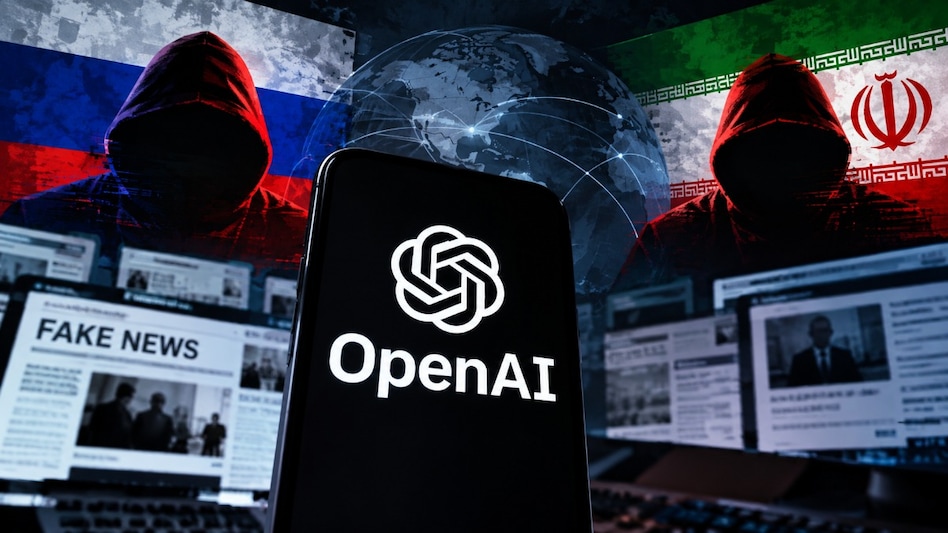
OpenAI bans Russian and Iranian accounts over AI-powered fake news campaigns targeting global audiences
OpenAI has taken decisive measures by banning ChatGPT accounts associated with Russian and Iranian influence campaigns. These operations reportedly utilized artificial intelligence to execute covert strategies aimed at influencing audiences throughout Latin America and various international news outlets. The schemes combined AI-generated content with conventional manipulation tactics, including the creation of false identities and misleading articles. While some of the activities involved posting comments across social media platforms, the campaigns also aimed to lend credibility to their narratives by disseminating articles through established publications. According to OpenAI's report dated October 8, the operators employed ChatGPT for tasks like research and content production, often exaggerating the perceived success of their initiatives. One particular operation went as far as creating a faux research organization, allegedly staffed by locals who were unaware of the true orchestrators behind it. Among the banned accounts, OpenAI highlighted a group originating from Russia involved in an operation dubbed “Dark Clark.” This initiative targeted various Latin American countries, focusing significantly on undermining Ukraine's image, while also delving into domestic political matters in Argentina and Bolivia. The campaign appeared to be managed through a fictitious research platform called the Social Research Center (SRC), which was presented by an invented persona named “Mia Clark.” The platform claimed to explore interests such as the Indian diaspora in Latin America and the diplomatic ties between India and regional nations. Moreover, the operation was marked by the dissemination of fake documents, audio scripts, and misleading materials, including questionable claims regarding Ukraine's honorary consul in Panama. OpenAI assessed the operation's severity as Category 5 on its six-point scale for influence activities, indicating it as one of the most serious disruptions the organization has encountered. In addition to the Russian accounts, OpenAI also removed accounts linked to Iran, involved in an operation referred to as “Bogus Bylines.” This initiative utilized seven fabricated journalist identities to promote geopolitical articles primarily focused on the US-Iran relationship. OpenAI discovered nearly 100 articles published or syndicated under these fake bylines across around a dozen media outlets. Although the operators generated numerous political comments, they found minimal evidence of significant audience engagement. OpenAI has shared the findings regarding both operations with appropriate authorities, underscoring how AI technology can facilitate the organization of covert campaigns while allowing misleading content to reach a broader audience through established media channels.
Staggering Recovery Rates Highlight Digital Payment Fraud Challenges
The battle against digital payment fraud continues to be an uphill struggle for consumers, with official data revealing ...
Business Today | Nov 24, 2026, 09:30
Revolutionizing Cybersecurity: AI's Role in Modern Threat Detection and Defense
As businesses increasingly embrace digital transformation and artificial intelligence, the complexity of cybersecurity t...
Business Today | Nov 24, 2026, 08:30
Tidal Takes Bold Step Against AI Music Flood, Set to Remove Millions of Tracks
In a decisive move to combat the overwhelming influx of AI-generated music, Tidal announced on Tuesday its plans to ban ...
TechCrunch | Nov 24, 2026, 17:10
Pinterest Empowers Parents with New Controls Over AI Content for Teens
This week, Pinterest unveiled an enhancement to its parental controls, introducing a feature that allows parents to regu...
TechCrunch | Nov 24, 2026, 16:25
Emerging AI Chip Design Revolution: A Challenge to Nvidia's Reign
Nvidia, under the leadership of Jensen Huang, faces a significant challenge from the very AI technology it helped to pop...
Business Insider | Nov 24, 2026, 10:10