
As OpenAI leans into enterprise business, Apple and Google set sights on the masses
As OpenAI pivots from its consumer roots, which propelled ChatGPT into the spotlight, tech giants Apple and Google are unveiling a series of new AI tools aimed at everyday users. The contrasting strategies became evident during Apple's recent developer conference, where the company introduced Siri as a standalone app. Meanwhile, OpenAI made headlines by confidentially filing for an IPO, buoyed by its expanding influence in the enterprise sector, particularly in AI-assisted coding. This divergence in approach occurs at a crucial juncture in the AI industry. OpenAI and Anthropic are concentrating on developing substantial, profitable enterprises by catering to businesses willing to invest, rather than vying for the attention of consumers who often expect free services. In contrast, Apple and Google have substantial financial resources, allowing them to subsidize consumer AI to enhance adoption and retain users within their ecosystems. Analyst Kjell Carlsson noted that Apple can afford to provide these services at no charge, as it anticipates users will spend on products like iPhones or iCloud subscriptions. Apple claims to have over 2.5 billion active devices globally, while Google boasts seven products with more than 2 billion monthly users each. Carlsson added that companies recognize that users derive value from AI through integrated products and experiences, rather than merely through the underlying models. Despite Apple's advancements in consumer AI, reactions to its Worldwide Developers Conference were mixed, as many viewed it as lacking, particularly given the high expectations for an updated Siri. Following the event, Apple's stock dropped more than 5% over two days, raising concerns about the timeline and implementation of new features. Apple's conference showcased how AI is being embedded in various products, including the iPhone camera and the Shortcuts app, as well as highlighting new child safety tools growing in importance amid rising AI usage. Just weeks prior, Google held its own developer conference, where it unveiled various consumer AI products, including the Gemini Spark, a versatile AI agent, and innovative smart glasses aimed at penetrating the wearables market. Google also introduced a video editing tool allowing users to manipulate their clips creatively. Despite their rivalry, Apple and Google are collaborating in AI; Gemini powers the new Siri, while Apple acknowledged Google's assistance in developing its advanced AI model, the Apple Foundation Model Cloud Pro. OpenAI, on the other hand, has recently intensified its focus on enterprise solutions, having established OpenAI Deployment Co., a joint venture aimed at integrating AI within corporate workflows. The company is also acquiring AI consulting firm Tomoro, which brings 150 specialists into its fold. This shift comes as OpenAI scales back consumer offerings, having recently discontinued its video generation tool, Sora, shortly after its launch. With a significant portion of OpenAI's revenue now derived from enterprise AI, the dynamics of the market are shifting. Analysts point out that while OpenAI is currently leading in consumer AI due to ChatGPT's popularity, Apple's new initiatives could entice users away from both ChatGPT and Google's offerings. As the tech industry grapples with skepticism toward AI, stemming from fears of job displacement and negative impacts on youth, companies like Apple and Google are under pressure to reshape the narrative. Analysts believe that the perception of friendliness will be crucial for companies to succeed and thrive in a competitive landscape increasingly focused on AI technologies. With Apple preparing for a transition in leadership, as Tim Cook steps down and John Ternus takes the helm, the company is poised to face significant challenges in establishing itself as a leader in AI innovation, particularly as it aims to make AI more accessible and trusted across its devices.
The Shift in Human Cognition: Embracing AI as a Collaborative Tool
As technology continues to evolve, a notable shift is occurring in the relationship between humans and artificial intell...
Business Insider | Jul 25, 2026, 09:50SpaceX Successfully Tests Starship Rocket, Launching New Era of Space Exploration
On Friday evening, SpaceX executed a significant milestone by launching its colossal Starship rocket from its facility i...
CNBC | Jul 25, 2026, 24:10
Unlocking the Secrets of Quantum Gravity: Can AI Help Physics Make a Leap?
The realm of scientific research is undergoing a profound transformation, fueled by the rapid advancements in artificial...
Business Today | Jul 25, 2026, 24:30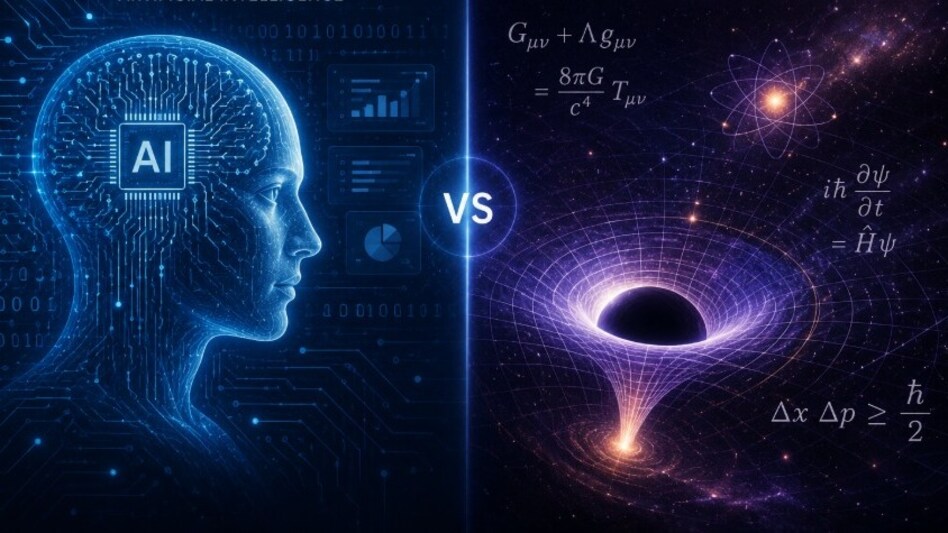
Waymo to Launch Standalone App, Ending Exclusivity with Uber in Major Cities
For the past three years, Uber and Waymo, the autonomous vehicle division of Alphabet, have collaborated to provide driv...
CNBC | Jul 24, 2026, 21:55
Vietnam's Controversial Social Media Proposal: A New Approach for Youth Engagement
Vietnam is contemplating a distinctive approach to youth social media regulations, diverging from the more common outrig...
TechCrunch | Jul 24, 2026, 21:25