Altman, Huang and the last-minute negotiations that sealed the $100 billion OpenAI-Nvidia deal
In a dramatic turn of events, Sam Altman, the CEO of OpenAI, found himself racing against the clock. With a significant announcement on the horizon regarding OpenAI's ambitious infrastructure plans, he traveled to Texas, where Nvidia's CEO, Jensen Huang, was eager to join forces. In a whirlwind of late-night negotiations and urgent calls, the two tech titans finalized a historic $100 billion partnership just hours before Altman departed for Abilene. The timing was fortuitous; Altman and Huang had recently met during President Donald Trump's state visit to the U.K., allowing for a preliminary discussion about their groundbreaking collaboration. Huang characterized the deal as "monumental in size," emphasizing its pivotal role in the ongoing AI revolution, where power and capital are increasingly dominated by these two frontrunners in the sector. Following the announcement, Nvidia's valuation soared to nearly $4.5 trillion, following a remarkable increase of $170 billion, while OpenAI's worth now stands at an impressive half a trillion dollars. This partnership solidifies the bond between OpenAI, known for its advancements in generative AI, and Nvidia, the supplier of the powerful GPUs that have fueled OpenAI's success. As the two companies prepare to develop the next generation of AI supercomputing facilities, Altman expressed his vision during an interview at Nvidia's headquarters, stating, "Expect significant developments from us in the upcoming months. OpenAI must excel in AI research, create user-friendly products, and tackle the unprecedented infrastructure challenges ahead." The negotiations unfolded through a series of virtual discussions and in-person meetings across multiple cities, including London and San Francisco, without the involvement of bankers, according to sources familiar with the discussions. The partnership involves Nvidia committing to invest $10 billion at a time into OpenAI, which is the driving force behind ChatGPT. As this relationship grows, Nvidia will also provide cutting-edge processors for a new wave of data centers. In a strategic move, OpenAI updated Microsoft, its main stakeholder and cloud services provider, just a day before the contract was finalized. This comes in the wake of Microsoft's diminished role as OpenAI's exclusive computing partner. Additionally, a recent announcement from Oracle revealed that OpenAI has agreed to spend $300 billion over the next five years on computing power, starting in 2027. The collaboration falls under the multibillion-dollar Stargate project, which OpenAI joined earlier this year, aimed at advancing next-generation AI infrastructure. While details about the buildout remain sparse, it has been confirmed that the first of the proposed 10-gigawatt sites will begin operations in the latter half of next year. OpenAI is currently assessing numerous potential locations while prioritizing energy availability and financing terms. Though Nvidia is designated as a "preferred" partner, OpenAI intends to continue collaborating with other cloud service providers and chip manufacturers to ensure a diversified approach, avoiding dependency on a single entity. The financial structure of the agreement is designed to minimize dilution, with the first $10 billion investment locked in at a $500 billion valuation, paving the way for nine additional funding rounds. The relationship between Nvidia and OpenAI is rooted in history, dating back to when OpenAI was a fledgling nonprofit and Nvidia was primarily known for its gaming graphics chips. Huang’s personal delivery of the first DGX supercomputer to OpenAI in 2016 marked the beginning of their collaborative journey. As Altman and Huang solidify their positions as key players in the tech landscape, the $100 billion investment is just one element of a larger strategy. OpenAI is exploring multiple funding avenues to support its ambitious expansion, acknowledging that equity financing is not always the most efficient route. As the company’s computational demands grow, discussions about potentially becoming a first-party cloud provider are on the table, a move that could significantly reshape the competitive landscape currently dominated by major players like AWS and Azure. With a keen eye on future opportunities, Altman and Huang's partnership signifies not just a financial commitment but a bold step towards redefining the future of artificial intelligence infrastructure.
China's Chipmaker Sparks Crypto Frenzy Ahead of Historic IPO
As China's leading memory chip manufacturer, ChangXin Memory Technologies (CXMT), gears up for its highly anticipated IP...
CNBC | Jul 23, 2026, 03:35
U.S. Treasury Issues Stark Warning to Chinese AI Firms Amid Distillation Controversy
In a significant development, U.S. Treasury Secretary Scott Bessent reiterated his stern warnings to Chinese artificial ...
TechCrunch | Jul 22, 2026, 21:00
Google's Cloud Surge Reflects Strong AI Investment Returns
Alphabet's recent earnings report offers a reassuring message to investors concerned about the company's substantial spe...
TechCrunch | Jul 22, 2026, 22:05
AI Trends Transforming India's IT Landscape: A Shift in Revenue Models
India's IT services sector, valued at approximately $300 billion, is on the brink of a significant transformation as art...
Business Today | Jul 23, 2026, 04:55
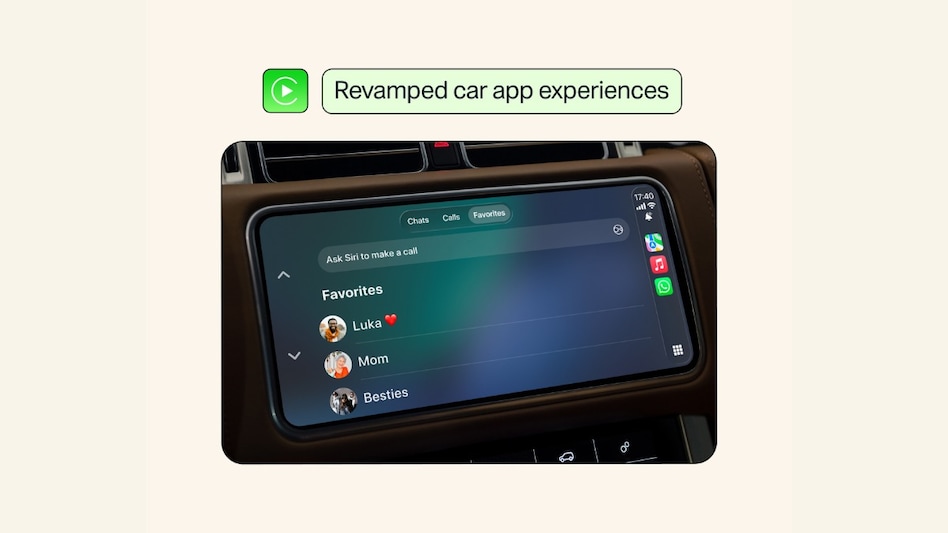
WhatsApp Unveils Major Updates for iPad and CarPlay Integration
WhatsApp is introducing a series of significant upgrades across its platforms, particularly focusing on iPad, CarPlay, a...
Business Today | Jul 23, 2026, 08:10