Okta's CEO says all AI agents need a kill switch
In a world where millions rely on Okta for secure access to applications, the rise of AI agents could soon demand similar safeguards. Todd McKinnon, the CEO of Okta, has voiced the necessity for robust security measures as organizations begin to delegate digital tasks to these advanced AI systems. During a recent interview on The Verge's "Decoder," McKinnon characterized AI agents as a new class of digital workforce capable of accessing various systems, moving data, and executing actions across an organization’s software landscape. With businesses increasingly leveraging AI to automate processes and even manage physical tasks, he emphasized the need for stringent controls. "It's essential to have a system in place to monitor them, define their roles, and establish permissions regarding what they can access and do," McKinnon stated. He underscored the importance of having a 'kill switch' mechanism that allows companies to instantly revoke access in case an AI agent behaves unexpectedly. Harish Pari, Okta’s senior vice president of AI security, echoed these concerns, warning that while AI agents can enhance productivity, they also introduce new risks. "Every organization is integrating AI agents, but their effectiveness hinges on having access to sensitive systems, which opens up potential vulnerabilities," he explained. Okta recently outlined its vision for a secure AI-driven environment in a press release titled "The Blueprint for the Secure Agentic Enterprise." The document advocates for immediate access revocation capabilities across all systems to mitigate risks. It also emphasizes the need for real-time enforcement of data-sharing permissions, human oversight for high-risk actions, and comprehensive audit logs to track agent interactions. The call for enhanced AI oversight is not unique to Okta. Earlier in 2024, California State Senator Scott Wiener introduced legislation mandating fail-safes for AI implementations, a measure that garnered support from notable figures like Elon Musk, though it was ultimately vetoed by Governor Gavin Newsom. In conclusion, McKinnon insists that as AI technology evolves, private enterprises must proactively develop their own safeguards. "Things are going to go awry, and issues will arise. We must ensure that agents cannot access sensitive data during a crisis," he warned, comparing the situation to disconnecting a malfunctioning machine from the network.
Crisis Averted: Power Line Failure Highlights Urgent Need for Data Center Resilience
A power line failure near Washington, DC, recently showcased a significant challenge faced by the electrical grid due to...
TechCrunch | Jul 25, 2026, 13:50
Navigating the Future: Are Wearable AI Gadgets Ready to Transform Our Lives?
Imagine a typical workday where you and your colleagues sport discreet recorders on your clothing, while smart glasses s...
CNN | Jul 26, 2026, 16:10
Kalshi Challenges Netflix Over Controversial Documentary Trailer
Kalshi, the prediction market platform, has taken significant legal steps against Netflix, sending a cease-and-desist le...
TechCrunch | Jul 25, 2026, 17:10
Unleashing the Power of AI: The 5 Smartphones Redefining Mobile Photography
Artificial Intelligence (AI) is transforming our daily experiences, permeating various aspects of technology, including ...
Business Today | Jul 26, 2026, 07:05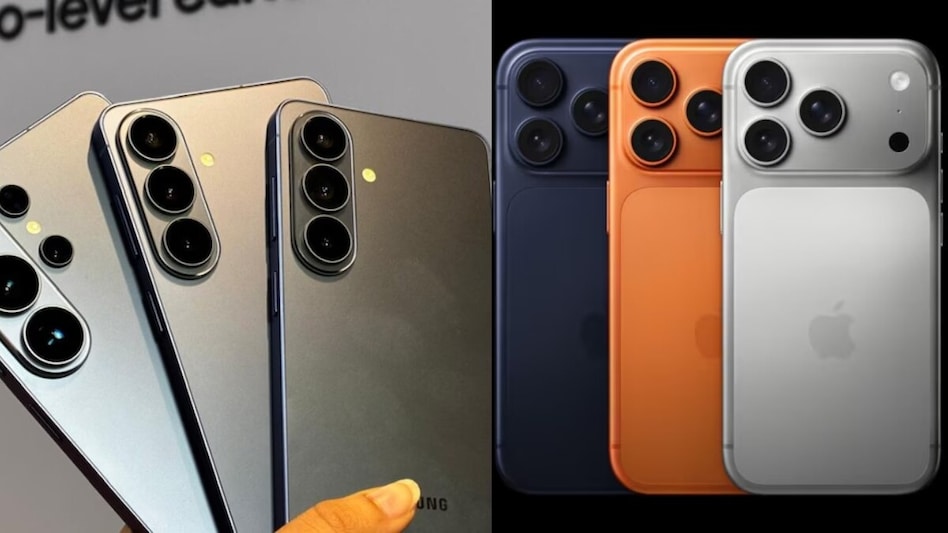
The Future of Work: Executives Weigh In on AI's Impact on Gen Z Careers
As generative artificial intelligence continues to rise, uncertainty looms for the incoming Gen Z workforce. Leaders fro...
Business Insider | Jul 26, 2026, 10:15