Nvidia's Huang pitches AI tokens on top of salary as agents reshape how humans work
In an innovative move, Nvidia CEO Jensen Huang has introduced the concept of AI tokens as an additional incentive for engineers, potentially transforming the compensation landscape in Silicon Valley. Speaking at the annual GPU Technology Conference, Huang suggested that alongside their substantial salaries, engineers could receive a budget of AI tokens, which they can utilize to enhance productivity through automation and AI tools. Huang emphasized the idea that these tokens would serve as a significant productivity enhancer, saying that engineers could potentially earn a total compensation package that includes a token budget worth half their base salary. This approach aligns with Huang's broader vision of a future workplace where engineers manage a multitude of AI agents capable of autonomously completing complex tasks with minimal oversight. As AI technology progresses, apprehensions regarding job displacement are rising. Huang pointed out that while he currently employs 42,000 individuals, he anticipates a future where hundreds of thousands of AI agents augment human workers. This perspective is echoed by Howard Marks from Oaktree Capital Management, who noted that advanced AI could perform tasks traditionally handled by humans, marking a significant shift in labor dynamics. Goldman Sachs has estimated that AI could automate around 25% of work hours in the U.S., leading to concerns about a possible 'job apocalypse.' Their projections indicate that as AI adoption increases, there could be a productivity boost of 15%, but also a displacement of 6% to 7% of jobs. Despite the challenges, Huang believes that AI agents will drive demand for software rather than diminish it. He posited that as the number of AI agents grows, so too will the need for the software and infrastructure that support them. This sentiment was shared by industry leaders who see the emergence of AI as a paradigm shift, enabling software engineers to communicate with systems in straightforward language rather than traditional programming syntax. However, the transition to a workforce integrated with AI is not without its challenges. The current job market faces a 'talent paradox' where a significant portion of executives anticipate workforce reductions due to AI, yet many also highlight a shortage of skilled workers. Amid this backdrop, entry-level positions are particularly vulnerable as the roles traditionally used for training new employees become obsolete. While the transition to an AI-integrated workforce may bring about temporary job losses, experts like Goldman Sachs' Joseph Briggs assert that new opportunities will arise, as history shows that technological advancements often lead to the creation of new jobs. Yet, integrating AI into existing business structures is fraught with difficulties, with a notable percentage of AI projects failing to meet their objectives. The industry remains optimistic, but as noted, it is crucial that the deployment of AI agents does not lead to more complications than solutions.
The Rise of AI Distillation: A Controversial Technique Sparks Debate in Tech and Government
In recent discussions, a once-obscure topic in artificial intelligence has surged to the forefront of debates among tech...
CNBC | Jul 25, 2026, 12:15
SpaceX's Latest Starlink Launch Marks Milestone Amid Booster Setbacks
On Friday, SpaceX marked a significant achievement by successfully launching its first batch of third-generation Starlin...
TechCrunch | Jul 24, 2026, 23:40
Kalshi Challenges Netflix Over Controversial Documentary Trailer
Kalshi, the prediction market platform, has taken significant legal steps against Netflix, sending a cease-and-desist le...
TechCrunch | Jul 25, 2026, 17:10
Nvidia Strikes Major Deal with SK Hynix to Secure AI Memory Supply
Nvidia has successfully forged a significant partnership with South Korea's SK Hynix to secure memory supplies essential...
CNBC | Jul 25, 2026, 05:15
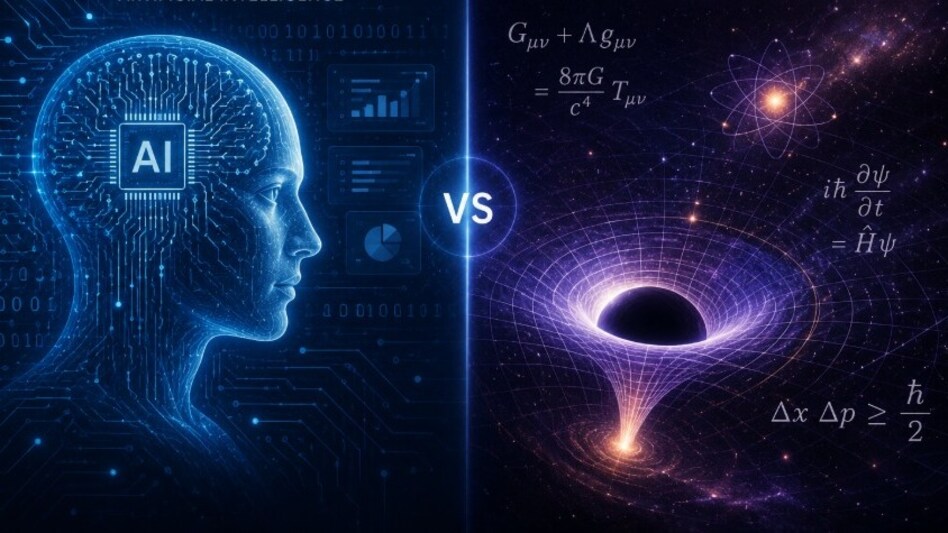
Unlocking the Secrets of Quantum Gravity: Can AI Help Physics Make a Leap?
The realm of scientific research is undergoing a profound transformation, fueled by the rapid advancements in artificial...
Business Today | Jul 25, 2026, 24:30