
Jensen Huang rejects AI bubble fears, says Nvidia sees ‘very different’
Jensen Huang, the CEO of Nvidia, has taken a firm stance against the notion of an AI bubble, presenting a compelling three-point argument to support his view. Huang asserts that the changes driven by AI extend far beyond mere chatbots, indicating a fundamental shift in the computing landscape that is fueling an unprecedented demand for GPUs. In his remarks, Huang stated, "There’s been a lot of talk about an AI bubble. From our vantage point, we see something very different." He elaborated on three critical reasons for his perspective. First, he pointed out that Moore’s Law, which posits that CPUs would continue to become faster and more affordable, has essentially plateaued. According to Huang, industries such as banking, e-commerce, and advertising are transitioning from CPU dependency to GPU utilization, thereby escalating the demand for Nvidia's chips. Second, Huang noted the evolution of modern recommendation systems. These systems, which determine the next show or ad presented to users, are increasingly leveraging generative AI technologies. This shift signifies that workloads traditionally managed by CPUs are now being offloaded to GPUs, further driving demand. Lastly, Huang highlighted the emergence of agentic AI systems like ChatGPT and others that can autonomously make decisions for users. This development is resulting in a growing need for enhanced computing power. "If you take these trends into consideration," Huang remarked, "you'll conclude that what remains to support revolutionary agentic AI is not only significantly less than anticipated, but also entirely justified." Huang's comments come amidst rising concerns within the AI sector about the potential for a bubble. Many investors are anxious as substantial investments in AI technology are not yielding immediate results. Even Google CEO Sundar Pichai has acknowledged the possibility of an AI bubble, suggesting that no company, including Google, is immune to such risks. Similarly, leaders from OpenAI and Meta have expressed their apprehensions regarding the potential parallels to the dot-com bubble of the early internet era.
Google's SynthID Triumphs in Debunking Viral Deepfake of Senator McConnell
Google's innovative SynthID technology has successfully exposed a viral deepfake image that misrepresented Kentucky Sena...
TechCrunch | Jul 08, 2026, 21:00
SpaceX Shares Struggle After Nasdaq 100 Inclusion Amid Mixed Analyst Opinions
SpaceX shares finished at $148 on Wednesday, marking a decline for the second consecutive day after debuting at $150 per...
CNBC | Jul 08, 2026, 20:15
Protect Your Instagram: How to Guard Your Posts from AI Exploitation
If your Instagram profile is set to public, your photos, including your profile picture, could be utilized in AI-generat...
Business Insider | Jul 08, 2026, 21:10Market Oversupply: Jim Cramer's Warning on the Bull Run's Future
On Wednesday, CNBC's Jim Cramer expressed significant concerns regarding the stability of the bull market, emphasizing t...
CNBC | Jul 08, 2026, 22:25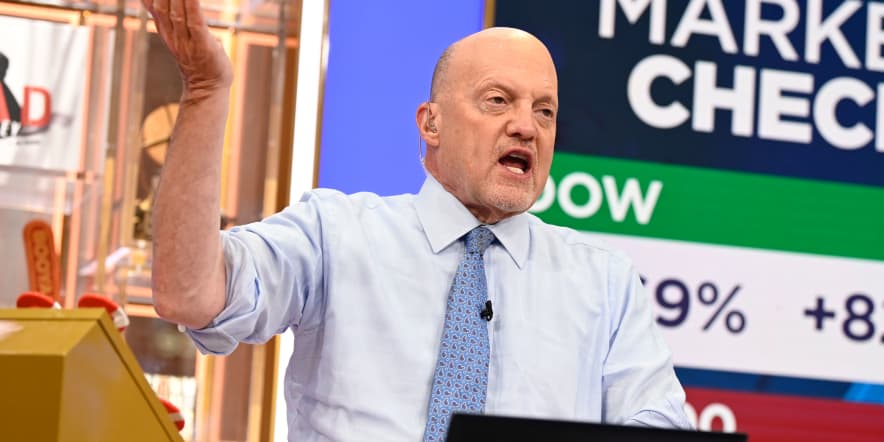
Roost: The App Bringing Back Slow Communication with a Whimsical Twist
In a digital age dominated by instant messages, Roost emerges as a refreshing alternative, inviting users to experience ...
TechCrunch | Jul 08, 2026, 19:50