
Nvidia CEO Jensen Huang says AI is in a 'virtuous cycle.' Here's what he means
At the recent APEC CEO Summit in South Korea, Nvidia's CEO Jensen Huang proclaimed that artificial intelligence has entered a 'virtuous cycle' that promises to propel the industry into a phase of sustained growth. Dressed in a suit—breaking from his signature black leather jacket—Huang explained that the exponential advancements in AI models are attracting increased investments, which, in turn, enhance the technology even further. "We have now achieved what is called the virtuous cycle," Huang stated from the stage. He elaborated on the interconnected nature of AI developments: "As AIs improve, more users engage with them. This engagement leads to higher profits, which fuels the establishment of more factories, ultimately enabling the creation of even better AIs. This cycle is why we are witnessing such rapid capital expenditures across the globe." Huang's insights come at a time when major technology companies are channeling billions into AI infrastructure. Collectively, giants like Meta, Amazon, Alphabet, and Microsoft have announced plans to invest over $300 billion in AI technologies and data center expansions this year. This trend is expected to continue, with companies planning to ramp up spending further through 2026, as indicated by their recent earnings reports. Dan Ives, global head of technology research at Wedbush Securities, echoed Huang's sentiments, labeling Nvidia as the cornerstone of the AI Revolution. He articulated the virtuous cycle of AI, noting that increased demand leads to more investment in AI infrastructure, which in turn generates even greater demand. Profitability, according to Huang, lies at the core of the current surge in AI investment. "When a technology proves profitable, the incentive to produce more of it intensifies, much like the production of chips and wafers. Profitability drives the construction of additional factories to meet growing demands," he explained. Huang also emphasized that we are on the brink of a transformative decade in computing. With AI at the forefront, he noted that every layer of the computing stack is undergoing significant evolution. He pointed out that AI relies predominantly on GPUs (graphics processing units), while traditional software relies on CPUs (central processing units). This shift is reshaping the entire software ecosystem, including energy needs, chip requirements, and infrastructure. He remarked, "For the past 60 years, the computer industry has largely remained unchanged, but with the advent of AI and accelerated computing, we are witnessing a fundamental transformation. The vast investments made in computers over the years, potentially amounting to over a trillion dollars, will now need to transition to this new computing paradigm." In a significant development, Nvidia also announced a partnership with Samsung, which is set to acquire a cluster of 50,000 Nvidia GPUs to enhance its chip production capabilities for mobile devices and robotics. Huang envisions a future where AI evolves beyond a mere tool, foreseeing a transformation of industries worth $100 trillion as fully automated manufacturing becomes a reality.
Reed Jobs Shifts Focus from Legacy to Life-Saving Innovations in Oncology
Reed Jobs is a refreshing presence in the biotechnology arena. With an engaging personality, he often uses humor and vid...
TechCrunch | Jul 12, 2026, 24:30
HDFC Bank Unleashes 'Neev': A Game-Changer in AI-Driven Banking
HDFC Bank is making a significant leap into the realm of artificial intelligence (AI) with the unveiling of 'Neev', its ...
Business Today | Jul 11, 2026, 07:30
Empowering Graduates: The Importance of Real-World Problem Solving in Education
As the job market evolves, the significance of applying academic knowledge to real-world challenges is becoming increasi...
Business Today | Jul 11, 2026, 13:00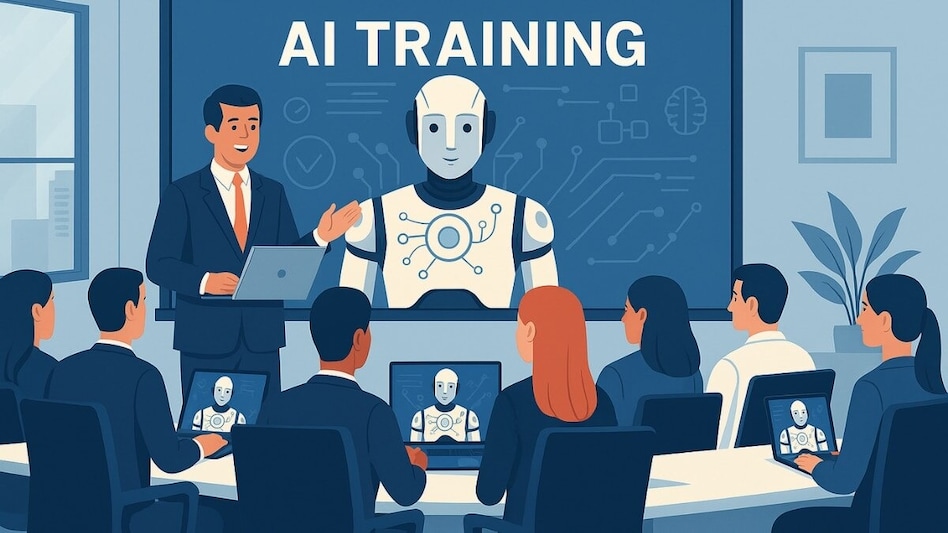
Apple Takes Legal Action Against OpenAI Over Alleged Trade Secret Infringement
Apple has initiated a lawsuit against OpenAI, claiming that the AI company unlawfully acquired confidential information ...
Business Today | Jul 11, 2026, 06:35
Meta Withdraws Controversial AI Feature Amid Privacy Concerns
Meta has officially retracted its newly launched feature that enabled users to create AI-generated images using public I...
Business Insider | Jul 11, 2026, 16:50