Nvidia details its next-generation Vera CPU for AI, in challenge to AMD and Intel
Nvidia is making headlines once again, not just as a leader in graphics processing units (GPUs) but as a contender in the central processing unit (CPU) arena. With soaring demand for its GPUs, the tech giant has now set its sights on capturing a share of the CPU market, challenging established players like AMD and Intel. On Tuesday, Nvidia revealed new details about its Vera CPU, which is designed specifically for data centers. This release provides prospective clients, including major names like OpenAI, Anthropic, and SpaceX, with essential specifications and benchmarks needed for evaluation. The company began shipping Vera chips to these customers back in June, marking a significant development in the competitive landscape of AI servers. Nvidia's move into CPU manufacturing is a strategic effort to vertically integrate its offerings and enhance system performance by controlling more of the technology stack. Instead of merely selling chips, Nvidia aims to provide entire systems that deliver robust computing power, ensuring that its products remain the preferred choice for leading AI research facilities as competition intensifies. Historically, the CPU was the cornerstone of server architecture, but the rise of AI has shifted that focus. Initially, AI servers paired numerous GPUs with a single CPU, but the emergence of independent AI agents has rekindled interest in the CPU's role in managing and processing data efficiently. Financial analysts have taken note, with AMD and Intel among the top-performing chip stocks, showing increases of 128% and 149% respectively in 2026. Ian Buck, Nvidia’s vice president of hyperscale, emphasized the importance of CPU performance in AI applications, stating that it is crucial for responding swiftly to queries. Nvidia estimates that the overall server CPU market could reach a value of $200 billion, with current forecasts suggesting a more mature market worth about $37 billion by 2025. AMD currently leads the enterprise AI server CPU market with a 33% share, while Intel holds 66.8%. However, AMD's strong ecosystem and partnerships with hyperscalers give it a competitive edge. Nvidia's Vera CPU, touted as the first designed in-house, promises to address existing bottlenecks in AI processes, boasting 50% better performance for AI tasks compared to traditional x86 chips made by Intel and AMD. The Vera CPU focuses on maximizing per-core speed, high memory bandwidth, and low latency, enabling efficient communication with GPUs. Nvidia plans to offer the chip independently as well as in configurations that pair it with their GPUs, including a liquid-cooled rack system. Despite the excitement surrounding the Vera CPU, analysts caution that convincing cloud providers to adopt this new technology may pose challenges. While some partnerships have been established, major players have not yet fully committed. OpenAI, however, has indicated plans to deploy Vera chips in significant numbers soon. As the landscape of AI computing continues to evolve, Nvidia’s bold entry into the CPU market could redefine the sector and set new standards for performance.
Trump Backs Jensen Huang's Comeback at Nvidia, Dismisses National Security Concerns
On Monday, President Trump expressed his support for Nvidia's decision to bring back founder Jensen Huang as CEO and pre...
TechCrunch | Nov 23, 2026, 15:35
NVIDIA Welcomes Back Jensen Huang as CEO Amidst National Security Review
In a significant leadership move, NVIDIA has reinstated Jensen Huang as President and CEO, effective immediately. This d...
Business Today | Nov 23, 2026, 14:25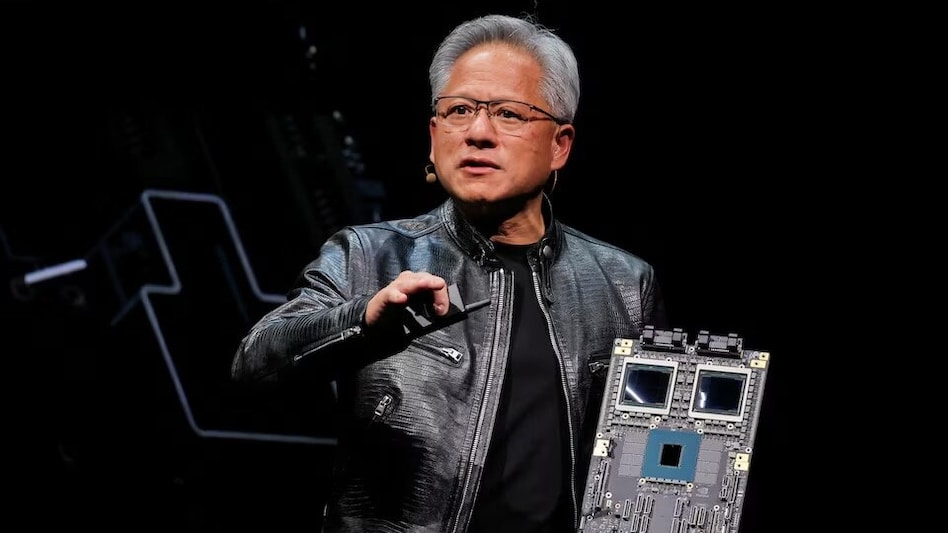
Jensen Huang's Stunning Return as CEO Marks a New Chapter for Nvidia
In a remarkable turn of events, Nvidia's board announced on Monday the reinstatement of Jensen Huang as CEO and presiden...
TechCrunch | Nov 23, 2026, 14:50
Uber Unveils New 'Record My Ride' Feature for Enhanced Safety
Uber is launching a groundbreaking feature in the United States that allows riders to book journeys with automatic ride ...
TechCrunch | Nov 23, 2026, 14:20
Cyber Alert: I4C Warns WhatsApp Users About Leaving Web Sessions Active
The Indian Cyber Crime Coordination Centre (I4C) has issued a critical warning to WhatsApp users regarding the potential...
Business Today | Nov 23, 2026, 11:40