
Nvidia launches 'Earth-2' AI models for weather forecasting, to be '1000 times' faster than traditional means
In a groundbreaking advancement for meteorological technology, Nvidia has introduced a new collection of open-source artificial intelligence models aimed at transforming the landscape of weather forecasting. This unveiling took place on January 26 during the American Meteorological Society’s annual conference in Houston, where the 'Earth-2' suite was presented as a faster, more economical, and precise alternative to traditional forecasting methods. Historically, weather prediction has depended on enormous supercomputers executing intricate physics calculations, a process that is both lengthy and costly for many nations. The innovative Earth-2 models, however, utilize graphics processing units (GPUs) to expedite the entire forecasting process. Nvidia asserts that this AI-driven strategy can slash computational time from hours to mere seconds. The suite features several specialized tools. For instance, Earth-2 Medium Range harnesses the power of the new 'Atlas' architecture to deliver global forecasts up to 15 days ahead, covering 70 different variables such as wind speed, temperature, and humidity. Meanwhile, Earth-2 Nowcasting employs generative AI to forecast local storm activity with remarkable precision, offering predictions at a kilometer-scale resolution within a six-hour timeframe. This capability is crucial for emergency responders and insurance companies, who rely on swift data to minimize the impact of severe weather events. Mike Pritchard, Nvidia's director of climate simulation research and a professor at the University of California, Irvine, emphasized the efficiency of the new AI models, stating that once trained, they operate at speeds that are "1,000 times faster" than traditional techniques. This remarkable speed enables organizations to conduct extensive simulations, allowing them to identify unusual weather risks that were previously too expensive to monitor. The models are available as open-source resources through platforms like GitHub and Hugging Face, encouraging countries to maintain control over their climate data using local infrastructure. Early users, including the Israel Meteorological Service and various energy companies, report experiencing up to a 90% reduction in computing expenses as a result of adopting these innovative technologies.
Unlocking the Secrets of Quantum Gravity: Can AI Help Physics Make a Leap?
The realm of scientific research is undergoing a profound transformation, fueled by the rapid advancements in artificial...
Business Today | Jul 25, 2026, 24:30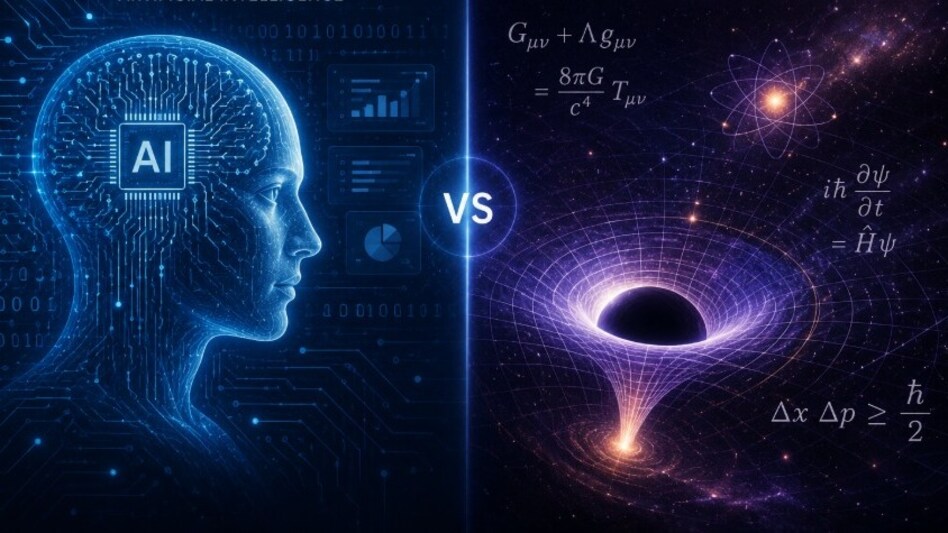
Market Turbulence: Four Key Factors Impacting Stocks This Week
This past week has been challenging for the stock market, driven by several significant forces that have created turbule...
CNBC | Jul 25, 2026, 20:05
Shifting Focus: The Cost-Effectiveness of AI Models Takes Center Stage
In recent years, the AI sector has been intensely focused on identifying the most advanced models. While this pursuit re...
Business Insider | Jul 25, 2026, 13:10AI Transformations Lead to Major Job Cuts at Tech Giants
Monday.com, the innovative work management platform based in Tel Aviv, has recently announced significant layoffs, attri...
TechCrunch | Jul 26, 2026, 01:45
OpenAI's Micro Keypad: A Novelty for Coders or Just a Confounding Gadget?
Last week, OpenAI made its debut in the hardware landscape with the launch of Micro, a stylish keypad designed to integr...
TechCrunch | Jul 25, 2026, 24:40