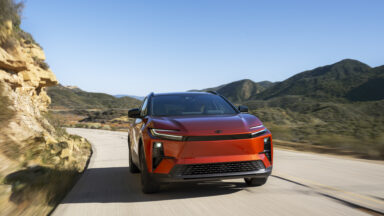
Nvidia announces new open AI models and tools for autonomous driving research
In a significant announcement made during the NeurIPS AI conference in San Diego, Nvidia has introduced innovative infrastructure and AI models aimed at enhancing the technology behind physical AI, particularly for robots and self-driving cars. Among these advancements is the Alpamayo-R1, heralded as a pioneering open reasoning vision language model tailored for autonomous driving research. This model stands out as the first of its kind that integrates vision and language processing specifically for autonomous vehicles. By enabling cars to interpret both text and images, the Alpamayo-R1 empowers vehicles to effectively 'see' their environment and make informed decisions based on visual cues. Built upon Nvidia's existing Cosmos Reason model, Alpamayo-R1 enhances the decision-making capabilities of autonomous vehicles, ensuring they can navigate complex driving scenarios with a level of 'common sense' akin to human drivers. Nvidia highlighted that the development of such technology is crucial for achieving Level 4 autonomy, which allows vehicles to operate independently within defined areas and under specific conditions. The Alpamayo-R1 model is now accessible through platforms like GitHub and Hugging Face, inviting developers to explore its capabilities. In addition to the model itself, Nvidia has released a comprehensive suite of resources known as the Cosmos Cookbook. This collection includes step-by-step guides and inference tools designed to assist developers in effectively utilizing and training Cosmos models for various applications. The Cookbook covers essential topics such as data curation, synthetic data generation, and model evaluation, providing valuable support for those venturing into autonomous driving projects. With these developments, Nvidia is not just reinforcing its position in the AI industry but also setting a course toward the next frontier: physical AI. CEO Jensen Huang has emphasized that the future of AI lies in its physical manifestations, a sentiment echoed by chief scientist Bill Dally, who envisions robots playing a pivotal role in the world. Dally noted, 'To do that, we need to start developing the key technologies,' underscoring Nvidia's commitment to leading innovation in robotics and autonomous systems.
Flipkart Accelerates Quick-Commerce Expansion Amidst Rising Competition from Amazon in India
In a move signaling the intense competition in India's e-commerce landscape, Flipkart, backed by Walmart, announced a si...
TechCrunch | Jun 24, 2026, 24:50
SpaceX Secures $25 Billion in Debt to Fuel Ambitious Projects
In a remarkable financial maneuver, SpaceX has successfully secured $25 billion through a debt sale, just under two week...
CNBC | Jun 23, 2026, 19:25
Cerebras Soars with Impressive Revenue Surge Following IPO
Cerebras has reported a remarkable 92% increase in revenue during its first earnings call since going public last month....
CNBC | Jun 23, 2026, 21:05
Alphabet Joins Dow Jones Industrial Average, Ushering in a New Era for Tech
In a significant shift for the Dow Jones Industrial Average, Alphabet Inc. is set to replace Verizon, as announced by S&...
CNBC | Jun 23, 2026, 21:35
Toyota's C-HR: A Bold Yet Polarizing Small SUV in the EV Landscape
In recent months, Toyota has ramped up its efforts in the North American electric vehicle market, debuting a series of n...
Ars Technica | Jun 23, 2026, 18:20