Nvidia launches powerful new Rubin chip architecture
At the Consumer Electronics Show, Nvidia's CEO Jensen Huang announced the launch of the company's latest Rubin computing architecture, heralded as a breakthrough in artificial intelligence hardware. This advanced architecture is currently in production and is expected to ramp up significantly later this year. Huang emphasized the critical need for more computational power, stating, "The amount of computation necessary for AI is skyrocketing," and assured attendees that Rubin is now fully in production. Initially revealed in 2024, the Rubin architecture signifies Nvidia’s ongoing commitment to hardware innovation, reinforcing its position as the world's most valuable corporation. Replacing the previous Blackwell architecture, which itself succeeded Hopper and Lovelace, the Rubin architecture is set to be utilized by prominent cloud service providers. Major partnerships with industry leaders such as Anthropic, OpenAI, and Amazon Web Services will see Rubin chips powering their infrastructures. Additionally, the architecture will contribute to the HPE Blue Lion supercomputer and the upcoming Doudna supercomputer at Lawrence Berkeley National Lab. Named after the renowned astronomer Vera Florence Cooper Rubin, this architecture comprises six integrated chips working together seamlessly. The centerpiece is the Rubin GPU, complemented by enhancements in storage and interconnection via the new Bluefield and NVLink systems. A notable aspect of the architecture is the introduction of the Vera CPU, tailored for agentic reasoning tasks. Dion Harris, Nvidia’s senior director of AI infrastructure solutions, highlighted the innovative storage capabilities designed to meet the increasing memory demands of contemporary AI workflows. He mentioned, "As you start to enable new types of workflows, like agentic AI or long-term tasks, that puts a lot of stress and requirements on your KV cache." The new tier of storage allows for more efficient scaling of storage pools, connecting externally to the compute device. The Rubin architecture also boasts remarkable advancements in speed and energy efficiency. Nvidia’s evaluations indicate that it will outperform the Blackwell architecture by three and a half times in model-training tasks and achieve five times the speed in inference tasks, reaching an impressive 50 petaflops. Furthermore, it will provide eight times more inference compute per watt. Amid fierce competition in the AI infrastructure sector, Huang projected that spending on AI infrastructure could reach between $3 trillion and $4 trillion over the next five years.
OpenAI's Micro Keypad: A Novelty for Coders or Just a Confounding Gadget?
Last week, OpenAI made its debut in the hardware landscape with the launch of Micro, a stylish keypad designed to integr...
TechCrunch | Jul 25, 2026, 24:40
Vision Breakthrough: US Startup Launches Groundbreaking Retina Chip in Europe
Science Corp is poised to introduce a revolutionary retina chip in Europe, designed to restore partial vision for indivi...
Business Today | Jul 25, 2026, 01:00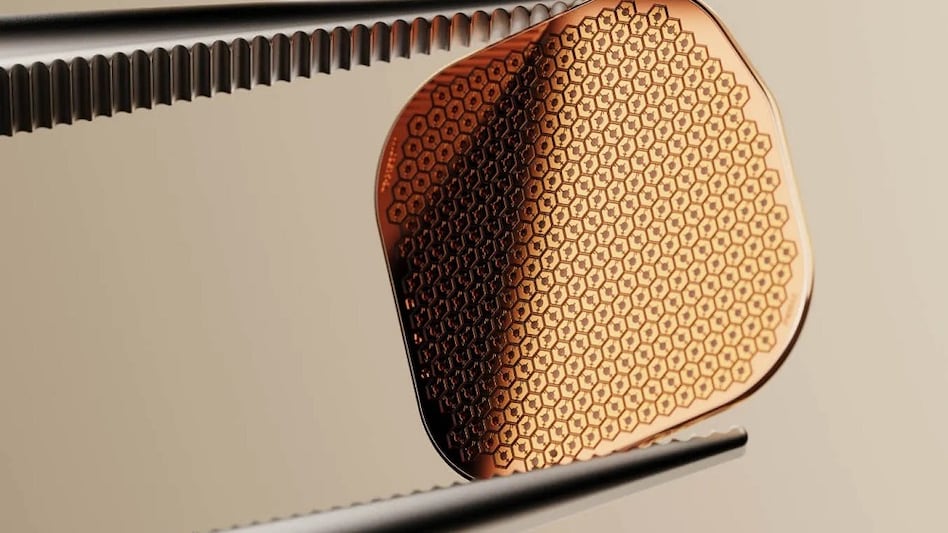
SpaceX Successfully Tests Starship Rocket, Launching New Era of Space Exploration
On Friday evening, SpaceX executed a significant milestone by launching its colossal Starship rocket from its facility i...
CNBC | Jul 25, 2026, 24:10
The Boring Company Eyes $4 Billion Funding Boost Amid Expanding Tunnel Ventures
Elon Musk's tunneling enterprise, The Boring Company, is reportedly negotiating a substantial funding round of $4 billio...
TechCrunch | Jul 25, 2026, 19:50
Unlocking the Secrets of Quantum Gravity: Can AI Help Physics Make a Leap?
The realm of scientific research is undergoing a profound transformation, fueled by the rapid advancements in artificial...
Business Today | Jul 25, 2026, 24:30