Can Nvidia survive without Jensen Huang? Bernstein flags major succession risk amid China spy controversy
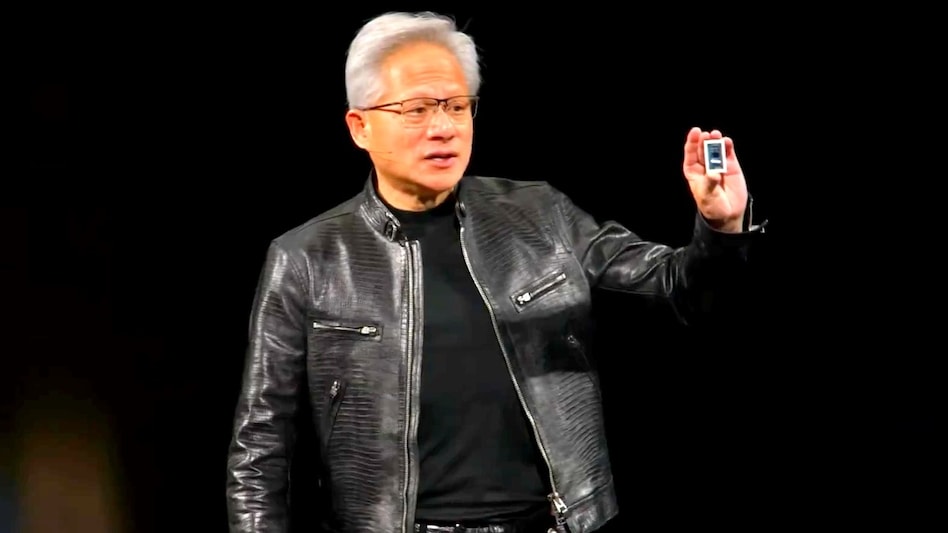
Nvidia, a leading player in the artificial intelligence chip industry, may be confronting a significant risk beyond its technological prowess: the potential absence of its CEO, Jensen Huang. As Huang deals with scrutiny related to a personal relationship with a woman alleged to have connections to Chinese intelligence, analysts are questioning the company's future without its visionary leader. In a recent report from Bernstein, analyst Stacy Rasgon highlighted the critical nature of this situation, emphasizing that Nvidia's dependency on Huang creates a notable leadership risk. "The recent revelations underscore the key man risk that Nvidia faces," Rasgon stated, raising alarms about the company's concentrated leadership structure. Huang has been instrumental in Nvidia's evolution from a graphics processor company into a powerhouse driving the AI revolution over the last thirty years. Bernstein asserts that his role is far from typical; he not only sets the company’s strategic vision but also manages an unusually high number of direct reports, leaving uncertainty around potential successors if he were to step down. The controversy intensified following allegations regarding Huang's relationship with Alice Huang, an executive linked to Megaspeed International, a significant buyer of Nvidia's AI chips. Although Huang publicly acknowledged an extramarital affair, he has not confirmed the identity of the individual involved. The claims about Alice Huang's ties to Chinese intelligence remain unverified, prompting Nvidia's board to initiate an independent inquiry into the situation, despite their assertion that there is no indication of compromised national security or trade secrets. As political scrutiny builds, with Republican leaders seeking a briefing with Huang, the implications of his potential departure could resonate throughout the AI industry. Huang's connections across various sectors—including cloud computing, semiconductor manufacturing, and governmental relations—are critical components of Nvidia's strategy and growth. Bernstein suggested that should Huang leave, it could provide an opening for competitors, particularly in China, while maintaining that demand for Nvidia’s offerings is expected to remain stable. Despite this unrest, Bernstein has kept its Outperform rating and $400 price target, indicating potential growth from Nvidia’s recent stock price. As investors await the results of the investigation and the company’s response to succession planning, the larger question looms: How can Nvidia secure its future and technological edge without relying heavily on one individual? The stakes are high for the company at the forefront of America’s AI ambitions.
Nvidia's Leadership Shakeup: CFO Excluded from CEO Reinstatement Talks
Nvidia's chief financial officer, Colette Kress, who had a brief stint as interim CEO, was reportedly not included in se...
Business Today | Nov 24, 2026, 15:15
Investing in the Future: Solar and Battery Solutions for AI Data Centers
The challenge of powering AI data centers has emerged as a pivotal issue in the current technological landscape. Over th...
TechCrunch | Nov 24, 2026, 16:25
Pinterest Empowers Parents with New Controls Over AI Content for Teens
This week, Pinterest unveiled an enhancement to its parental controls, introducing a feature that allows parents to regu...
TechCrunch | Nov 24, 2026, 16:25
Revolutionizing Cybersecurity: AI's Role in Modern Threat Detection and Defense
As businesses increasingly embrace digital transformation and artificial intelligence, the complexity of cybersecurity t...
Business Today | Nov 24, 2026, 08:30
Supertake Secures $20 Million to Revolutionize AI-Driven Investment Portfolios
Supertake, an innovative AI investing startup, is on a mission to transform how individuals engage with the stock market...
TechCrunch | Nov 23, 2026, 22:10