
Competition heats up to challenge Nvidias AI chip dominance
The surge of interest in artificial intelligence (AI) has sparked a fierce competition among Nvidia's rivals, all eager to challenge the chip manufacturer's stronghold in this burgeoning sector. Once relatively obscure, Nvidia has transformed into a leader in the industry, achieving the highest revenue globally, largely due to its graphics processing units (GPUs). These powerful processors are essential for developing technologies like ChatGPT among others. Nvidia's dominance stems from its specialization in GPUs, which began in the late 1990s alongside the rise of cloud computing. This has given the company a wealth of experience that is hard to replicate. Dylan Patel of SemiAnalysis referred to Nvidia as a "three-headed dragon" on the "No Priors" podcast, noting that the company not only designs chips but also provides comprehensive infrastructure, including networking and software, to ensure these chips operate effectively. Jon Peddie from Jon Peddie Research emphasized that Nvidia is capable of meeting diverse needs within data centers with its top-tier products. While Nvidia's market share hovers around 80%, its closest competitor has been AMD, which primarily relies on CPU sales for its revenue. Peddie points out that AMD's focus on its lucrative CPU business limits its ability to invest in GPU development. In an effort to reduce their reliance on Nvidia, major cloud service providers like Google and Amazon have begun creating their own processors. Google has been utilizing its Tensor Processing Unit (TPU) for nearly a decade, and Amazon Web Services introduced its Trainium processor in 2020. Currently, these tech giants collectively capture more than 10% of the market, surpassing AMD in crucial areas like performance and reliability. On the global stage, China stands as the only nation capable of rivaling the United States in AI chip development. However, it faces challenges due to restrictions on access to advanced US chips. Huawei has emerged as a notable competitor, alongside companies like Google and Amazon, while Chinese tech giants Baidu and Alibaba are also developing their AI processors, albeit still reliant on Nvidia's technology as a benchmark. Peddie notes that while they currently cannot keep pace with Nvidia's technical capabilities using local manufacturing, China's vast and skilled workforce, along with substantial investment, positions it to potentially enhance its fabrication systems over time. Despite these emerging threats, experts agree that Nvidia's leadership in the AI chip market remains unchallenged for the foreseeable future. Analyst John Belton from Gabelli Funds remarked that Nvidia is foundational to most AI applications today. The company continues to innovate, with plans to roll out its next-generation chip, Rubin, by late 2026, projected to deliver performance that is 7.5 times greater than its current leading model, Blackwell. The relentless pace of Nvidia's product releases presents a formidable challenge for its competitors to keep up.
Investors React as AI Investment Woes Weigh on Tesla and Alphabet Shares
Shares of both Alphabet and Tesla experienced significant declines in premarket trading on Thursday, driven by concerns ...
CNBC | Jul 23, 2026, 08:35
AI Skills Outshine Experience in India's Tech Job Market
In a significant shift within India's technology job market, specialized artificial intelligence (AI) skills are increas...
Business Today | Jul 23, 2026, 04:00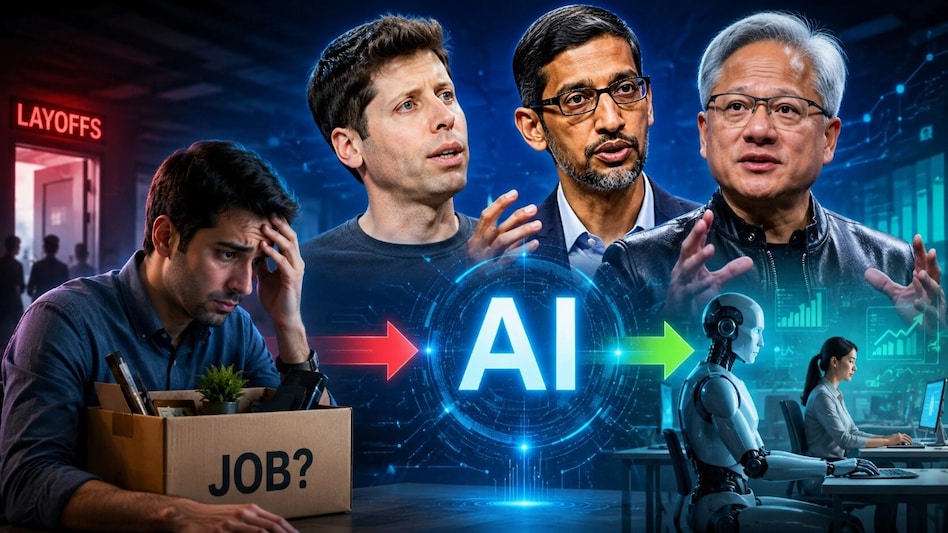
iPhone 17 Series Price Surge Expected in India: Up to ₹12,000 Increase
Apple is reportedly planning to raise prices for the iPhone 17 series in India, mirroring recent price hikes in Japan. S...
Business Today | Jul 23, 2026, 10:10
Silicon Valley's Startup Leaders Rally Against Potential Ban on Chinese AI Models
Nearly 200 companies from Silicon Valley, including prominent names like Proton and Y Combinator, are appealing to the T...
Business Insider | Jul 22, 2026, 23:25Elon Musk Urges Tesla to Ramp Up AI Investments Despite Potential Waste
In a bold move, Elon Musk has emphasized the need for Tesla to significantly increase its spending on artificial intelli...
Business Insider | Jul 23, 2026, 11:05