Nvidia staffer called Microsoft's cooling system for Blackwell GPUs 'wasteful,' internal email shows
In a recent internal communication, an Nvidia employee raised concerns about the cooling system utilized by Microsoft for its new Blackwell GPU installation. This exchange took place as Nvidia rolled out its cutting-edge GB200 Blackwell architecture within Microsoft's data centers, responding to the escalating demand for computing power needed to support AI model training and operations. The Blackwell architecture, unveiled in March 2024, boasts performance capabilities approximately double that of its predecessor, Hopper, as stated by Nvidia CEO Jensen Huang during the launch. The email, originating from a member of Nvidia's Infrastructure Specialists (NVIS) team, detailed the installation of two GB200 NVL72 racks, each integrating 72 Nvidia GPUs. Given the substantial heat produced by these closely packed GPUs, liquid cooling technology was implemented. However, the Nvidia employee described Microsoft's cooling methodology as seemingly 'wasteful' due to its reliance on a less efficient cooling approach that lacked significant water usage. Despite this criticism, the memo acknowledged that the system allowed for greater flexibility and fault tolerance. This perspective was further contextualized by Shaolei Ren, an associate professor of electrical and computer engineering at the University of California, who explained that many data centers deploy a secondary air-cooling system to manage overall heat expulsion. Ren noted that while air cooling is often more energy-intensive, it addresses public concerns about water consumption—an issue that is becoming increasingly prominent as the demand for data center resources grows. Microsoft has stressed its commitment to sustainability, aiming to achieve a carbon-negative, water-positive, and zero-waste status by 2030. The company has also announced plans for a zero-water cooling design for future data centers, as well as innovations in on-chip cooling technology. The internal email also highlighted some challenges faced during the Blackwell hardware installation, a typical occurrence during the initial phase of new technology deployments. The staffer indicated that significant time was dedicated to creating validation processes and ensuring that the steps were comprehensible to those unfamiliar with cluster and system validation practices. Furthermore, the transition process between Nvidia and Microsoft required more solidification than previous deployments. Despite these challenges, the memo indicated that the quality of Blackwell's production hardware had improved compared to earlier testing samples, with both racks achieving a 100% pass rate in specific compute performance assessments. An Nvidia spokesperson reinforced the capabilities of the Blackwell systems, asserting that they deliver exceptional performance, reliability, and energy efficiency across diverse computing applications, with numerous systems already deployed by clients like Microsoft to meet rising global AI demands.
Reclaiming Control: Librarians Host Workshops to Help People Navigate AI Tools
In a lively library setting in South Philadelphia, Charlie Bailey, a local librarian, humorously noted, "Everybody’s on ...
TechCrunch | Jul 25, 2026, 16:20
The Shift in Human Cognition: Embracing AI as a Collaborative Tool
As technology continues to evolve, a notable shift is occurring in the relationship between humans and artificial intell...
Business Insider | Jul 25, 2026, 09:50Crisis Averted: Power Line Failure Highlights Urgent Need for Data Center Resilience
A power line failure near Washington, DC, recently showcased a significant challenge faced by the electrical grid due to...
TechCrunch | Jul 25, 2026, 13:50
Vision Breakthrough: US Startup Launches Groundbreaking Retina Chip in Europe
Science Corp is poised to introduce a revolutionary retina chip in Europe, designed to restore partial vision for indivi...
Business Today | Jul 25, 2026, 01:00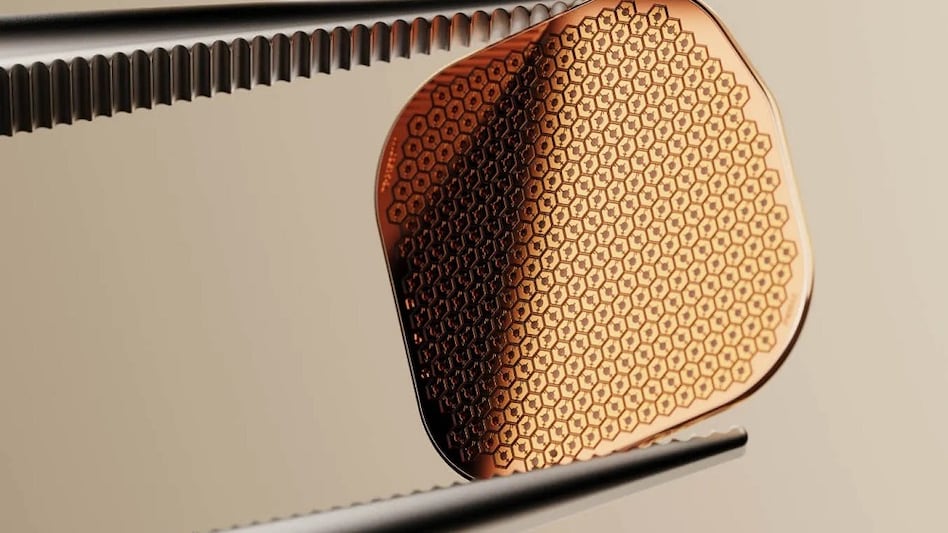
SpaceX's Latest Starlink Launch Marks Milestone Amid Booster Setbacks
On Friday, SpaceX marked a significant achievement by successfully launching its first batch of third-generation Starlin...
TechCrunch | Jul 24, 2026, 23:40