Nvidia AI chips worth $1B smuggled to China after Trump export controls
In a surprising turn of events, over $1 billion worth of Nvidia's advanced AI processors were reportedly shipped to China in the three months following the imposition of tighter export controls by the Trump administration. This situation highlights the challenges faced by U.S. authorities in curbing Beijing's high-tech aspirations. An analysis conducted by the Financial Times, which examined numerous sales contracts and spoke with individuals familiar with the transactions, reveals that Nvidia's B200 chip has become a highly sought-after item in a burgeoning black market for American semiconductors in China. This processor is crucial for major U.S. companies like OpenAI, Google, and Meta, which utilize it to enhance their AI systems, despite it being prohibited for sale to Chinese entities. Following the tightening of regulations, several Chinese distributors began offering B200s to data center suppliers servicing AI companies in China. This activity came shortly after the Trump administration restricted the sale of the H20 chip, a less powerful Nvidia product designed to meet the new compliance standards set by the Biden administration. Legal experts have clarified that while it is permissible for Chinese firms to receive and sell restricted Nvidia chips, they must pay the appropriate tariffs. However, the act of selling these chips from the U.S. to China contravenes U.S. regulations. Recently, Nvidia’s CEO, Jensen Huang, announced a potential revival of sales for the China-specific H20 chip, indicating shifts in the regulatory landscape. In the months leading up to this announcement, Chinese distributors operating from provinces such as Guangdong, Zhejiang, and Anhui managed to sell Nvidia's B200 chips and other restricted processors, including the H100 and H200. The total sales during this time frame are estimated to exceed $1 billion. Despite these developments, Nvidia has maintained that there is no evidence of any diversion of their AI chips and asserts that they are not complicit in the sale of their restricted products to China.
Navigating the New AI Landscape: Satya Nadella's Insights on Knowledge Ownership
In a thought-provoking discussion, Satya Nadella, Chairman and CEO of Microsoft, has ignited a crucial debate surroundin...
Business Today | Jul 12, 2026, 16:45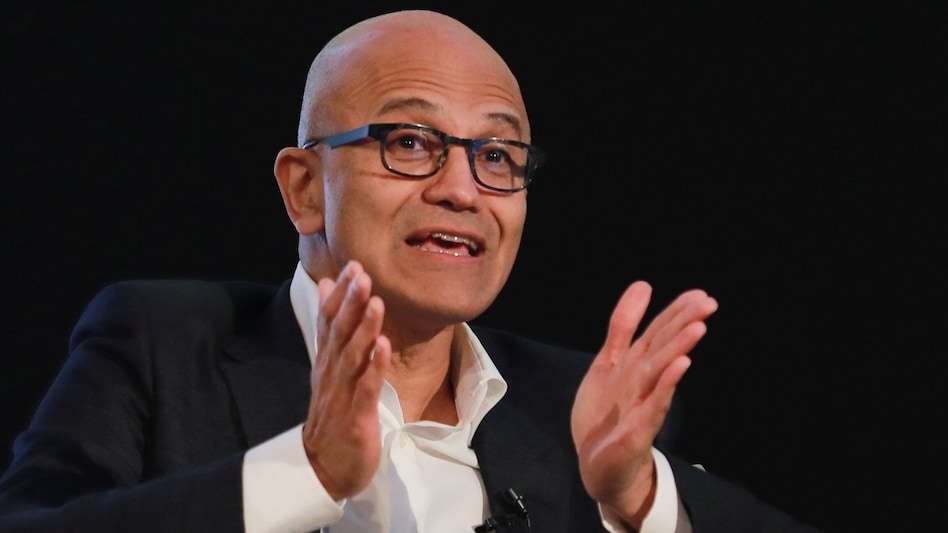
From Silicon Valley to Buenos Aires: A Startup Founder’s Journey to Family Life
Koby Conrad, the 32-year-old founder of Sunflower, an innovative AI tool designed to support sobriety, has made a life-c...
Business Insider | Jul 12, 2026, 08:55Nadella Challenges AI Labs on Data Usage and Model Training Ethics
In a recent post, Microsoft’s CEO Satya Nadella subtly criticized AI labs, particularly targeting firms like Anthropic, ...
Business Insider | Jul 13, 2026, 05:00AI Demand Surges Amid Market Volatility: Experts Weigh In
The semiconductor market has experienced a remarkable surge over the past year, fueled by optimistic investments in AI i...
CNBC | Jul 12, 2026, 05:15
Elon Musk and Sam Altman: The Ongoing Rivalry Intensifies Over AI Claims
In a renewed clash between tech titans, OpenAI CEO Sam Altman has claimed that the latest version of ChatGPT, 5.6, is th...
Business Insider | Jul 12, 2026, 22:15