Nothing Phone (3) review
Under the leadership of Carl Pei, the electronics startup Nothing has launched its most ambitious offering yet, the Phone (3), which is priced at $799. This device aims to carve out a competitive niche alongside established giants like Samsung and Apple. Unlike Pei's previous venture, OnePlus, which emphasized value-for-money, Nothing focuses on innovative design and software to distinguish itself in the crowded smartphone market. The Phone (3) retains the brand's signature transparent aesthetic but has sparked mixed reactions due to its unique design. The back features an asymmetric layout, including an unconventional camera module that some users find appealing while others criticize it. One notable change is the removal of the popular glyph LED arrangement from earlier models, which allowed for customizable notifications. Instead, it introduces the Glyph Matrix—a circular secondary display at the top right, meant to provide quick information like time and battery life. However, it raises questions about its practicality, as users still need to activate their phone to read incoming messages. Powering the Phone (3) is the Snapdragon 8s Gen 4 processor, built on a 4-nanometer architecture. While this is slightly less advanced than the Snapdragon 8 Elite found in top-tier devices, it performs adequately for everyday tasks. The phone boasts a 6.67-inch AMOLED display with a vibrant 1.5K resolution, although it lacks HDR support for Netflix, which could limit its appeal to media consumers. Photography capabilities are a focal point, featuring three 50-megapixel cameras: a main lens with a larger sensor, a periscope telephoto lens offering impressive zoom capabilities, and an ultra-wide lens. Despite these specifications, early reviews highlight concerns over color accuracy and performance in challenging lighting conditions, which may hinder its standing among flagship competitors. With a robust 5150mAh battery, the Phone (3) promises a full day of use under normal conditions and supports fast wired and wireless charging. Notably, it introduces the Essential Key, which integrates various features like a note-taking app and AI-powered search functionality, although users may find some limitations in accessing their saved data. Pei emphasizes that the company’s goal is to harness AI technology to enhance user experience rather than simply adding AI gimmicks. While the ambition to create genuinely useful AI features is commendable, the competition is fierce, with many brands incorporating similar technologies. Available directly through its website and Amazon in the U.S., the Phone (3) is positioned as a compelling alternative for those seeking an unlocked device. However, initial social media reactions suggest that the pricing may pose challenges in attracting consumers, especially in key markets like India, where it competes head-to-head with other flagship models. As the market watches closely, the Phone (3) stands as a bold statement from Nothing, but its success will depend on how well it resonates with consumers looking for alternatives to established brands.
Tech Titans Set to Invest $5.3 Trillion in AI by 2030, Outpacing Major Economies
Major technology companies are on track to invest staggering amounts in artificial intelligence (AI), with projections i...
Business Today | Jun 04, 2026, 09:50
Market Shifts and SpaceX's Bold IPO: Key Insights for Investors
In a significant update for investors, the latest newsletter highlights several crucial developments impacting the marke...
CNBC | Jun 04, 2026, 12:15
Walmart's Code Puppy: A Game-Changer in AI Flexibility and Cost Control
In an era where companies are increasingly concerned about becoming overly dependent on a few dominant AI providers, Wal...
Business Insider | Jun 04, 2026, 09:05Byju Raveendran's Influence Diminishes Amid Byju's Insolvency Crisis
As Byju's corporate insolvency resolution process (CIRP) reaches a pivotal moment, the future of India's once-celebrated...
Business Today | Jun 04, 2026, 13:05
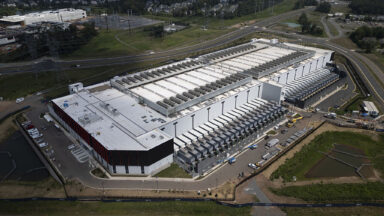
Tech Giants Confront Water Scarcity Challenges in Data Center Operations
On Monday, SpaceX updated its initial public offering, highlighting concerns that water availability—affected by scarcit...
Ars Technica | Jun 04, 2026, 14:20