
As data from space spikes, an innovative ground station company seeks to cash in
Northwood Space, a company poised to transform the reception and transmission of satellite data, has garnered significant funding and secured key partnerships. On Tuesday, the firm announced it successfully completed a $100 million Series B funding round aimed at accelerating the deployment of its innovative phased-array radar system, named Portal. In addition to the funding, Northwood has landed a substantial contract worth $49.8 million with the US Space Force. This contract is intended to enhance the Satellite Control Network, which is crucial for providing telemetry and tracking services for military satellites. "Our previous funding announcement was in April 2025, and it’s been less than a year since then. However, we’ve made considerable strides at Northwood, highlighting the critical role of ground systems in enabling more advanced missions on tighter schedules," stated Bridgit Mendler, co-founder and CEO of Northwood, during a recent media session. "We are committed to developing capabilities in space at an accelerated pace, and we believe that achieving this requires a vertically integrated ground network." This funding marks a pivotal moment for Northwood, which emerged from stealth mode in February 2024. The company was established to address the growing bottleneck in commercial ground stations, which are struggling to handle the increasing volume of data from satellites. Northwood, alongside its investors, recognizes that many existing ground stations, some of which were installed over a decade ago, are ill-equipped to keep pace with the influx of new satellites. In June, Northwood showcased its advanced phased-array antenna, Portal, which differs from traditional parabolic dish antennas by allowing the collection of signals without needing to point directly at the target. This technology enables the antenna to direct beams of radio waves in various directions simultaneously, facilitating communication with multiple satellites across different orbits at once.
OpenAI's Micro Keypad: A Novelty for Coders or Just a Confounding Gadget?
Last week, OpenAI made its debut in the hardware landscape with the launch of Micro, a stylish keypad designed to integr...
TechCrunch | Jul 25, 2026, 24:40
Market Turbulence: Four Key Factors Impacting Stocks This Week
This past week has been challenging for the stock market, driven by several significant forces that have created turbule...
CNBC | Jul 25, 2026, 20:05
The Shift in Human Cognition: Embracing AI as a Collaborative Tool
As technology continues to evolve, a notable shift is occurring in the relationship between humans and artificial intell...
Business Insider | Jul 25, 2026, 09:50Vision Breakthrough: US Startup Launches Groundbreaking Retina Chip in Europe
Science Corp is poised to introduce a revolutionary retina chip in Europe, designed to restore partial vision for indivi...
Business Today | Jul 25, 2026, 01:00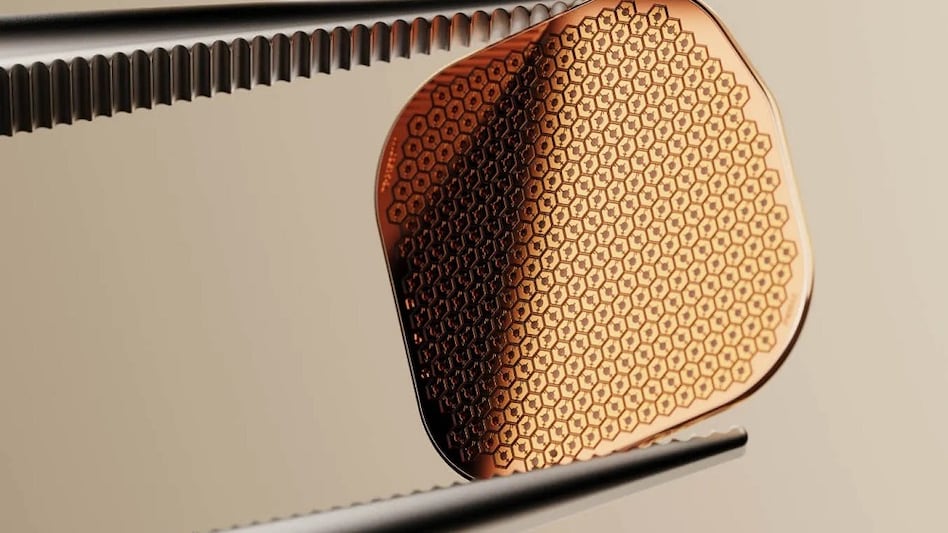
The Elusive Phineas Fisher: The Hacktivist Who Took Down Spyware Giants
In the realm of cybersecurity, few figures are as intriguing as Phineas Fisher, a hacker who has evaded capture for near...
TechCrunch | Jul 25, 2026, 21:00