Angry Norfolk residents lose lawsuit to stop Flock license plate scanners
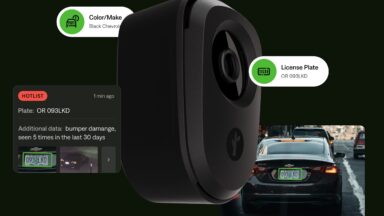
In a significant ruling, a federal judge in Virginia upheld the constitutionality of Norfolk's deployment of nearly 200 automated license plate readers (ALPRs) from Flock, allowing the city to continue using this surveillance technology. The decision came just days before a scheduled bench trial, leading to the dismissal of the case, Schmidt v. City of Norfolk. The lawsuit was initiated in October 2024 by two residents who argued that their rights were infringed upon as the Flock camera network recorded their vehicles hundreds of times, labeling it as a form of 'dragnet surveillance.' However, US District Court Judge Mark S. Davis found insufficient evidence to support the plaintiffs' claims, stating that they could not prove that the ALPR system could track an individual's movements comprehensively. Judge Davis recognized the potential for future concerns regarding the intrusive nature of ALPRs but concluded that, at least for now, such invasiveness is not apparent in Norfolk. The plaintiffs were assisted by the Institute of Justice, a libertarian public interest law firm that plans to appeal the decision. Flock Safety has evolved into the largest and most advanced ALPR provider in the U.S., collaborating with numerous law enforcement agencies nationwide. The company, recently valued at $7.5 billion, offers technology that now captures detailed vehicle information beyond just license plates, including make and model, which can be queried through AI-driven natural language searches. However, some localities, including Santa Cruz, California, and Charlottesville, Virginia, have opted to terminate their contracts with Flock due to worries about privacy violations and the potential sharing of data with federal immigration authorities. Last year, two senators raised alarm over these privacy issues, emphasizing that the risk of misuse of Flock cameras is a significant concern.
The Rise of AI Distillation: A Controversial Technique Sparks Debate in Tech and Government
In recent discussions, a once-obscure topic in artificial intelligence has surged to the forefront of debates among tech...
CNBC | Jul 25, 2026, 12:15
Crisis Averted: Power Line Failure Highlights Urgent Need for Data Center Resilience
A power line failure near Washington, DC, recently showcased a significant challenge faced by the electrical grid due to...
TechCrunch | Jul 25, 2026, 13:50
The Aluminum Foil Trend: A DIY Shield Against Wireless Identity Theft
Have you noticed an unusual trend where people are wrapping their wallets in aluminum foil? This peculiar practice has e...
Business Today | Jul 25, 2026, 02:45
Market Turbulence: Four Key Factors Impacting Stocks This Week
This past week has been challenging for the stock market, driven by several significant forces that have created turbule...
CNBC | Jul 25, 2026, 20:05
The Boring Company Eyes $4 Billion Funding Boost Amid Expanding Tunnel Ventures
Elon Musk's tunneling enterprise, The Boring Company, is reportedly negotiating a substantial funding round of $4 billio...
TechCrunch | Jul 25, 2026, 19:50