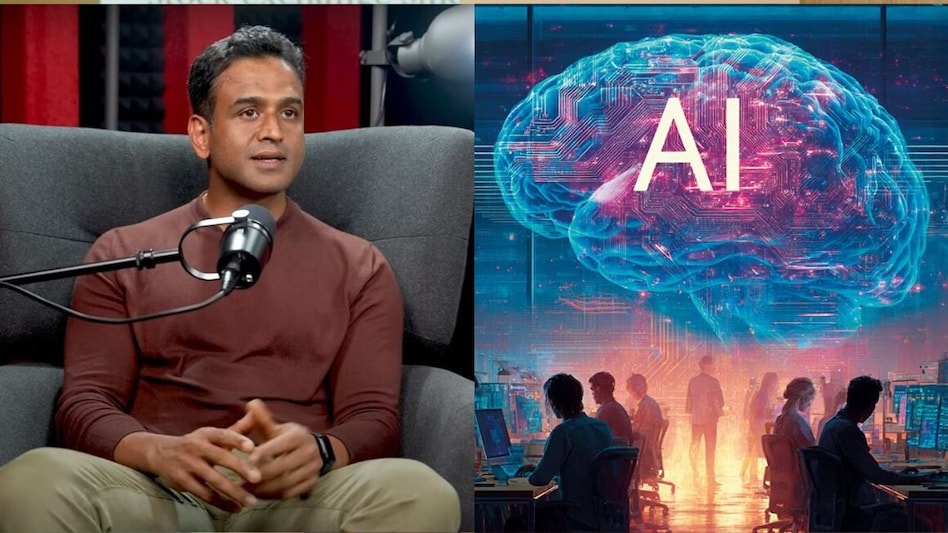
'India can no longer rely on IT services': Nithin Kamath calls for China-style deep tech push
In light of increasing global trade tensions and stringent export controls, Nithin Kamath, the founder and CEO of Zerodha, emphasized on Monday that India must move beyond its reliance on software services. He noted a significant shift in the global landscape towards robust infrastructure, strategic supply chains, and advanced technologies, indicating that India needs to adapt accordingly. "The tech industry appears to be undergoing a process of nationalization. Since 2020, we've witnessed a rise in export restrictions concerning vital components such as chips and critical minerals, along with limitations on advanced manufacturing tools. This evolution has turned supply chains into a matter of national security," Kamath explained. His message was clear: without developing indigenous deep tech capabilities, India risks being sidelined when it matters most. Kamath pointed out that self-sufficiency is no longer just a strategic advantage but a necessary safeguard. He believes that while India's startup ecosystem has seen significant growth, the next phase must focus more on deep technology. "We have a wealth of local talent capable of producing many of the goods we currently import; they just require the right support. The government's recent initiatives to promote deep tech represent a positive step forward," he stated. He also highlighted the transformative impact of artificial intelligence on traditional business models. According to Kamath, as AI becomes increasingly capable of generating software, asset-light business models could face significant challenges. "The next decade will favor tangible products over digital services. We are already witnessing substantial investments in areas such as data centers, defense technologies, battery production, semiconductors, and advanced manufacturing," he remarked. Despite these opportunities, Kamath identified a critical gap in India's ecosystem. "We have the talent, but we lack the supportive infrastructure around them," he noted. He acknowledged the frequent comparisons between India and China but argued that valuable lessons can be derived from China's rapid industrialization. "China's rise as an industrial powerhouse was not accidental; it was driven by fierce domestic competition among numerous startups, which spurred innovation and efficiency. India once achieved similar success with software parks; we need to replicate that model for deep tech. States like Tamil Nadu, Gujarat, and Maharashtra have shown potential, but we need more regions to join this initiative." Kamath emphasized the importance of industrial clustering, explaining that companies choose to manufacture in China due to the proximity of essential resources and services. "This clustering offers competitive advantages, enabling rapid prototyping and development. Although building such a network takes decades, it's achievable with a long-term investment approach," he added. He also pointed out the crucial link between academia and industry that China has fostered. "In India, many innovative ideas fizzle out before they can be realized. Talented PhDs often lack the necessary funding and institutional backing to create prototypes or establish businesses. There is a pressing need for government procurement assurances and patient capital that understands the lengthy timeline of hardware development." While Kamath welcomed the government's support for deep tech, he underscored that it must extend beyond mere financial allocations. "We need comprehensive support mechanisms, including R&D tax credits, subsidies, and streamlined regulatory processes, that are sustained over decades rather than tied to election cycles," he urged. He stressed that the stakes are not just about economic growth but also about India's strategic resilience. "Without a strong domestic deep tech foundation, India will remain vulnerable, dependent on external sources for critical infrastructure. If we can establish these clusters, enhance education, fund R&D, and create effective pathways from concept to commercialization, we can transform from a self-sufficient nation into a leading exporter in deep technology," Kamath concluded.
SpaceX Successfully Tests Starship Rocket, Launching New Era of Space Exploration
On Friday evening, SpaceX executed a significant milestone by launching its colossal Starship rocket from its facility i...
CNBC | Jul 25, 2026, 24:10
Unleashing the Power of AI: The 5 Smartphones Redefining Mobile Photography
Artificial Intelligence (AI) is transforming our daily experiences, permeating various aspects of technology, including ...
Business Today | Jul 26, 2026, 07:05
The Shift in Human Cognition: Embracing AI as a Collaborative Tool
As technology continues to evolve, a notable shift is occurring in the relationship between humans and artificial intell...
Business Insider | Jul 25, 2026, 09:50Reclaiming Control: Librarians Host Workshops to Help People Navigate AI Tools
In a lively library setting in South Philadelphia, Charlie Bailey, a local librarian, humorously noted, "Everybody’s on ...
TechCrunch | Jul 25, 2026, 16:20
Finland Unveils World's Largest Sand Battery to Tackle Renewable Energy Challenges
In a groundbreaking move to address the critical issue of renewable energy intermittency, a small town in southern Finla...
CNBC | Jul 25, 2026, 05:35