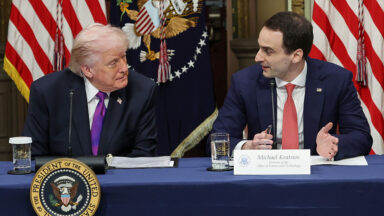
Trump staffs science and technology panel with non-scientists
The President’s Council of Advisors on Science and Technology (PCAST) has recently revealed its updated roster, sparking conversations about the representation of scientific expertise in government advisory panels. Traditionally, PCAST remains under the radar, often gaining attention only during controversies or missteps, such as the resignation of a recent head appointed by Biden due to allegations of misconduct. Historically, the council has been populated by individuals with a strong background in science, but the latest appointments indicate a shift towards a membership predominantly composed of high-profile technology executives. Among the notable figures included are investor Marc Andreessen, Google co-founder Sergey Brin, Dell's Michael Dell, Oracle's Larry Ellison, NVIDIA's Jensen Huang, AMD's Lisa Su, and Meta's Mark Zuckerberg. This trend raises questions about the administration's commitment to scientific integrity, especially given that nine positions on the council remain unfilled, leaving the door open for potential future appointments with scientific credentials. In addition to the tech magnates, the council also includes individuals with varied backgrounds in investment and technology. Notable appointees include Safra Catz of Oracle, Fred Ehrsam, who co-founded Coinbase, and David Friedberg, another investor with ties to the tech industry. However, there are a few members with academic research backgrounds. Jacob DeWitte and Bob Mumgaard, both PhD graduates from MIT, lead nuclear startups, with DeWitte at the helm of Oklo and Mumgaard at Commonwealth Fusion Systems. Additionally, John Martinis, a Nobel Prize-winning physicist recognized for his contributions to quantum physics, has been instrumental in Google's quantum computing initiatives and is involved in two quantum computing startups. As discussions around the scientific direction of the council continue, many are left wondering how this composition will impact the future of science and technology policy in the current administration.
Vietnam's Controversial Social Media Proposal: A New Approach for Youth Engagement
Vietnam is contemplating a distinctive approach to youth social media regulations, diverging from the more common outrig...
TechCrunch | Jul 24, 2026, 21:25
Reclaiming Control: Librarians Host Workshops to Help People Navigate AI Tools
In a lively library setting in South Philadelphia, Charlie Bailey, a local librarian, humorously noted, "Everybody’s on ...
TechCrunch | Jul 25, 2026, 16:20
The Shift in Human Cognition: Embracing AI as a Collaborative Tool
As technology continues to evolve, a notable shift is occurring in the relationship between humans and artificial intell...
Business Insider | Jul 25, 2026, 09:50Waymo Considers Parting Ways with Uber Amid Rising Tensions
Waymo is reportedly exploring options to exit its partnership with Uber, which has allowed the Alphabet-owned firm to de...
TechCrunch | Jul 24, 2026, 21:00
Crisis Averted: Power Line Failure Highlights Urgent Need for Data Center Resilience
A power line failure near Washington, DC, recently showcased a significant challenge faced by the electrical grid due to...
TechCrunch | Jul 25, 2026, 13:50