
In a major new report, scientists build rationale for sending astronauts to Mars
A groundbreaking report released this Tuesday sheds light on the compelling reasons for sending astronauts to Mars, a venture projected to span decades and cost billions. The document, titled "A Science Strategy for the Human Exploration of Mars," articulates the perspectives of top scientists and engineers in the U.S., emphasizing the quest to uncover the existence of life beyond Earth. Dava Newman, a professor at the Massachusetts Institute of Technology and co-chair of the committee behind the report, shared insights in an interview, stating, "We’re searching for life on Mars. The question of whether we are alone in the universe will remain uncertain unless we find definitive answers." The comprehensive report, which took two years to compile and spans over 200 pages, was published by the National Academies of Sciences, Engineering, and Medicine. Co-chaired by Newman and Linda T. Elkins-Tanton, director of the Space Sciences Laboratory at UC Berkeley, the committee was tasked with pinpointing the most critical scientific objectives for the initial human missions to Mars. Interestingly, the report's release coincides with the anticipated confirmation of NASA's next administrator, private astronaut Jared Isaacman, by the U.S. Senate. Isaacman’s vision aligns with laying the foundation for upcoming human missions to Mars, particularly as companies like SpaceX and Blue Origin advance their reusable in-space transportation technologies, aiming to facilitate human travel to the red planet within the next twenty years. Newman remarked, "There’s no turning back. Everyone is inspired by this because it’s becoming real. With the advancements in technology, we are finally at a point where this exploration is feasible, unlike decades ago when it was merely theoretical." The report aims to establish a rationale for conducting significant scientific research on Mars alongside human exploration. It outlines 11 key scientific objectives prioritized for future missions, paving the way for a deeper understanding of the Martian environment and its potential for life.
ServiceNow Invests $40 Million in Indian Banking Software Firm to Enhance Financial Services
ServiceNow, a prominent U.S. enterprise software provider renowned for streamlining workflows in IT and HR functions, is...
TechCrunch | Jul 23, 2026, 06:50
Amazon's AGI Team Faces Job Cuts Amid Ongoing Restructuring
In July, Amazon has initiated further job cuts within its artificial general intelligence (AGI) division as part of its ...
Business Today | Jul 23, 2026, 06:15
Market Insights: AI Concerns, Rising Oil Prices, and Legislative Changes Shape Today's Trading Landscape
Good morning. As we dive into today's trading landscape, investors are facing a whirlwind of factors affecting the marke...
CNBC | Jul 23, 2026, 12:55
Allegations Fly as US Claims Chinese AI Model Breached Intellectual Property
In a bold accusation, Michael Kratsios, science and technology adviser to President Donald Trump, has charged that the C...
Business Today | Jul 23, 2026, 05:20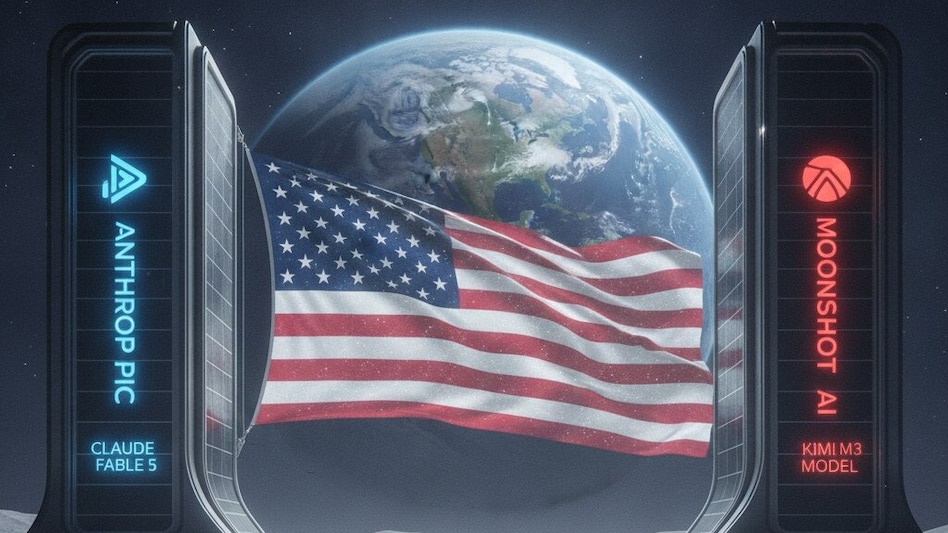
Elon Musk Urges Tesla to Ramp Up AI Investments Despite Potential Waste
In a bold move, Elon Musk has emphasized the need for Tesla to significantly increase its spending on artificial intelli...
Business Insider | Jul 23, 2026, 11:05