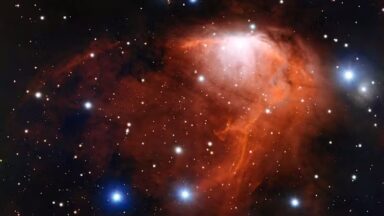
The first stars may not have been as uniformly massive as we thought
Astronomers have long speculated about the characteristics of the universe's earliest stars, which played a pivotal role in the creation of new chemical elements and the formation of subsequent generations of stars and planets. Traditionally believed to be predominantly massive—ranging from hundreds to thousands of times the mass of our Sun—these primordial stars were thought to have existed briefly before exploding as supernovae. Because of their short lifespans, it was assumed that no remnants of these ancient stars could be observed today. However, two recent studies, released in early 2025, introduce a groundbreaking perspective: the early universe may have also birthed lower-mass stars from collapsing gas clouds. One of these studies employs an innovative astrophysical simulation that accounts for turbulence within these clouds, leading to fragmentation and the formation of smaller star clusters. Meanwhile, an independent laboratory experiment reveals that molecular hydrogen—a crucial component for star formation—may have been produced in greater quantities and at an earlier stage than previously thought, utilizing an unexpected catalyst. As an astronomer focused on the dynamics of star and planet formation, I find the implications of these discoveries thrilling. They suggest that the chemistry of the universe in the first 50 to 100 million years post-Big Bang was likely much more dynamic than we had assumed. This new understanding indicates that the second generation of stars, which are currently the oldest we can observe and may be the progenitors of the first planets, could have formed sooner than we previously estimated. Stars are born when vast clouds of hydrogen collapse under the influence of gravity, continuing this process until a bright sphere emerges around a dense core hot enough to initiate nuclear fusion. These findings not only reshape our view of early stellar evolution but also open new avenues for understanding the formation of the universe as we know it.
Investors React as AI Investment Woes Weigh on Tesla and Alphabet Shares
Shares of both Alphabet and Tesla experienced significant declines in premarket trading on Thursday, driven by concerns ...
CNBC | Jul 23, 2026, 08:35
Revolutionizing Email: A New AI App Aims to Dethrone Gmail
In a bold move to transform the way we handle emails, two ambitious 23-year-old Swedes have introduced Scape, a desktop ...
Business Insider | Jul 23, 2026, 09:15Allegations Fly as US Claims Chinese AI Model Breached Intellectual Property
In a bold accusation, Michael Kratsios, science and technology adviser to President Donald Trump, has charged that the C...
Business Today | Jul 23, 2026, 05:20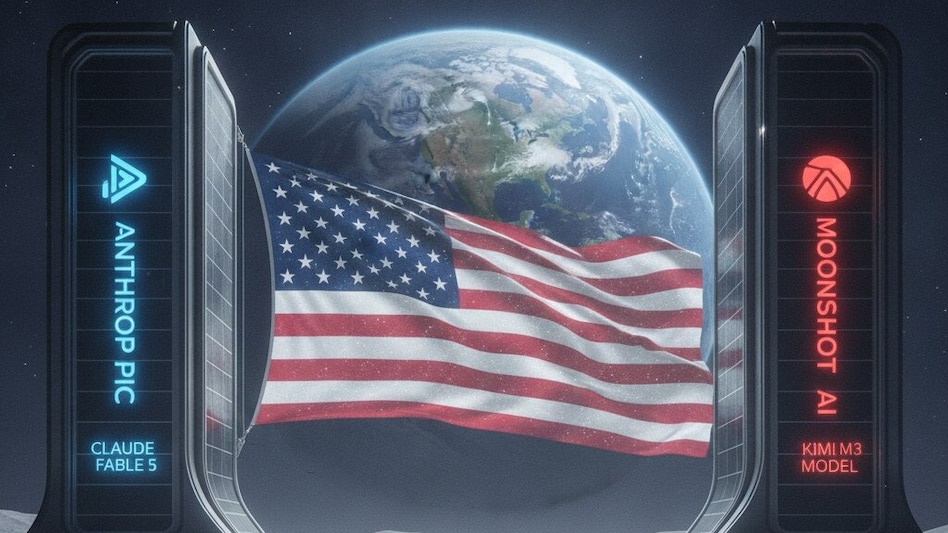
ServiceNow Invests $40 Million in Indian Banking Software Firm to Enhance Financial Services
ServiceNow, a prominent U.S. enterprise software provider renowned for streamlining workflows in IT and HR functions, is...
TechCrunch | Jul 23, 2026, 06:50
OpenAI Sets Its Sights on Legal Tech: A New Era for Attorneys
OpenAI is stepping into the legal tech arena, shifting its focus from merely empowering startups to directly engaging wi...
Business Insider | Jul 23, 2026, 09:05