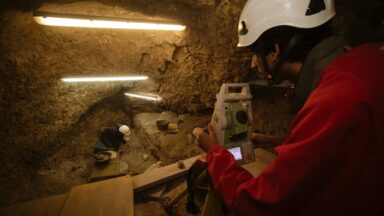
Archaeologists unearth fresh evidence of Neolithic cannibalism
Archaeologists have discovered human remains from 11 individuals at El Mirador Cave in Spain that provide compelling evidence of cannibalistic practices. A recent study published in the journal Scientific Reports suggests that this act may have stemmed from a violent clash between rival herding communities during the Late Neolithic period, approximately 5,700 years ago. Co-author Palmira Saladié, a researcher affiliated with IPHES-CERCA and the Universitat Rovira i Virgili (URV), remarked on the complexities surrounding the interpretation of cannibalism. "Understanding the act of humans consuming other humans is inherently challenging," she stated. Saladié also noted the societal biases that often label such acts as barbaric, making it difficult to grasp the cultural context surrounding them. The El Mirador Cave is part of the renowned Sierra de Atapuerca archaeological site in northern Spain, where previous findings have also indicated cannibalistic behaviors. Notably, remnants of six individuals from the Early Bronze Age were found, including skull caps that might have been used in ceremonial practices. Since 1994, over 160 bone fragments from the Aurora Stratum (TD-6) in the Gran Dolina cavern have been unearthed, with more than 30 percent showing signs of butchering, such as slice, scrape, and chop marks. In this latest research, a meticulous analysis of 5,056 human remains from two areas of El Mirador Cave was conducted using microscopy. Eight samples were chosen for radiocarbon dating, ensuring representation across stratigraphic levels, while five bones underwent strontium isotope testing. The findings highlighted clear marks indicative of butchering and consumption, along with evidence of cremation and disarticulation of the bodies, suggesting that the victims were skinned, their flesh removed, and subsequently cooked. Radiocarbon dating placed these events between 5,700 and 5,570 years ago. Isotope analysis revealed that the individuals were likely local and consumed within a few days. While distinguishing between cannibalistic behavior and other possible explanations is challenging, the authors deliberated on alternative theories. They noted that funerary rituals might involve similar marks, but such practices typically affect only a small percentage of remains, and injuries from weaponry would mostly be found on specific areas like ribs and vertebrae.
Local Community Triumphs as Palm Beach Commissioners Block Major AI Data Center
In a significant decision, Palm Beach County commissioners voted 5-1 to reject a proposal for a large-scale AI data cent...
Business Insider | Jul 16, 2026, 14:40New York Mayor Unveils Measures to Combat AI-Driven Rental Listing Deception
In an effort to protect renters from misleading apartment listings, New York Mayor Zohran Mamdani announced a series of ...
Business Insider | Jul 16, 2026, 17:10Revolutionizing Food Delivery: DoorDash Launches Command-Line Tool for Developers
In a groundbreaking development, DoorDash has rolled out a limited beta version of its new command-line interface (CLI) ...
TechCrunch | Jul 16, 2026, 16:05
AMI Labs' CEO Questions AI Labels While Pursuing Real-World Robotics Solutions
In a landscape where the term 'AGI' and 'superintelligence' are rapidly becoming buzzwords, Alexandre LeBrun, the CEO of...
TechCrunch | Jul 16, 2026, 14:50
Apple's AI Breakthrough: Collaboration with Alibaba and Baidu Paves the Way for China Launch
Apple's latest generative AI initiative, Apple Intelligence, is set to make its debut in China. On Wednesday, it was rep...
TechCrunch | Jul 16, 2026, 13:30