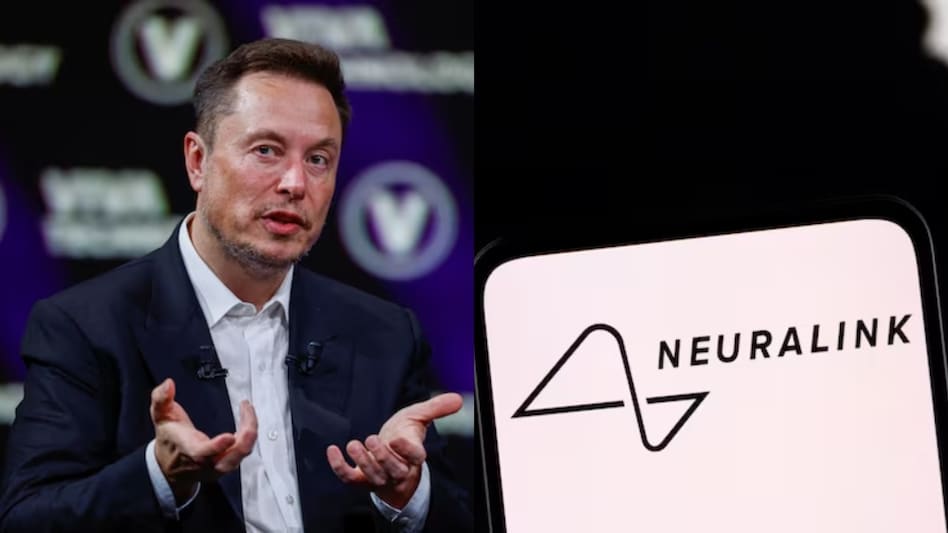
Elon Musk's Neuralink to begin high-volume production of 'Brain-Computer Interfaces' in 2026: Read details
Neuralink, the brainchild of Elon Musk, is gearing up to kick off high-volume production of its brain-computer interface (BCI) devices by the year 2026. Musk shared this exciting news on his social media platform, X, highlighting the significant progress the company has made in its clinical trials and advancements in surgical automation. The proposed production will coincide with the introduction of an almost entirely automated surgical procedure. This innovative approach will allow the device threads to be inserted through the dura, the brain's protective outer layer, without requiring surgical removal. This groundbreaking method could revolutionize how such procedures are performed, comparable to the advancements seen in laser eye surgery. According to Musk, Neuralink is on track to achieve full automation of the surgical process within the next year. The procedure employs a specialized robotic system that deftly places flexible sensors—thinner than a human hair—into the brain’s motor cortex. This milestone is particularly noteworthy as it ensures that the threads can be guided meticulously through the dura, enhancing the overall safety and efficiency of the operation. Neuralink’s technology promises to restore independence to individuals suffering from severe neurological conditions, including spinal cord injuries and amyotrophic lateral sclerosis (ALS). Since the first human implantation took place in early 2024, the company has successfully conducted the procedure on 12 patients worldwide, enabling them to control digital cursors, play video games, and move robotic limbs merely through thought. The push for mass production follows a substantial $650 million Series E funding round completed in June 2025, which valued Neuralink at around $9 billion. These funds are being strategically allocated to enhance manufacturing capabilities and quicken the pace of clinical studies. While the BCI industry is becoming increasingly competitive, with numerous firms working on similar technologies, Neuralink's commitment to high-volume production and precision robotics is aimed at making these life-changing devices more widely available. Musk emphasized that achieving the 2026 target for volume production is crucial for expanding access to brain-interface technology for patients in dire need. The company remains focused on refining its hardware and surgical software to ensure lasting stability and safety for its users.
Nvidia's Jensen Huang Calls for a More Balanced AI Narrative Amid Growing Public Concerns
In a recent interview, Nvidia's CEO Jensen Huang urged leaders in the artificial intelligence sector to adopt a more con...
Business Insider | Jul 24, 2026, 09:50Fremont Emerges as a Robotics Hub: The Rise of Agility Robotics and Its Ambitious Plans
In a surprising turn of events, Fremont, a city traditionally known for its industrial parks, is rapidly becoming a foca...
Business Insider | Jul 24, 2026, 08:25Blinkit Rises to Challenge Amazon in E-Commerce Landscape
In an impressive leap forward, Blinkit has significantly increased its operational scale, with the cost to establish a s...
Business Today | Jul 24, 2026, 09:35
Facebook Unveils New Seller App and Free Verification System to Boost Marketplace Engagement
In an effort to enhance user engagement and streamline operations, Facebook has announced a series of updates aimed at M...
TechCrunch | Jul 24, 2026, 13:00
Revolutionizing Interaction: ChatGPT Desktop App Introduces Voice Control
OpenAI has unveiled an exciting update for its ChatGPT desktop application, introducing a voice control feature that ena...
TechCrunch | Jul 24, 2026, 14:00