Dutch government takes control of Chinese-owned chipmaker Nexperia in 'highly exceptional' move
In a remarkable decision, the Dutch government has assumed control of Nexperia, a semiconductor manufacturer owned by China, to safeguard the supply of essential chips across Europe as global trade tensions escalate. Nexperia, a subsidiary of Wingtech Technology from China, is crucial for producing high volumes of chips utilized in various sectors, including automotive and consumer electronics, thus playing a significant role in Europe's technological supply chain. On Sunday, the Dutch Minister of Economic Affairs announced that the government had invoked the 'Goods Availability Act' in September. This move aims to prevent any potential shortages of finished and semi-finished products from Nexperia in emergency situations. Following this announcement from The Hague, Wingtech's stock plummeted by the maximum daily limit of 10% on the Shanghai Stock Exchange. The Goods Availability Act empowers the Dutch government to intervene in private companies to ensure the readiness of critical goods during emergencies. The decision comes against the backdrop of escalating tensions in the U.S.-China trade war. According to a government statement, this 'highly exceptional' action was prompted by observations of serious governance issues within Nexperia that threatened the continuity of vital technological knowledge and capabilities on Dutch and European soil. The government identified the automotive sector as particularly at risk. In a corporate filing dated October 13, Wingtech confirmed that Nexperia is now under temporary external management. The company has been instructed to freeze any changes to its assets, business, or personnel for up to one year. Following the ministerial order, Wingtech's chairman, Zhang Xuezheng, was immediately suspended from his positions within Nexperia. Despite the upheaval, Nexperia's daily operations are set to continue, although the exact impact of these measures remains unclear. Wingtech criticized the Dutch government's decision, claiming it reflects excessive intervention motivated by geopolitical bias rather than a rational risk assessment. They asserted that since acquiring Nexperia in 2019, they have adhered to all local regulations, ensuring transparent operations and governance while employing thousands in R&D and manufacturing across the Netherlands, Germany, and the UK. This intervention coincides with China's recent tightening of export restrictions on rare earth elements and magnets, which could significantly affect Europe's automotive industry. It also threatens to further strain the already delicate trade relations between China and the Netherlands, especially following years of limitations on Dutch company ASML's exports of advanced semiconductor manufacturing equipment to China. Earlier in 2023, the Netherlands had also scrutinized Nexperia's acquisition of chip startup Nowi, although that deal was ultimately approved.
WhatsApp Unveils Major Updates for iPad and CarPlay Integration
WhatsApp is introducing a series of significant upgrades across its platforms, particularly focusing on iPad, CarPlay, a...
Business Today | Jul 23, 2026, 08:10
Samsung's New Foldables Hit the Market with Significant Price Increases
Samsung has unveiled its latest generation of foldable smartphones, introducing two book-style models and a clamshell de...
Business Today | Jul 23, 2026, 07:10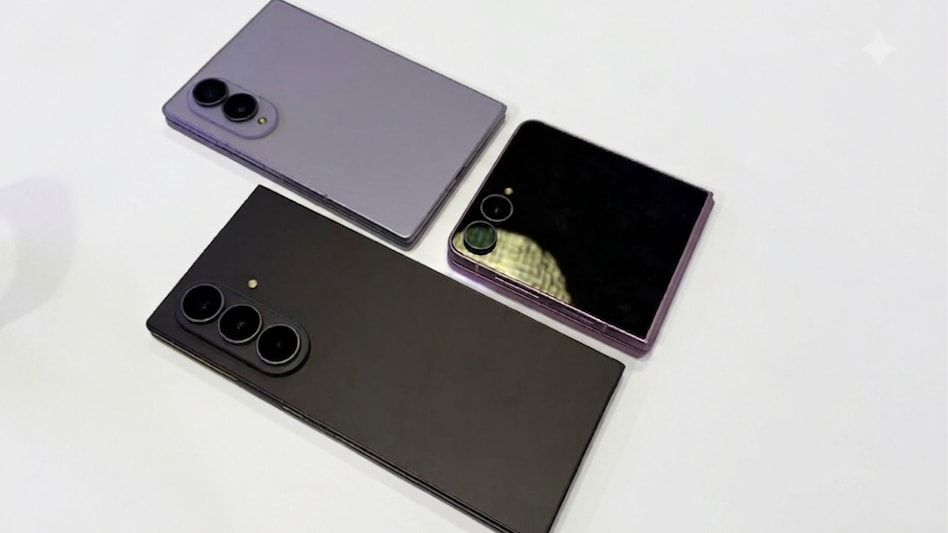
Community Rallies Against Massive AI Data Center Proposal at Heated Town Meeting
In a fervent display of community spirit, residents of Upper Merion Township gathered for an intense four-hour town meet...
Business Insider | Jul 23, 2026, 13:15Moonshot AI's Visionary Founder: The Traits Behind His Meteoric Rise
Yang Zhilin, the 34-year-old cofounder of Moonshot AI, has recently captured the attention of the tech world with the la...
Business Insider | Jul 23, 2026, 12:30iPhone 17 Series Price Surge Expected in India: Up to ₹12,000 Increase
Apple is reportedly planning to raise prices for the iPhone 17 series in India, mirroring recent price hikes in Japan. S...
Business Today | Jul 23, 2026, 10:10