
One of Google’s biggest AI advantages is what it already knows about you
In a recent discussion on the Limitless podcast, Robby Stein, the Vice President of Product for Google Search, highlighted a major advantage Google has in the realm of artificial intelligence: its ability to personalize interactions based on user data. Stein asserted that the company’s AI can significantly enhance its responses by understanding individual user preferences. However, this capability raises concerns about the potential for intrusive surveillance, as users may feel their privacy is compromised. Stein pointed out that Google's AI is often called upon for advice and recommendations, situations where subjective responses are more beneficial. He stated, "We believe there’s a significant opportunity for our AI to become uniquely helpful by knowing you better." During the Google I/O developer conference, he discussed how the AI can learn from connected services such as Gmail to gather insights about users. The integration of AI into Google's suite of applications has evolved, starting from the early days of Bard to the current Gemini Deep Research product. The incorporation of personal data from emails, documents, and browsing behavior is intended to create a more tailored user experience. However, this trend raises questions about how far personalization can go before it feels invasive. Google's approach aims to ensure that AI technology can adapt to user behavior across its various platforms, allowing it to offer personalized recommendations that suit individual tastes. For example, if the AI learns that a user prefers certain brands, it will prioritize these in its suggestions, thus making the experience more relevant and useful. This vision of personalized AI is reminiscent of themes explored in popular culture, such as in the Apple TV show "Pluribus," where a system uses personal data to cater to an individual's needs, often leading to feelings of invasion instead of assistance. Users may find it increasingly challenging to opt-out of Google's expansive data collection as AI becomes more integrated into its services. Although Google provides options for users to manage their data sharing with Gemini, the privacy implications remain a gray area. Stein mentioned that Google intends to be transparent about when AI responses are personalized, emphasizing the need for users to understand the difference between tailored responses and general information. As Google explores ways to enhance user experience through AI, it remains crucial for the company to strike a balance between offering valuable assistance and respecting user privacy. The future of search, as envisioned by Stein, involves a myriad of ways in which Google can be beneficial, yet it must tread carefully to avoid crossing boundaries that could lead to discomfort among users.
Moonshot AI's Visionary Founder: The Traits Behind His Meteoric Rise
Yang Zhilin, the 34-year-old cofounder of Moonshot AI, has recently captured the attention of the tech world with the la...
Business Insider | Jul 23, 2026, 12:30WhatsApp Unveils Major Updates for iPad and CarPlay Integration
WhatsApp is introducing a series of significant upgrades across its platforms, particularly focusing on iPad, CarPlay, a...
Business Today | Jul 23, 2026, 08:10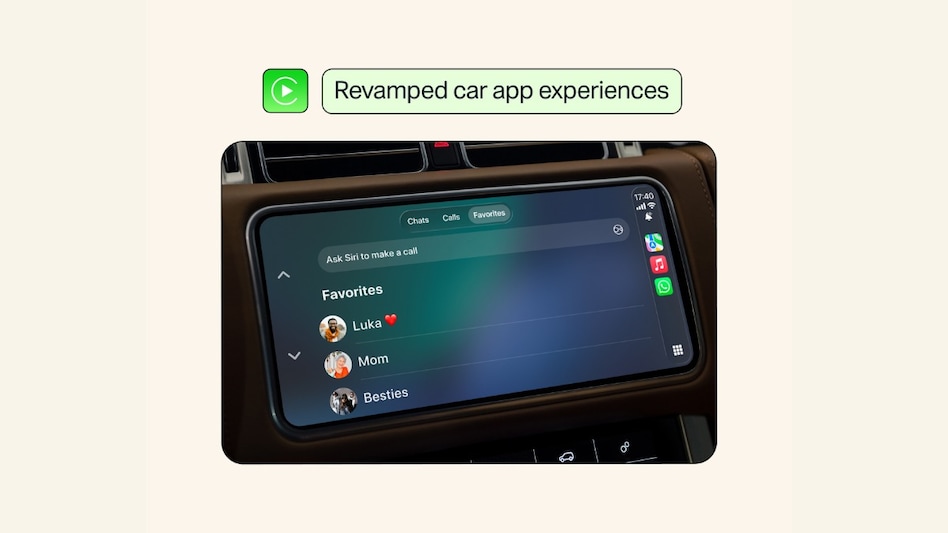
Allegations Surface: Moonshot AI's Controversial Access to Nvidia Chips Amid Export Controls
A high-ranking official from the White House has raised serious concerns regarding the Chinese AI firm Moonshot's potent...
CNBC | Jul 23, 2026, 11:25
Investors React as AI Investment Woes Weigh on Tesla and Alphabet Shares
Shares of both Alphabet and Tesla experienced significant declines in premarket trading on Thursday, driven by concerns ...
CNBC | Jul 23, 2026, 08:35
Ford Teams Up with Apple to Revolutionize Electric Vehicle Technology
Apple has unveiled a suite of developer tools designed to allow car manufacturers to integrate Apple Maps directly into ...
TechCrunch | Jul 23, 2026, 14:05