
Europe’s AI Law Needs a Smart Pause, Not a Full Stop
In a rapidly evolving technological environment, the debate surrounding artificial intelligence regulation has intensified. Recently, a collective of European corporate leaders has urged the European Union, often referred to as the global authority on AI regulation, to reconsider its approach by implementing a temporary pause on new AI rules. This plea echoes sentiments from two years ago when prominent figures like Elon Musk advocated for a six-month halt in AI development to allow for thoughtful consideration of its implications. However, the current push from over 45 companies to pause the EU's AI regulations raises critical questions about the region's competitive status against the US and China. It's important to recognize that simply freezing regulatory measures will not address the underlying funding challenges that hinder European tech startups from scaling and competing effectively with their American counterparts. The narrative that Europe must choose between innovation and regulation has been cleverly promoted by major tech lobbyists who would benefit from less stringent oversight. While some argue for a full stop, others, including industry giants like ASML Holding NV, Airbus SE, and Mistral AI, are advocating instead for a targeted pause. Their recent letter to European Commission President Ursula von der Leyen highlights the need to delay implementation of certain regulations deemed “unclear, overlapping, and complex.” This argument holds merit, particularly concerning the sections of the 180-page act that were hastily revised in response to the emergence of generative AI models like ChatGPT. Originally drafted in 2021, the act sought to regulate high-risk AI applications, such as those used in healthcare and critical infrastructure, with clearly defined criteria. However, the introduction of the general-purpose AI regulations has added layers of ambiguity. For instance, the act specifies a threshold of 10^25 floating point operations (FLOPs) to determine when a system poses a systemic risk. Critics point out that this metric lacks clarity and fails to provide a comprehensive assessment of risk, as smaller models with high-quality data can perform comparably to larger systems. Experts like Petar Tsankov, CEO of LatticeFlow AI, argue that the benchmarks set forth in the regulations are insufficient. He suggests that Brussels should maintain its timeline for enforcing rules on high-risk AI systems in healthcare and infrastructure by August 2026. Nonetheless, the regulations concerning general AI systems, which are set to take effect much sooner, require additional time for refinement. Ultimately, Europe’s AI law has the potential to enhance transparency across the industry. However, if the current regulations are implemented without addressing their ambiguities, companies may exploit loopholes, undermining the intended protective measures. A focused pause on the most unclear aspects of the legislation could mitigate potential legal complications and ensure that the finalized rules are effective and beneficial for all stakeholders.
WhatsApp Introduces New Parental Controls for Kids Under 13
WhatsApp is enhancing safety for its younger audience by introducing features tailored for children under the age of 13....
Business Today | Mar 12, 2026, 06:25
Elon Musk Launches 'Macrohard': A Groundbreaking AI Initiative from Tesla and xAI
On March 11, Elon Musk introduced an innovative joint venture between Tesla and xAI, dubbed 'Macrohard' or 'Digital Opti...
Business Today | Mar 12, 2026, 07:30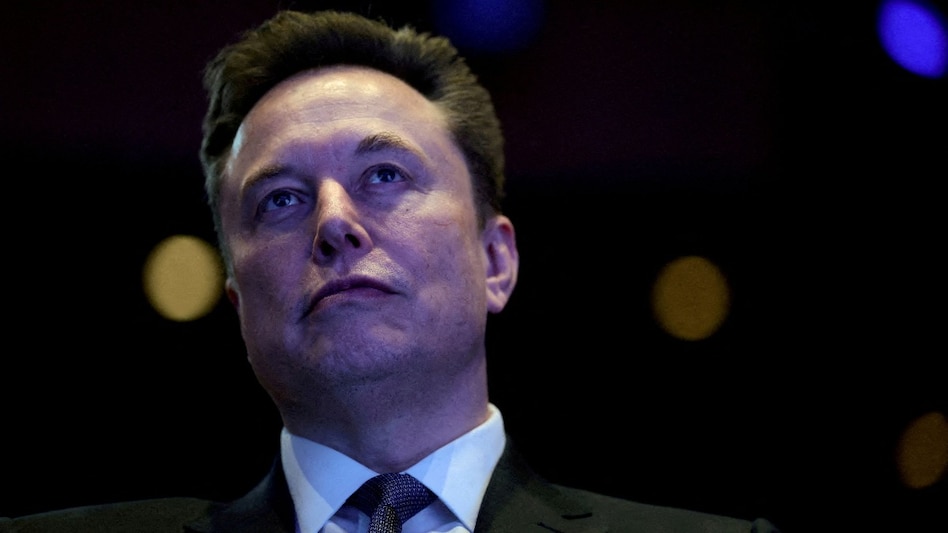
Atlassian Cuts Workforce by 1,600 as It Shifts Focus to AI Investments
Atlassian has announced significant layoffs affecting around 10% of its workforce, translating to approximately 1,600 em...
Business Today | Mar 12, 2026, 05:20
Vibe Coding's Rapid Rise Faces Key Challenges, Says Emergent CEO
Mukund Jha, CEO of Emergent, recently highlighted significant challenges confronting the burgeoning vibe coding sector. ...
Business Insider | Mar 12, 2026, 06:40Google's Innovative AI Model Aims to Tackle Flash Flood Prediction Using Historical News Data
Flash floods, notorious for their rapid onset and devastating impact, claim over 5,000 lives annually, making them one o...
TechCrunch | Mar 12, 2026, 10:35