
Opinion: Demis Hassabis’ new role exposes Google’s AI balancing act
Demis Hassabis, a pivotal figure in the field of artificial intelligence, is undergoing a significant transition. Initially recognized for his groundbreaking work with DeepMind, which Google acquired shortly after its inception, Hassabis has now stepped back from his role as CEO to take on the position of chair at Google DeepMind. This shift comes amid concerns from investors, leading to a decline in the company’s stock value following the announcement. In an exclusive interview, Hassabis shared insights into this change, which he views as a natural evolution in his career. While he aims to harness AI for transformative scientific advancements, Google faces pressures to rapidly commercialize and monetize its technology to justify its substantial investments. During our conversation, Hassabis emphasized his long-standing belief that AI could emerge as the “ultimate tool for science.” Under his leadership, DeepMind has achieved remarkable milestones, including the development of AlphaGo, which triumphed over a world champion in the ancient game of Go, and AlphaFold, an innovative AI that predicts protein folding structures critical for disease understanding and drug development. Hassabis credits Google’s robust computational resources as a vital support factor behind these successes. His recent blog post reflects on the potential of artificial general intelligence (AGI), a form of AI designed to replicate human cognitive capabilities. Hassabis expressed confidence that AGI is nearing reality and highlighted his new role’s focus on strategic AGI initiatives and advising his successor, Koray Kavukcuoglu. Additionally, he will dedicate time to Isomorphic Labs, a venture dedicated to AI in drug discovery. Sebastian Mallaby, author of "The Infinity Machine," noted that Hassabis’s move is consistent with his longstanding commitment to AI safety. His decision to sell DeepMind to Google, rather than to a competitor like Facebook, underscores his values. As Google DeepMind continues its scientific endeavors, the competitive landscape has evolved dramatically. Alphabet is projected to invest up to $205 billion this year, amidst growing scrutiny from investors regarding Big Tech’s expenditures. The competitive pressure from organizations like OpenAI and other global players is palpable, with Hassabis describing the current environment as “ferocious.” This competitive climate may be pushing Google to prioritize the commercialization of its AI technologies. Hassabis noted that he frequently communicates with Google CEO Sundar Pichai about strategic goals while maintaining a focus on the long-term vision for AGI, allowing the company to accelerate product development. Hassabis acknowledged the complexities of the current geopolitical and corporate landscape in the AI race. He expressed a desire for a more measured scientific approach to AGI development, but recognized the realities of a competitive market. As DeepMind strives for advanced AI solutions, the emphasis on responsible development remains a guiding principle for Hassabis and his team.
The Complex Journey of Jensen and Lori Huang: Love, Challenges, and Triumphs
Jensen Huang, the prominent CEO of Nvidia, and his wife Lori have navigated a journey filled with personal and professio...
Business Insider | Nov 24, 2026, 19:05LinkedIn CEO Highlights Gen Z's Potential Edge in AI-Driven Job Market
As the job landscape becomes increasingly challenging for young professionals, LinkedIn's CEO, Daniel Shapero, suggests ...
Business Today | Nov 25, 2026, 24:25
Nvidia's Jensen Huang Opens Up About Personal Struggles and Commitment to Improvement
In a heartfelt address to Nvidia employees, Jensen Huang revealed that he has been attending daily therapy sessions as h...
Business Today | Nov 25, 2026, 02:10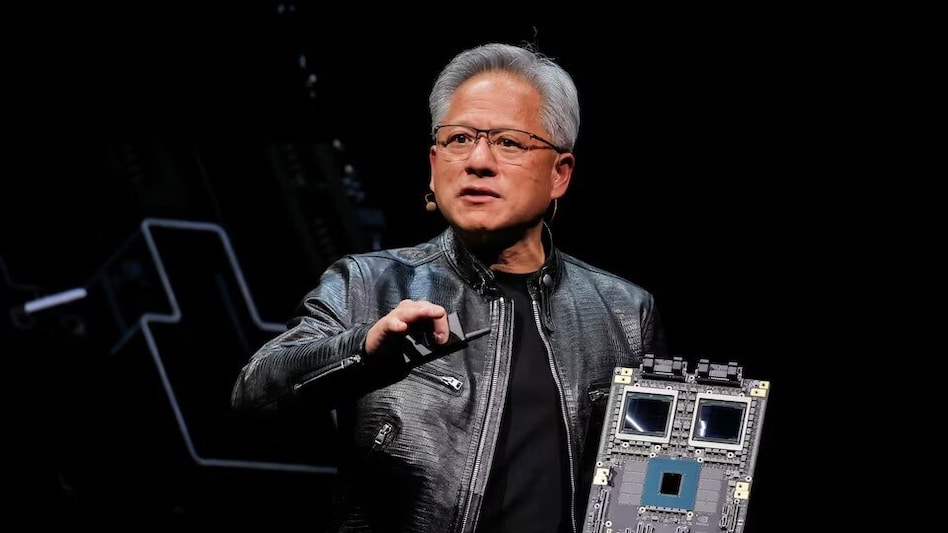
Yale Expert Warns Nvidia’s Leadership Changes Could Harm U.S. Tech Dominance
On Monday, the market's enthusiasm for Nvidia may have been misguided, according to Yale business scholar Jeffrey Sonnen...
TechCrunch | Nov 25, 2026, 24:35
Jensen Huang's Remarkable Comeback: A Look at Corporate Resurgences
Jensen Huang has made headlines with his return to the helm of Nvidia on November 23, merely 11 days after stepping down...
Business Today | Nov 24, 2026, 20:15