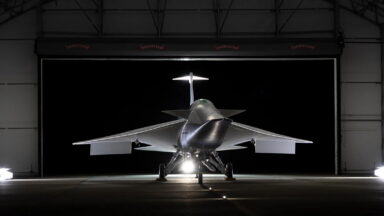
NASA test flight seeks to help bring commercial supersonic travel back
In a groundbreaking development for aviation, NASA's latest experimental jet, the X-59 Quesst (Quiet SuperSonic Technology), soared into the skies for its inaugural flight early Tuesday morning over the vast Mojave Desert in Southern California. This advanced aircraft aims to significantly reduce the noise associated with sonic booms, potentially allowing commercial jets to operate at supersonic speeds over land in the future. Constructed by Lockheed Martin's Skunk Works division, the X-59 took off from the US Air Force Plant 42 in Palmdale, California. Under the skilled guidance of Nils Larson, NASA’s lead test pilot, the flight lasted about an hour. It successfully validated the jet's airworthiness and safety protocols before making a smooth landing near NASA’s Armstrong Flight Research Center in Edwards, California. Acting NASA Administrator Sean Duffy highlighted the significance of the X-59, stating, "This aircraft represents the pinnacle of American ingenuity. It embodies our relentless pursuit of innovation—striving to go farther, faster, and quieter than ever before." Currently, commercial supersonic flight over land is prohibited in the United States due to the disruptive sonic booms that can shatter windows and set off alarms. The Concorde was the only commercial supersonic aircraft to operate successfully, but its routes were limited to over oceans to avoid these disturbances. The unique design of the X-59 plays a crucial role in mitigating noise. Its elongated, slender nose, which constitutes one-third of its total length, helps disperse pressure waves that typically merge into shock waves, resulting in the disruptive sonic boom. Additionally, the engine's placement atop the fuselage, rather than underneath as seen in traditional fighter jets, allows for a smoother underside that limits shock wave formation and directs sound waves upwards, away from populated areas. NASA's mission now includes gathering valuable data to assist aircraft manufacturers in designing quieter supersonic planes for future commercial use.
Revolutionizing Office Automation: Prentis Aims to Secure $100 Million in Funding
Prentis, a newly established AI research lab, is making waves in the tech industry as it prepares to raise $100 million ...
TechCrunch | Jul 25, 2026, 24:00
Moody's Warns of Credit Risks as Tech Giants Ramp Up AI Investments
According to a recent report from Moody's Ratings, the surge in investment towards artificial intelligence infrastructur...
CNBC | Jul 24, 2026, 17:50
Unveiling the Future of Finance: TechCrunch Disrupt 2026's Smart Money Stage
The landscape of money is transforming beyond just cash or bank balances, and TechCrunch Disrupt 2026 is set to spotligh...
TechCrunch | Jul 24, 2026, 22:40
Unlocking the Secrets of Quantum Gravity: Can AI Help Physics Make a Leap?
The realm of scientific research is undergoing a profound transformation, fueled by the rapid advancements in artificial...
Business Today | Jul 25, 2026, 24:30
Rising Concerns in Bond Market as AI Investments Surge
Investors are growing increasingly uneasy about the substantial capital required to realize the ambitions of artificial ...
CNBC | Jul 24, 2026, 20:15