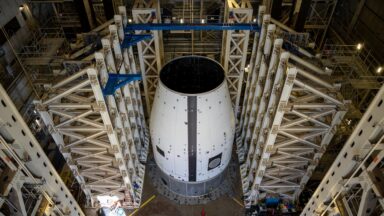
Analysis finds the exploration programs NASA recently canceled were running way late
In a significant strategic overhaul, NASA Administrator Jared Isaacman recently revealed plans to transition from developing a lunar orbit space station to establishing a base on the Moon's surface. This pivotal announcement, dubbed the "Ignition" event, came just after the agency disclosed its decision to halt the development of a new upper stage for its Space Launch System rocket. The reaction from contractors involved in these projects has been one of disappointment, with many arguing that NASA is abandoning nearly completed hardware essential for the Artemis Program. However, Isaacman countered this sentiment by asserting that these initiatives were not crucial for achieving manned lunar landings. He highlighted that the projects had exceeded their initial budgets significantly and had faced extensive delays, leaving them far from operational. "For too long we tried to satisfy every stakeholder," Isaacman stated during the March Ignition event. "Billions of dollars wasted. Years lost. Hardware that never launched. Fewer flagship science missions. And fewer astronauts in space, which means fewer kids dressing up as astronauts for Halloween. I don’t like it. The president doesn’t like it. The American people have waited long enough." On Wednesday, NASA's Office of the Inspector General released a memorandum detailing the elements of the Artemis Program that are being canceled as the agency pivots to focus on lunar surface operations. The report emphasized that the projects in question had faced significant cost overruns and delays throughout their development. According to the inspector general's findings, the combined contract values for these initiatives soared from approximately $2.8 billion to $5.9 billion, with delivery timelines extended by as much as seven years. The report also projected that allowing the projects to continue would have likely resulted in even higher costs and longer completion times than those originally contracted.
The Elusive Phineas Fisher: The Hacktivist Who Took Down Spyware Giants
In the realm of cybersecurity, few figures are as intriguing as Phineas Fisher, a hacker who has evaded capture for near...
TechCrunch | Jul 25, 2026, 21:00
The Rise of AI Distillation: A Controversial Technique Sparks Debate in Tech and Government
In recent discussions, a once-obscure topic in artificial intelligence has surged to the forefront of debates among tech...
CNBC | Jul 25, 2026, 12:15
The Shift in Human Cognition: Embracing AI as a Collaborative Tool
As technology continues to evolve, a notable shift is occurring in the relationship between humans and artificial intell...
Business Insider | Jul 25, 2026, 09:50Vision Breakthrough: US Startup Launches Groundbreaking Retina Chip in Europe
Science Corp is poised to introduce a revolutionary retina chip in Europe, designed to restore partial vision for indivi...
Business Today | Jul 25, 2026, 01:00
Kalshi Challenges Netflix Over Controversial Documentary Trailer
Kalshi, the prediction market platform, has taken significant legal steps against Netflix, sending a cease-and-desist le...
TechCrunch | Jul 25, 2026, 17:10