
NASA satellites can spot GPS jammers on Earth
NASA's satellites, originally designed for monitoring cyclone winds and ice sheet dynamics, have demonstrated an unexpected capability: detecting GPS jammers on Earth. This advancement could significantly enhance safety for air and maritime navigation in an era where GPS interference is increasingly common. In a recent study led by Sean Gorman, CEO and co-founder of location-based tech firm Zephr.xyz, two distinct NASA satellite systems successfully pinpointed a known GPS jammer operating in Iran, identifying its location within a few kilometers. These jammers emit powerful signals that drown out the weaker transmissions from US-operated GPS satellites and other global navigation systems. While NASA's satellites are not engineered for real-time monitoring or precise localization of jammers, Clara Chew, a principal scientist at Muon Space, noted that estimating their approximate locations could be beneficial for flight planning and maritime operations in risky areas. The Cyclone Global Navigation Satellite System (CYGNSS), one of the satellite systems involved, comprises eight microsatellites that detect GPS signals reflected off ocean surfaces to assess wind speeds in hurricane eyewalls. When a terrestrial jammer is activated, it generates a substantial disturbance in the reflected GPS signals, which can be detected hundreds of kilometers away. Another contributing system, the NASA-ISRO Synthetic Aperture Radar (NISAR), employs radar imaging to monitor Earth’s surface changes, such as seismic activity and ice sheet movements. The emissions from GPS jammers create identifiable streaks in the NISAR imagery that align perpendicular to the satellite's flight path, revealing directional data about the jamming source. Gorman highlighted that CYGNSS detects the impact of jammers on reflected GPS signals across numerous points, while NISAR offers a more direct measurement of the emissions, albeit along a narrower path. This dual capability could pave the way for better tracking of GPS interference, enhancing safety protocols in air and maritime navigation.
Meta Tightens Rules on Smart Glasses to Protect User Privacy on Instagram
Meta has taken a significant step in addressing privacy issues related to smart glasses by implementing new guidelines f...
Business Today | Jul 24, 2026, 11:50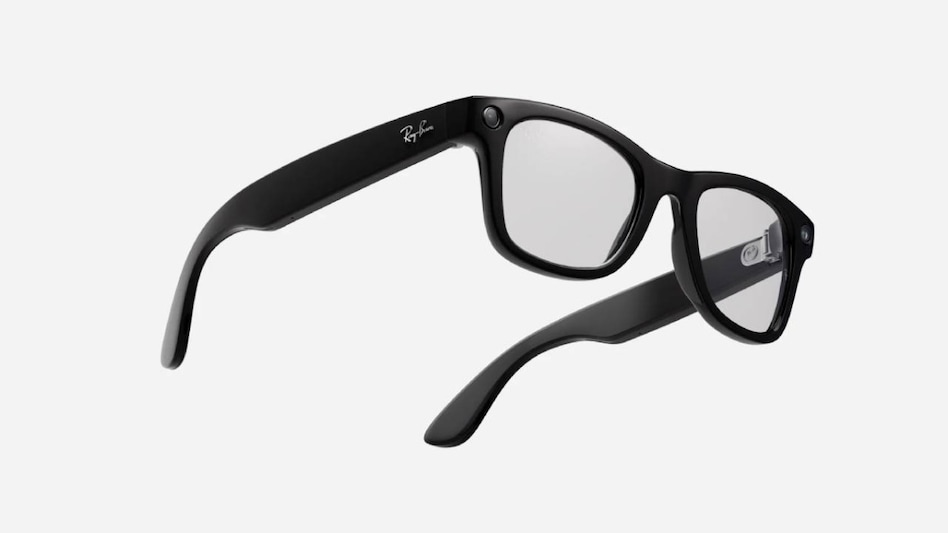
Amazon Implements New Labeling Requirement for AI-Generated Images Following New York Legislation
In response to a recent New York law aimed at enhancing transparency in advertising, Amazon has announced a new policy r...
CNBC | Jul 24, 2026, 24:45
Divorce Drama: Tech Mogul's Ex-Wife Faces Setback in AI Wealth Battle
The surge in wealth from the booming AI industry is reshaping fortunes, yet the former spouse of one of South Korea's le...
CNN | Jul 24, 2026, 05:45
Nvidia's Jensen Huang Calls for a More Balanced AI Narrative Amid Growing Public Concerns
In a recent interview, Nvidia's CEO Jensen Huang urged leaders in the artificial intelligence sector to adopt a more con...
Business Insider | Jul 24, 2026, 09:50India Takes Action Against Jack Dorsey's Bitchat App Amid Protests
In a significant move, India's cybercrime agency, the Indian Cyber Crime Coordination Centre (I4C), has mandated GitHub ...
Business Today | Jul 24, 2026, 10:25