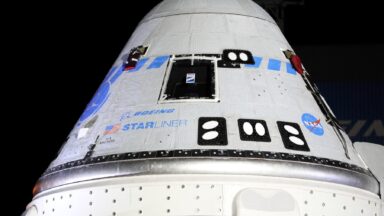
Safety panel says NASA should have taken Starliner incident more seriously
For nearly two months last year, the true extent of the issues plaguing Boeing’s Starliner spacecraft, which was docked at the International Space Station (ISS), remained largely unknown to the public. A recent report from a safety advisory panel highlighted that this uncertainty also permeated NASA's workforce. In June 2024, Boeing’s Starliner successfully transported NASA astronauts Butch Wilmore and Suni Williams to the ISS, marking the first crewed flight of the Starliner after over a decade filled with challenges and delays. Initially expected to stay at the ISS for one or two weeks, the astronauts found themselves in orbit for nine months as NASA officials deemed it too dangerous to return them to Earth aboard the Boeing-built capsule. Wilmore and Williams eventually returned to Earth in March on a SpaceX Dragon spacecraft. The Starliner capsule faced significant hurdles during its 27-hour journey to the ISS, including issues with maneuvering thrusters and troubling helium leaks. At one point, Commander Wilmore lost control of the spacecraft as it approached the docking procedure, raising alarms among engineers. Charlie Precourt, a former space shuttle commander and current member of NASA’s Aerospace Safety Advisory Panel (ASAP), expressed concerns about the potential consequences of losing control. He noted that without regaining some degree of maneuverability, both docking and re-entry could have resulted in catastrophic outcomes for the vehicle and crew. In response to these complications, NASA prudently utilized the ISS as a safe haven, allowing for thorough testing and engineering analysis on the ground to explore recovery options. Despite NASA and Boeing's assurances throughout that summer that the spacecraft was safe for an emergency evacuation, extensive testing was mandated to identify the underlying issues. Behind the scenes, there was a significant likelihood that NASA management would choose against placing astronauts aboard Boeing’s crew capsule for their eventual departure from the ISS—a decision that ultimately aligned with their cautious approach to the situation.
AI Transformations Lead to Major Job Cuts at Tech Giants
Monday.com, the innovative work management platform based in Tel Aviv, has recently announced significant layoffs, attri...
TechCrunch | Jul 26, 2026, 01:45
The Rise of AI Distillation: A Controversial Technique Sparks Debate in Tech and Government
In recent discussions, a once-obscure topic in artificial intelligence has surged to the forefront of debates among tech...
CNBC | Jul 25, 2026, 12:15
Market Turbulence: Four Key Factors Impacting Stocks This Week
This past week has been challenging for the stock market, driven by several significant forces that have created turbule...
CNBC | Jul 25, 2026, 20:05
Revolutionizing Startup Living: Inside London's Unique Lift House
In East London, a group of six young entrepreneurs is redefining the concept of collaborative living for tech founders. ...
TechCrunch | Jul 26, 2026, 17:10
The Future of Work: Executives Weigh In on AI's Impact on Gen Z Careers
As generative artificial intelligence continues to rise, uncertainty looms for the incoming Gen Z workforce. Leaders fro...
Business Insider | Jul 26, 2026, 10:15