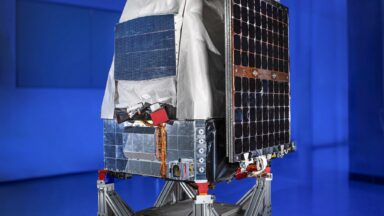
NASA’s newest telescope will play an outsize role in finding Earth 2.0
The James Webb Space Telescope (JWST) is revolutionizing our quest to discover habitable worlds orbiting distant stars. Positioned a million miles from Earth, its expansive gold-coated mirror captures light more effectively than any other space telescope. Since its launch in 2021, with an investment exceeding $10 billion, JWST has demonstrated the ability to explore far-off planetary systems, identifying vital chemical signatures that could indicate the presence of life, such as water vapor, carbon dioxide, and methane. In addition to investigating distant exoplanets, Webb also studies the oldest galaxies in the universe and examines celestial bodies within our own Solar System. To maximize the scientific returns from this high-budget observatory, NASA has introduced the Pandora mission. Pandora launched successfully from Vandenberg Space Force Base in California aboard a SpaceX Falcon 9 rocket, alongside approximately 40 other small payloads. It is now in a Sun-synchronous orbit at an altitude of around 380 miles (613 kilometers). Over the next few weeks, teams on the ground will carry out a series of commissioning and calibration procedures before Pandora begins its deep space observations. Despite its much smaller size compared to JWST, with a primary mirror akin to that of the largest consumer-grade telescopes—less than one-tenth the size of Webb's—Pandora's mission is both ambitious and cost-effective, capped at $20 million. This is a stark contrast to the more than 500 times higher budget of its larger counterpart. So, how will this compact telescope contribute to cutting-edge astronomy? Pandora is designed to enhance our understanding of how JWST examines exoplanets. When a planet transits in front of its star, some of the starlight filters through its atmosphere. JWST can detect this modified starlight, breaking it down into its spectral components, which provides insights into the atmospheric composition, including clouds and hazes. Ultimately, this data is crucial for assessing whether an exoplanet may share characteristics with Earth.
Volkswagen Engineers Indicted for Insider Trading Linked to Rivian Partnership
In a significant legal development, the U.S. Department of Justice has brought securities fraud charges against two engi...
TechCrunch | Jul 24, 2026, 20:30
Elon Musk Faces Major Setbacks as Tesla and SpaceX See Significant Stock Declines
It has been a challenging week for Elon Musk, as both Tesla and SpaceX experienced substantial stock declines. Tesla sha...
CNBC | Jul 24, 2026, 20:40
The Aluminum Foil Trend: A DIY Shield Against Wireless Identity Theft
Have you noticed an unusual trend where people are wrapping their wallets in aluminum foil? This peculiar practice has e...
Business Today | Jul 25, 2026, 02:45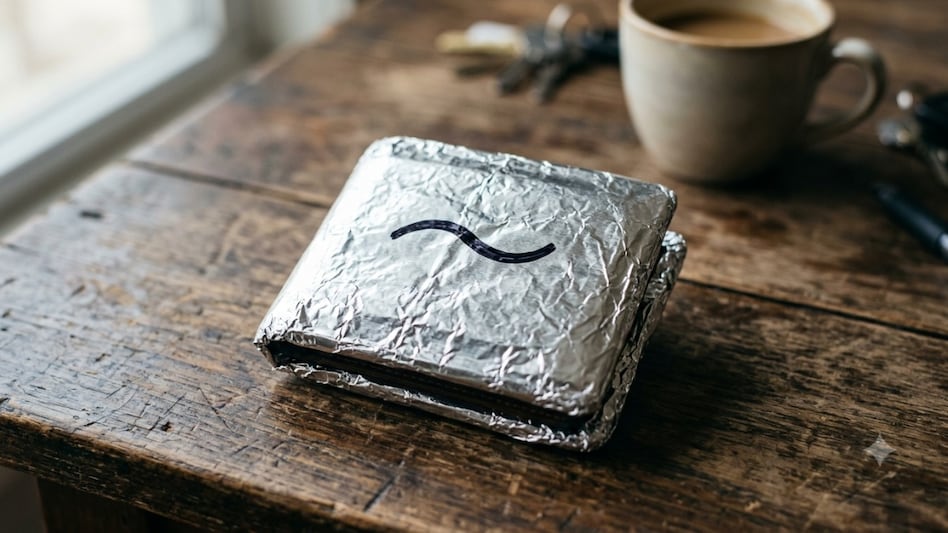
SpaceX's Latest Starlink Launch Marks Milestone Amid Booster Setbacks
On Friday, SpaceX marked a significant achievement by successfully launching its first batch of third-generation Starlin...
TechCrunch | Jul 24, 2026, 23:40
Nvidia Strikes Major Deal with SK Hynix to Secure AI Memory Supply
Nvidia has successfully forged a significant partnership with South Korea's SK Hynix to secure memory supplies essential...
CNBC | Jul 25, 2026, 05:15