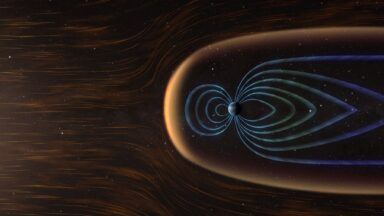
SpaceX launches a pair of NASA satellites to probe the origins of space weather
In a significant advancement for space physics, two NASA satellites have successfully entered orbit aboard a SpaceX Falcon 9 rocket from California. This launch marks the beginning of a $170 million mission aimed at exploring the elusive phenomena of space weather, which has puzzled scientists since the early days of the Space Age. The satellites are integral to the NASA-funded TRACERS mission, designed to spend at least a year examining plasma conditions in specific areas of Earth's magnetic field, known as polar cusps. Situated over the poles, these regions are crucial yet not fully understood in their role in generating stunning auroras. These auroras occur when solar plasma interacts with Earth's magnetic field, but the same mechanisms can also lead to geomagnetic storms that disrupt GPS systems, radio communications, electrical grids, and satellite functionalities. Solar flares and coronal mass ejections often trigger these storms, sending bursts of plasma through the Solar System. If directed towards Earth, these flows can create mesmerizing auroras but also pose risks, as evidenced by an extreme geomagnetic storm last year that disrupted GPS signals, causing over $500 million in economic losses for the agricultural sector. Similarly, a surge in solar activity in 2022 led to the loss of 40 SpaceX Starlink satellites. "Understanding our Sun and the space weather it produces is more crucial for us here on Earth than many realize," stated Joe Westlake, director of NASA's heliophysics division. The launch of the TRACERS mission faced a 24-hour delay due to a regional power outage that affected air traffic control in the vicinity of the Falcon 9 launch site on California's Central Coast, according to the Federal Aviation Administration. SpaceX had to halt the countdown just shy of liftoff on Tuesday, before successfully rescheduling the launch for Wednesday.
China's Affordable AI Models Set to Disrupt Enterprise Market, Jefferies Reports
The competitive landscape of artificial intelligence is evolving, with a shift from simply having the most advanced mode...
Business Today | Jun 28, 2026, 08:40
Reconnecting with Reality: Ian Bogost's Call to Embrace the Sensory World
In a thought-provoking exploration, writer and academic Ian Bogost raises critical questions about the impact of technol...
TechCrunch | Jun 28, 2026, 17:40
Tesla's Full Self-Driving Under Fire Amid Investigations and Controversies
In the ever-evolving world of transportation technology, Tesla’s Full Self-Driving (FSD) capabilities are facing intense...
TechCrunch | Jun 28, 2026, 16:30
California Enforces New Law to Mute Loud Streaming Advertisements
This week marks a significant shift in the world of streaming advertisements as a new California law is set to take effe...
TechCrunch | Jun 28, 2026, 21:40
Ford Revamps Engineering Team to Enhance Quality After AI Setbacks
In a bold move to address recent shortcomings in quality control, Ford has brought on board 350 seasoned engineers, many...
TechCrunch | Jun 28, 2026, 19:40