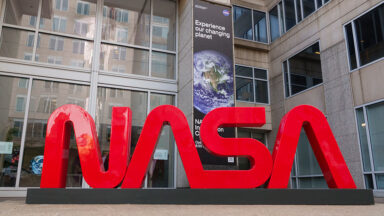
To achieve major goals, NASA seeks to streamline its organization
In a significant move to enhance operational efficiency, NASA Administrator Jared Isaacman communicated a series of structural adjustments to the agency's workforce in a detailed email sent on Friday morning. The changes aim to streamline the sprawling organization and ensure it can effectively pursue its ambitious objectives, including returning humans to the Moon and establishing a base there. Isaacman emphasized the need to allocate resources towards top-priority goals outlined in the National Space Policy. He expressed a commitment to freeing up talented individuals from unnecessary bureaucratic hurdles that could hinder progress. "I believe it is imperative to concentrate resources towards the highest priority objectives and liberate the best and brightest from needless bureaucracy," he stated in his extensive 3,000-word letter. Importantly, Isaacman assured employees that no jobs would be lost and no field centers would close as a result of these changes. Instead, the focus is on enhancing efficiency and sharpening the agency's commitment to its core missions. Key objectives highlighted include executing the Artemis Program to facilitate human return to the Moon, establishing a permanent lunar base, and launching a new “Space Reactor Office” to advance nuclear power initiatives in space. Additionally, the agency aims to stimulate economic activity in low-Earth orbit and increase the development of experimental X-planes alongside more scientific missions. The restructuring is seen as a necessary response to counteract a long-standing trend of bureaucratic expansion and fragmented control within NASA. According to two former NASA employees familiar with the agency's inefficiencies, these changes are largely viewed as a positive direction for NASA. One source commented, "I was concerned there was going to be more of a consolidation of authority at headquarters. Instead, this all appears to be broadly helpful to the mission." Previously, NASA operated with six primary “Mission Directorates” overseeing key sectors like human exploration, science, and aeronautics. These will now be merged into four directorates to facilitate better coordination and effectiveness.
Uber Restructures Workforce Amid AI Integration, Laying Off 10% of Customer Support Staff
Uber has announced significant changes to its workforce, attributing the decision to advancements in artificial intellig...
Business Insider | Jul 23, 2026, 15:00Google's Gemini AI Assistant Approaches Billion-User Milestone
Google is on the verge of adding another major product to its portfolio, which already boasts several offerings with ove...
TechCrunch | Jul 23, 2026, 15:21
Community Rallies Against Massive AI Data Center Proposal at Heated Town Meeting
In a fervent display of community spirit, residents of Upper Merion Township gathered for an intense four-hour town meet...
Business Insider | Jul 23, 2026, 13:15Amazon Expands Prime Video with Exciting New Gaming Features
On Thursday, Amazon made a significant announcement, revealing its plan to incorporate games into Prime Video by merging...
TechCrunch | Jul 23, 2026, 15:25
Seamless Switch: Android 17 Simplifies iPhone to Android Data Transfer
Transitioning from an iPhone to an Android device has just become significantly easier with the introduction of Android ...
Business Today | Jul 23, 2026, 11:40