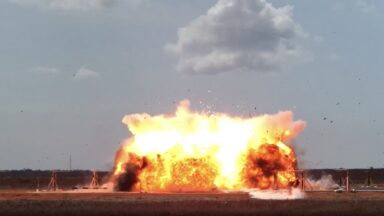
NASA is blowing stuff up to study the explosive potential of methalox rockets
For over six decades, the landscape of rocket propulsion has been dominated by a few key propellants, each chosen for specific benefits. Refined kerosene has been praised for its ease of handling and non-toxic properties, while hydrazine is known for its storability and simplicity. Hydrogen boasts exceptional efficiency, and solid fuels are favored for their longevity and quick launch readiness. In recent years, however, the focus has shifted toward methane-fueled engines, with companies like SpaceX and Blue Origin leading the charge. Their powerful engines, Raptor and BE-4, respectively, can generate over half a million pounds of thrust. SpaceX’s Starship, equipped with 39 Raptor engines, and Blue Origin’s New Glenn, which employs BE-4s, are at the forefront of this technology. Methalox engines, which burn methane combined with liquid oxygen, offer several advantages: they produce less soot than kerosene and are simpler to handle compared to liquid hydrogen, which is notorious for leaks and requires extremely low storage temperatures. As the rocket industry evolves, understanding the risks associated with methalox engines becomes crucial. The US Space Force and NASA are keen on studying how the potential hazards of an exploding methalox rocket differ from those of traditional engines. This knowledge is especially vital as the frequency of launches increases, with some companies planning multiple daily flights from launch sites that are only a mile or two apart. Col. Brian Chatman, commander of the Eastern Range at Cape Canaveral Space Force Station, highlighted the need for thorough analysis to determine safety parameters for launch operations. He emphasized the importance of understanding these risks better to ensure safety protocols can be effectively implemented. Currently, launch pads for methalox rockets are either operational or under development at several government locations, including Kennedy Space Center and Cape Canaveral in Florida, Vandenberg Space Force Base in California, and NASA’s Wallops Flight Facility in Virginia. SpaceX also conducts Starship test flights from private land in South Texas, where the Federal Aviation Administration oversees public safety regulations.
Finland Unveils World's Largest Sand Battery to Tackle Renewable Energy Challenges
In a groundbreaking move to address the critical issue of renewable energy intermittency, a small town in southern Finla...
CNBC | Jul 25, 2026, 05:35
SpaceX's Latest Starlink Launch Marks Milestone Amid Booster Setbacks
On Friday, SpaceX marked a significant achievement by successfully launching its first batch of third-generation Starlin...
TechCrunch | Jul 24, 2026, 23:40
SpaceX Successfully Tests Starship Rocket, Launching New Era of Space Exploration
On Friday evening, SpaceX executed a significant milestone by launching its colossal Starship rocket from its facility i...
CNBC | Jul 25, 2026, 24:10
Revolutionizing Office Automation: Prentis Aims to Secure $100 Million in Funding
Prentis, a newly established AI research lab, is making waves in the tech industry as it prepares to raise $100 million ...
TechCrunch | Jul 25, 2026, 24:00
Kalshi Challenges Netflix Over Controversial Documentary Trailer
Kalshi, the prediction market platform, has taken significant legal steps against Netflix, sending a cease-and-desist le...
TechCrunch | Jul 25, 2026, 17:10