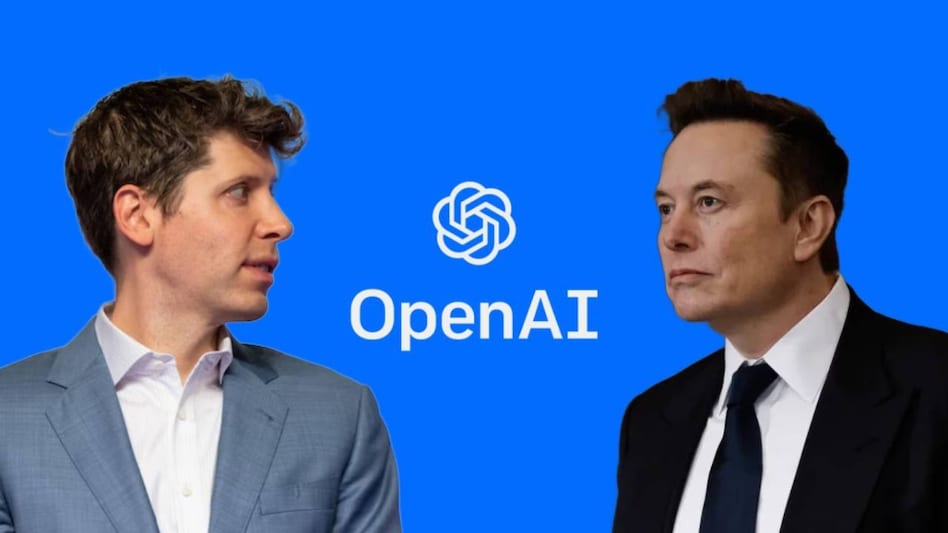
OpenAI case narrows as Musk withdraws fraud allegations before key trial; here's what we know
Elon Musk has recently retracted his fraud accusations against OpenAI and its co-founders, Sam Altman and Greg Brockman, significantly reducing the scope of a high-stakes lawsuit just before the impending trial. A federal court in the United States will now focus solely on two remaining claims: unjust enrichment and breach of charitable trust, down from the original 26 allegations lodged in November 2024. US District Judge Yvonne Gonzalez Rogers has granted Musk's request to narrow the case, with jury selection set to commence on Monday in Oakland, California. Despite the legal claims being streamlined, the core issue regarding OpenAI's shift in mission is still very much alive. Musk contends that OpenAI has deviated from its founding principles, which were established in 2015 with the intention of developing artificial intelligence for the greater good of humanity. He argues that the organization's move to a "capped-profit" model, coupled with substantial funding—particularly from Microsoft—has undermined its original public-interest objectives. Even with the fraud claims dropped, Musk is pursuing damages that could reach as high as $134 billion. He has suggested that any financial compensation awarded should support OpenAI's charitable initiatives. Furthermore, he is advocating for structural reforms, which include reinstating the organization’s nonprofit status and removing Altman and Brockman from their leadership positions. OpenAI and its co-founders, as well as Microsoft, have vehemently denied all accusations. They characterize Musk's legal approach as a “legal ambush,” asserting that the claims lack merit and are motivated by competitive interests. The defense has also highlighted Musk's own AI venture, xAI, launched in 2023, which positions itself as a competitor to OpenAI amid the escalating AI arms race. The ongoing dispute underscores the broader tensions surrounding OpenAI's transformation. Initially created to mitigate the concentration of AI power among major tech companies, OpenAI focused on open research and societal benefits. However, the high costs associated with developing advanced AI technologies necessitated a strategic shift. By adopting a capped-profit model, the organization aimed to attract significant investments while attempting to uphold aspects of its foundational mission. The launch of ChatGPT in November 2022 marked a pivotal moment for OpenAI, propelling it to a leading position in the global AI landscape. This surge was further bolstered by Microsoft's reported multi-billion-dollar investment, estimated at around $13 billion. The trial will be conducted in two stages. Initially, a jury will evaluate the remaining claims and deliver a non-binding advisory verdict. Following that, the judge will decide on appropriate remedies, if any. Beyond the immediate legal implications, this case is poised to establish a critical precedent, raising essential questions about how AI companies reconcile their nonprofit roots with the demands of commercial scalability in an industry that necessitates substantial capital and infrastructure.
Waymo to Launch Standalone App, Ending Exclusivity with Uber in Major Cities
For the past three years, Uber and Waymo, the autonomous vehicle division of Alphabet, have collaborated to provide driv...
CNBC | Jul 24, 2026, 21:55
SpaceX's Latest Starlink Launch Marks Milestone Amid Booster Setbacks
On Friday, SpaceX marked a significant achievement by successfully launching its first batch of third-generation Starlin...
TechCrunch | Jul 24, 2026, 23:40
Prentis: Ambitious New AI Lab Eyes $100 Million Funding with Innovative Automation Goals
Prentis, a cutting-edge AI research laboratory co-founded by Ritankar Das, Reid Hoffman, and Marc Pincus, is currently i...
TechCrunch | Jul 24, 2026, 22:45
SpaceX Successfully Tests Starship Rocket, Launching New Era of Space Exploration
On Friday evening, SpaceX executed a significant milestone by launching its colossal Starship rocket from its facility i...
CNBC | Jul 25, 2026, 24:10
Elon Musk Faces Major Setbacks as Tesla and SpaceX See Significant Stock Declines
It has been a challenging week for Elon Musk, as both Tesla and SpaceX experienced substantial stock declines. Tesla sha...
CNBC | Jul 24, 2026, 20:40