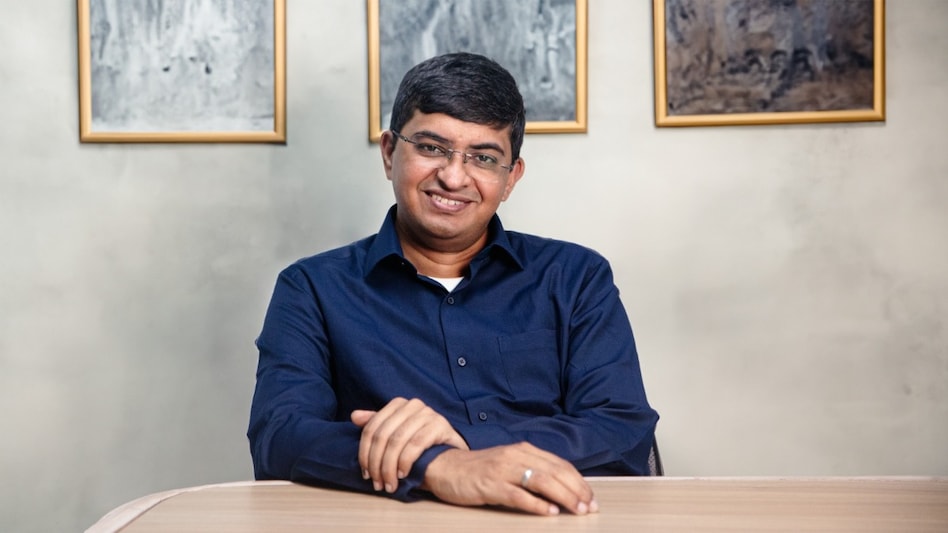
‘India’s biggest challenge isn’t talent. It’s the service mindset,’ says Mindgrove CEO Shashwath TR
According to Shashwath TR, co-founder and CEO of Mindgrove Technologies, India possesses a wealth of semiconductor talent. However, he emphasizes that the primary challenge lies in shifting from a service-oriented mindset to one focused on product innovation. In a recent interview, Shashwath pointed out, "India’s biggest challenge isn’t talent. It’s the service mindset." Mindgrove, recognized as a rising star among India’s fabless semiconductor startups, is focused on creating indigenous system-on-chip products tailored for Internet of Things (IoT) and edge artificial intelligence applications. This initiative aligns with the Indian government's push to establish a robust domestic semiconductor ecosystem. The startup plans to launch its Secure IoT chip, the S2401, by the end of this year, followed by the Vision SoC, V2600, expected to debut next year. The S2401 is designed for applications like smart meters, wearables, and access control systems, while the Vision SoC will cater to markets including CCTV cameras, dashcams, advanced driver assistance systems, and smart TVs. While India has historically excelled in semiconductor design services, there has been a noticeable scarcity of companies that own products and intellectual property. Shashwath argues that this must change for India to cultivate globally competitive chip manufacturers. He stated, "Product thinking, the ability to conceptualise a product and engage with the users, is an ecosystem-level skill we need to build." The future of India’s semiconductor industry hinges not only on talent but also on the willingness of investors, customers, and the broader ecosystem to support companies through the lengthy development cycles typical in this field. Mindgrove asserts that its chip architecture and security subsystem are developed in India, leveraging the Shakti core from IIT Madras. "The Shakti core, chip architecture, security subsystem, and integration work are entirely ours, based on initial open-source design done at IIT Madras," Shashwath explained. While the company relies on large global foundries for chip fabrication—a common practice among fabless semiconductor firms—each successive chip they produce enhances their local indigenization efforts. They are also looking towards domestic fabrication as India’s manufacturing capabilities grow. Geopolitical factors are further influencing the demand for domestic chips. As government and enterprise clients become more cautious about the origins of electronic components, Shashwath noted a shift in customer inquiries. "Customers now ask where the chip was designed, who owns the IP, and about foreign dependencies," he said, highlighting the impact on government procurement and critical infrastructure. Mindgrove’s ownership of its design and intellectual property positions it advantageously amidst increasing security concerns in electronics procurement. Shashwath remarked, "Our design, security architecture, and IP are entirely ours. That’s a structural advantage as geopolitical pressure on electronics increases." The company’s inaugural chip will face competition from low-cost Chinese and Taiwanese options. Shashwath acknowledged that while pricing can attract original equipment manufacturers (OEMs), the true competitive edge lies in their collaborative approach, offering customization and co-development opportunities that larger global vendors may not provide. In terms of technology, Mindgrove's chip is built on the RISC-V open-source instruction set architecture, rather than ARM. Shashwath explained that this choice is both technical and strategic, as RISC-V avoids licensing fees and foreign dependency, fostering an environment for chip sovereignty in India. Mindgrove is also focusing on edge AI, where data processing occurs on devices rather than relying on cloud computing. Shashwath pointed out that many applications benefit from edge inference due to factors like latency and privacy concerns. With a significant number of devices in India currently using imported chips, he believes the potential market is substantial. Although semiconductor startups are gaining traction in India, Shashwath stated that fundraising for these ventures remains challenging compared to software companies. He noted that semiconductor firms require considerable upfront capital and typically take longer to generate revenue. Despite this, Mindgrove has successfully attracted investments from firms like Peak XV and Speciale Invest, which understand the complexities of the semiconductor business. As for talent, Shashwath maintains that India possesses the necessary skills, but it is crucial to present a compelling mission to attract and retain them. He shared that Mindgrove is integrating AI into various aspects of the chip design workflow, which helps enhance efficiency without replacing the essential strategic insights needed for architectural decisions.
Reclaiming Control: Librarians Host Workshops to Help People Navigate AI Tools
In a lively library setting in South Philadelphia, Charlie Bailey, a local librarian, humorously noted, "Everybody’s on ...
TechCrunch | Jul 25, 2026, 16:20
Unlocking the Secrets of Quantum Gravity: Can AI Help Physics Make a Leap?
The realm of scientific research is undergoing a profound transformation, fueled by the rapid advancements in artificial...
Business Today | Jul 25, 2026, 24:30
The Elusive Phineas Fisher: The Hacktivist Who Took Down Spyware Giants
In the realm of cybersecurity, few figures are as intriguing as Phineas Fisher, a hacker who has evaded capture for near...
TechCrunch | Jul 25, 2026, 21:00
Finland Unveils World's Largest Sand Battery to Tackle Renewable Energy Challenges
In a groundbreaking move to address the critical issue of renewable energy intermittency, a small town in southern Finla...
CNBC | Jul 25, 2026, 05:35
Market Turbulence: Four Key Factors Impacting Stocks This Week
This past week has been challenging for the stock market, driven by several significant forces that have created turbule...
CNBC | Jul 25, 2026, 20:05