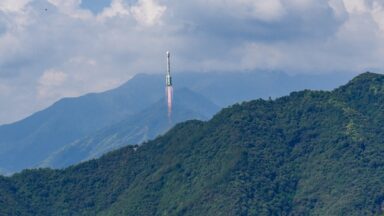
The military’s squad of satellite trackers is now routinely going on alert
In a recent discussion with Colonel Raj Agrawal, the former leader of the Space Force’s Mission Delta 2, it became clear that the frequency of satellite launches has reached unprecedented levels. The US Space Force, operating under the Space Operations Command, oversees the tracking of nearly 50,000 objects currently in orbit, a task that has become increasingly critical as dozens of satellites are launched weekly, chiefly by SpaceX to enhance the Starlink broadband network. The US military typically receives advanced notifications about these launches, especially since many occur from Space Force facilities. This foresight allows them to monitor the trajectory and purpose of these satellites. However, the situation becomes more complex when it comes to launches from adversarial nations such as China, Russia, Iran, or North Korea. These countries often do not disclose specific details about their launches, which raises concerns for US military personnel tasked with observing orbital activity. Questions loom over whether these foreign launches could deploy technologies capable of neutralizing US satellites or enhancing surveillance capabilities against allied forces. This secrecy fuels apprehension within the US military, which is vigilant about maintaining its strategic advantage in space. Colonel Agrawal, who recently transitioned command to Colonel Barry Croker after a two-year tenure, understands the implications of such developments. While the US government keeps sensitive satellite details, particularly those related to intelligence-gathering craft, under wraps, the crowded low-Earth orbit remains an observable environment. Meanwhile, space enthusiasts have taken it upon themselves to track both US and foreign military satellites, piecing together data that offers insights into their altitude and orbital paths.
New Era of AI Regulation: White House Gains Control Over Model Access
The current administration is taking significant measures to enhance its authority over the deployment of advanced artif...
CNBC | Jul 17, 2026, 22:15
Big Tech's Capital Expenditure Surge: Inflation or Genuine Growth?
The much-anticipated earnings season for major tech companies is set to kick off next week, with Google leading the char...
Business Insider | Jul 18, 2026, 14:05India's Smartphone Market Faces Turbulence Amid Rising Memory Costs
In a significant shift for India's smartphone landscape, rising memory chip prices are reshaping the market dynamics, wi...
TechCrunch | Jul 17, 2026, 20:35
Top 5 Tech Subscriptions to Slash Your Digital Expenses in 2026
As the costs of smartphones, streaming services, and cloud storage rise, many users are feeling the pinch of technology ...
Business Today | Jul 18, 2026, 05:10
Databricks Achieves $188 Billion Valuation Amid AI Revolution
Databricks has announced a significant new funding round that values the company at an impressive $188 billion, followin...
TechCrunch | Jul 17, 2026, 22:15