Microsoft promised consumers won't foot the bill for its data centers. Our interactive map shows where its facilities are located.
In response to growing concerns about the financial burden of data centers on consumers, Microsoft has announced a proactive strategy aimed at alleviating these worries. Brad Smith, President of Microsoft, emphasized this commitment in a recent blog post, stating, "We'll pay our way to ensure our datacenters don't increase your electricity prices." This declaration follows heightened public scrutiny, particularly after President Trump expressed his disapproval of American citizens potentially subsidizing the operational costs of data centers. The announcement comes at a time when the construction of data centers across the United States is surging. As of 2024, developers have filed permits for 1,240 data centers, a significant increase compared to the 310 recorded in 2010, according to a Business Insider analysis. This expansion has raised alarms about potential hikes in consumer electricity rates and sparked grassroots opposition against new builds. Microsoft ranks fifth in the number of permits filed, with 44 data centers in the pipeline, half of which are among the largest, each estimated to consume at least 40 megawatts of power. Currently, Virginia hosts the majority of Microsoft’s data centers, with 24 facilities, followed by Texas with eight, and both Illinois and Iowa with four. These data centers are notably power-intensive, with the most demanding facility located in Maricopa County, Arizona. In comparison, Amazon operates 177 data centers, projected to have the highest annual electricity demand, estimated between 30 and 48 terawatt-hours. Microsoft, with a smaller footprint, is still expected to generate a significant demand of between 16 and 25 terawatt-hours annually if all its facilities become operational. Furthermore, the implications of data center electricity consumption extend beyond individual companies. A federal report anticipates that electricity demand could approach upper limits of current estimates by 2026, prompting concerns among local communities about rising energy costs. Critics argue that the massive electricity requirements of these data centers often lead to new infrastructure investments by utility companies, which can shift the costs to all consumers. To mitigate these impacts, Microsoft plans to collaborate with utility companies and regulators to ensure that the pricing structure reflects the actual costs incurred by its data centers. Smith reiterated that the company would also cover any necessary upgrades to the grid infrastructure required to support its operations. He stated, "We believe the long-term success of AI infrastructure requires that tech companies pay their own way for the electricity costs they create." This initiative aligns with a broader affordability agenda from President Trump, which seeks to lower costs for consumers in various sectors, further emphasizing the importance of corporate responsibility in managing energy consumption and its implications for public rates.
Meta Breaks Ground on First AI-Focused Data Center in Canada
Meta has officially commenced construction on its inaugural AI data center in Canada, located in Sturgeon County, Albert...
Business Insider | Jul 09, 2026, 02:10Microsoft Announces Major Workforce Reduction with Generous Severance Packages
In a significant organizational shift, Microsoft has revealed plans to trim its workforce by 2.1%, affecting over 4,800 ...
Business Today | Jul 09, 2026, 06:15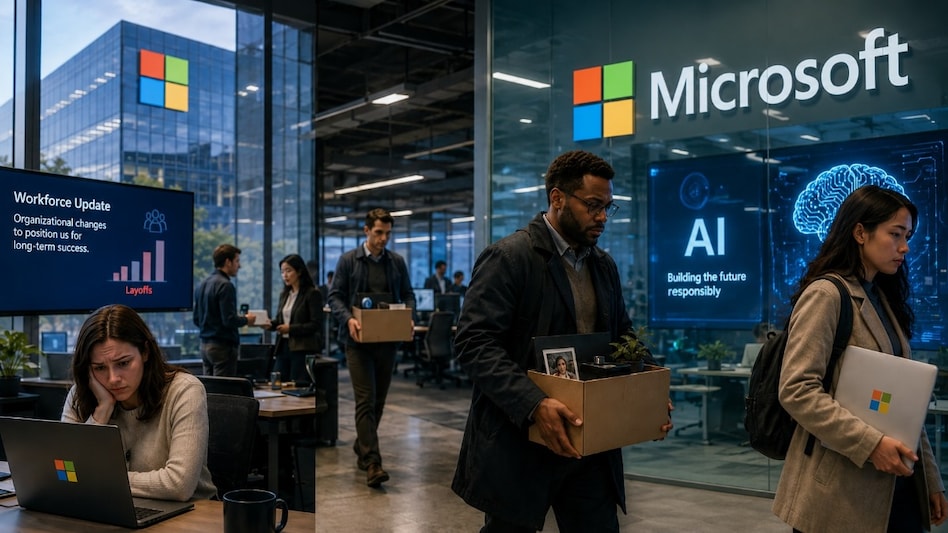
Introducing Isaac 1: The $8,000 Robot Set to Revolutionize Household Chores
Weave Robotics, a San Francisco-based startup, is making waves with its innovative home robot, Isaac 1, designed to tack...
Business Insider | Jul 09, 2026, 09:05Navigating AI Costs: How One Startup Learned to Balance Speed and Budget
In the fast-paced world of AI development, financial missteps can happen, as demonstrated by the experience of Turbo AI,...
Business Insider | Jul 09, 2026, 09:25Anthropic's Valuation Skyrockets to $1.2 Trillion Amidst Frenzied Demand
In a dramatic surge, Anthropic's valuation has skyrocketed to $1.2 trillion in secondary markets, making it one of the m...
Business Insider | Jul 09, 2026, 09:05