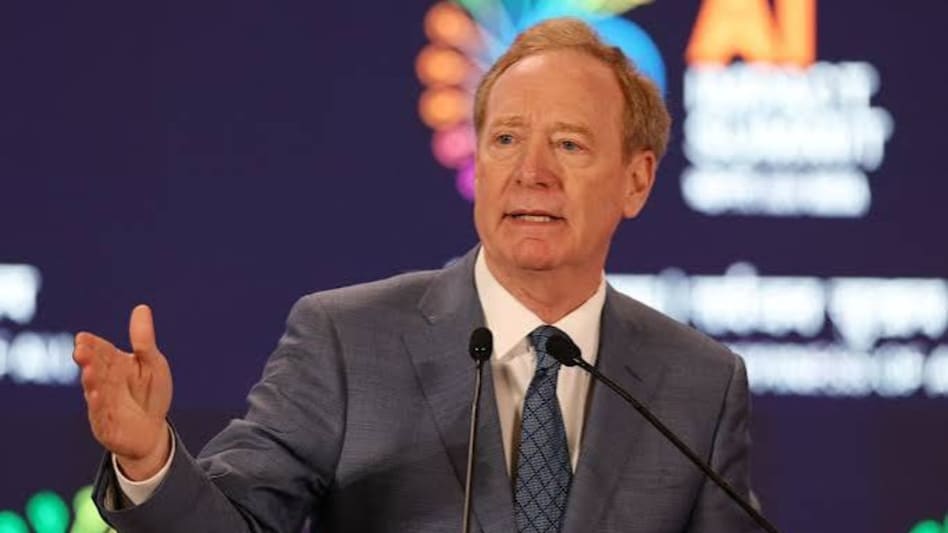
'Could cripple US tech for over a generation': Microsoft president on Green Card restrictions
Brad Smith, the President of Microsoft, has raised alarm bells regarding the U.S. government's tightening of green card policies for skilled foreign workers. He warns that these measures could pose a significant threat to the future of the American tech sector, potentially impacting it for over a generation. In a recent statement, Smith dismissed claims of H-1B visa misuse as fundamentally misguided. He cautioned that the restrictive immigration policies might push top talent in artificial intelligence and software engineering to rival countries, as reported by Politico. Refuting allegations of wage suppression and the displacement of local workers, he emphasized that Microsoft maintains an equitable compensation structure for all employees, regardless of their immigration status. Smith also pointed to Microsoft's substantial contributions to the local workforce, noting that the company had hired over 9,000 U.S.-born employees in the last year alone. He argued that this positive impact has been overlooked in the administration's criticisms. Furthermore, he clarified that most of Microsoft's green card applications are for long-term employees rather than new hires, attributing delays in processing to systemic issues within the government. Tensions escalated following U.S. Vice President JD Vance's announcement that Microsoft and seven other leading companies would be barred from sponsoring permanent residency for skilled foreign workers. This policy change is part of a broader crackdown initiated on October 8 by the Trump administration, which suspended the Permanent Labor Certification (PERM) program for several major IT firms, including Microsoft and others. The scrutiny of the U.S. immigration system intensified as Vance lashed out at companies that rely heavily on foreign labor, accusing them of displacing American employees and suppressing wages. He referred to H-1B workers as "foreign indentured servants," suggesting that their dependency on employers makes them susceptible to exploitation. This announcement has sparked concerns among Indian IT professionals who rely on employer sponsorship for their paths to permanent residency in the U.S. The affected companies, which include Microsoft, Adobe, and Tata Consultancy Services, are now facing a freeze on processing pending applications and are prohibited from filing new certifications, effectively cutting off a crucial avenue for skilled workers seeking to establish permanent residency in the United States.
Navigating the AI Landscape: Why CEOs Must Embrace Technology Literacy
In the rapidly evolving world of corporate India, companies are increasingly investing in artificial intelligence (AI), ...
Business Today | Nov 24, 2026, 07:35
Emerging AI Chip Design Revolution: A Challenge to Nvidia's Reign
Nvidia, under the leadership of Jensen Huang, faces a significant challenge from the very AI technology it helped to pop...
Business Insider | Nov 24, 2026, 10:10Investing in the Future: Solar and Battery Solutions for AI Data Centers
The challenge of powering AI data centers has emerged as a pivotal issue in the current technological landscape. Over th...
TechCrunch | Nov 24, 2026, 16:25
Threads Expands to iPad with New Cashtag Feature to Rival X
Meta's Threads app has officially launched a dedicated version for iPad, marking a significant milestone in its developm...
TechCrunch | Nov 24, 2026, 18:00
Uber and Nuro Kick Off Driverless Trials for Lucid Robotaxis Ahead of 2027 Launch
Uber and Nuro have officially launched their driverless testing phase for the Lucid Gravity SUVs on the streets of the S...
TechCrunch | Nov 24, 2026, 17:15