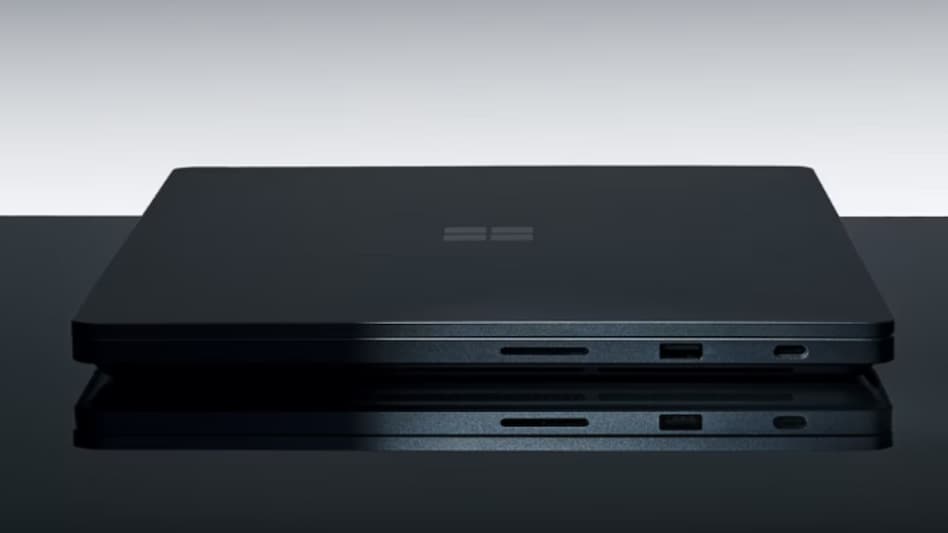
Microsoft’s Nvidia-powered Surface Ultra laptop put a price on its hybrid AI ambitions: All details
Microsoft has unveiled its latest innovation, the Surface Ultra laptop, which harnesses the power of Nvidia's artificial intelligence to elevate hybrid intelligence in computing. This new device represents a significant step forward in integrating on-device AI processing with cloud capabilities, enabling a seamless experience for AI agents across the Windows ecosystem. In conjunction with the Surface Ultra, Microsoft also introduced a high-performance workstation powered by the RTX Spark chip. This workstation includes essential Microsoft development tools such as Visual Studio Code, GitHub Copilot CLI, Windows Subsystem for Linux, and PowerShell 7. Furthermore, the company showcased an updated version of Windows 11, featuring a new sandboxing tool named "Execution Containers," enhanced privacy settings, and more customization options for users. The Surface Ultra is the result of a collaboration between Microsoft and Nvidia, specifically designed for developers, creators, and AI researchers. It boasts an Arm-based system-on-chip that features the cutting-edge Nvidia RTX Spark platform, combined with up to a 20-core Nvidia Grace CPU and an Nvidia Blackwell RTX GPU. This powerful configuration allows the laptop to run local large language models (LLMs) and AI agents with over 120 billion parameters entirely on the device, eliminating ongoing cloud computing expenses. Microsoft asserts that the architecture of the Surface Ultra maintains 99% of its peak performance even when not plugged in. In performance comparisons, it reportedly surpasses Apple’s M5 Pro-powered MacBook Pro, achieving up to 2.1 times faster initial token generation, 4.3 times quicker image generation, and 6.2 times faster video generation. The Surface Ultra laptop is available in three configurations, starting at $2,599 for an 18-core CPU, 24GB RAM, and 512GB storage. The highest-end model can reach a price of $5,899, featuring a 20-core CPU, 128GB RAM, and 1TB storage. During the announcement, Pavan Davuluri, head of Windows, elaborated on the concept of Hybrid Intelligence. This innovative architecture aims to bridge the gap between local AI processing and remote cloud intelligence, allowing for efficient operation of AI agents on both ends. By minimizing the number of tokens sent to cloud AI models, Microsoft is working towards making AI more economical and efficient. Moreover, Windows ML is set to become the software runtime that facilitates the operation of AI models across various hardware types, including GPUs, NPUs, and CPUs. The integrated Copilot feature will intelligently select the appropriate AI model based on task complexity, optimizing whether tasks are processed locally or in the cloud. This development promises to enhance the speed, efficiency, and cost-effectiveness of AI operations on Windows devices.
UK Government Sounds Alarm on Surge of AI-Enhanced Cyber Threats
The United Kingdom's cybersecurity agency has reported a significant increase in cyberattacks driven by artificial intel...
TechCrunch | Nov 24, 2026, 18:30
Walmart Partners with Meta's Muse for a Smarter Black Friday Shopping Experience
The future of shopping is now, as Walmart embraces the integration of artificial intelligence into its retail strategy. ...
TechCrunch | Nov 24, 2026, 21:45
Nvidia's Board Shake-Up: The High-Stakes Return of Jensen Huang
Nvidia's CEO Jensen Huang has received unwavering support from longtime board members Tench Coxe, Mark Stevens, and Harv...
CNN | Nov 24, 2026, 23:00
Electric Truck Innovator Harbinger Secures Major Funding from Erebor Bank
Harbinger, an emerging player in the electric truck industry, has secured a significant financial boost from Erebor Bank...
TechCrunch | Nov 24, 2026, 18:00
AI Assistants Struggle to Handle Everyday Tasks, New Research Reveals
In recent months, AI firms have been promoting personal AI agents as solutions to alleviate the mundane aspects of daily...
TechCrunch | Nov 24, 2026, 21:45